REVIEW · PHILADELPHIA
2.5 Hour Philadelphia History Tour with Washington War Tent Show
Book on Viator →Operated by WeVenture · Bookable on Viator
A city block can change your headspace fast. This 2.5-hour Philadelphia history tour strings together the big Revolutionary landmarks and adds a hands-on stop at the Museum of the American Revolution, including the Washington War Tent presentation. I especially like the small-group size (max 12) and the way the guide story-tells at walking speed, with guides like Tom or PJ often bringing the facts to life.
Two things I really liked: you get Independence National Historical Park landmarks in a tight route, and you also get myth-busting context at sites people think they already know, like the Liberty Bell. The included museum time is focused and efficient, not a random museum wander.
One possible drawback: most of the most famous buildings are viewed from the outside on this schedule, and some interior access can depend on what’s open that day. If you’re hoping for a lot of ticketed entry beyond what’s included, you may need to plan a follow-up stop on your own.
In This Review
- Key things to love about this Philadelphia Revolutionary tour
- A 2.5-hour Philadelphia history walk that gets you oriented fast
- Signer’s Garden to Independence National Historical Park: where the story locks in
- Independence Hall and the Congress-era buildings: seeing power from the street
- Liberty Bell area myths, Carpenters’ Hall, and why the walk sets up the museum stop
- Museum of the American Revolution: Washington’s War Tent presentation and what to do next
- Elfreth’s Alley, Betsy Ross House passing views, Franklin’s grave, and the President’s House dig
- Pace, group size, and how guides like Tom, Caroline Hodash, or John shape the experience
- What $45 buys you in real-world value
- Who this tour is best for (and who might want alternatives)
- Should you book the Washington War Tent Philadelphia history tour?
- FAQ
- How long is the Philadelphia history tour?
- How much does it cost per person?
- What’s included during the tour at the Museum of the American Revolution?
- Which major Revolutionary landmarks are covered?
- How large is the group?
- Where do I meet the guide and where does it end?
- Is food included?
- Is there free cancellation?
Key things to love about this Philadelphia Revolutionary tour
- Small group (up to 12) keeps questions and pacing personal
- Independence National Historical Park route hits the core landmarks quickly
- Washington’s War Tent presentation at the Museum of the American Revolution is built into the walk
- Discounted museum ticket after the tour gives you an easy way to keep going later
- Old City walking highlights include Elfreth’s Alley and Carpenters’ Hall without long detours
- Myth correction moments at famous sites helps you leave with clearer answers
A 2.5-hour Philadelphia history walk that gets you oriented fast
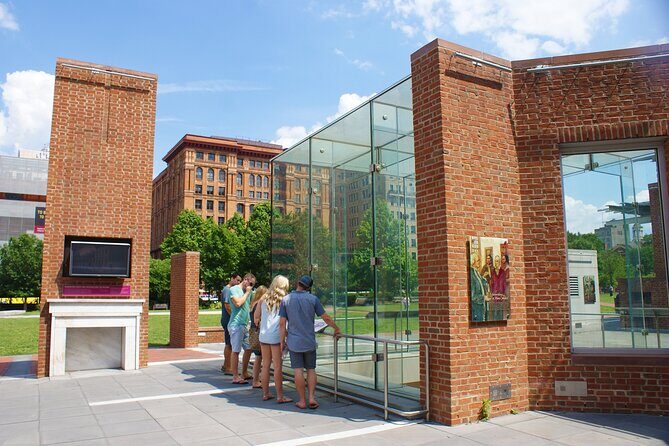
Philadelphia can feel like history everywhere, which is great, but it also means you can burn time walking without a plan. This tour is built like a timeline on foot: you start in Old City and move through the Revolutionary-era core in about 2 hours 30 minutes. The pacing is meant to be doable even if you’re not in “stand-and-read” mode all day.
At $45 per person, the value comes from two places. First, you’re paying for a guide who can connect the buildings to the events, not just point at them. Second, the ticket includes admission for the Museum of the American Revolution portion centered on Washington’s War Tent, plus you receive a discounted ticket for the rest of the museum after the tour. That combo is hard to beat if you want both street-level context and an indoor “show” moment.
One practical bonus: you get a mobile ticket, and the tour runs in English. It’s also conveniently placed for public transit, and service animals are allowed. For solo travelers or couples, the small group size makes it easier to ask direct questions without feeling like you’re competing with the crowd.
Other Founding Fathers and Revolutionary history tours we've reviewed in Philadelphia


Signer’s Garden to Independence National Historical Park: where the story locks in
The tour starts at the Signer’s Garden at the statue of The Signer (434-498 Chestnut St). This is a clever opening because it sets the theme: the ideas behind the Declaration of Independence and the Constitution, not just the buildings. You’ll get a quick orientation about the signers and the spirit of freedom they’re tied to today.
From there, you move into Independence National Historical Park, where the tour focuses on the big names: Independence Hall, Congress Hall, and Old City Hall. You don’t just “see” these places—you get the guide’s explanation of why they mattered and how they connect to modern-day Philadelphia, the United States, and broader democratic ideals.
Even if the park feels crowded at certain times, your route is built to keep you moving. This matters because Old City history gets better when you’re not stuck at one stop for too long. Expect about 20 minutes here, enough to build a solid base before you circle the most iconic building on the map.
Independence Hall and the Congress-era buildings: seeing power from the street
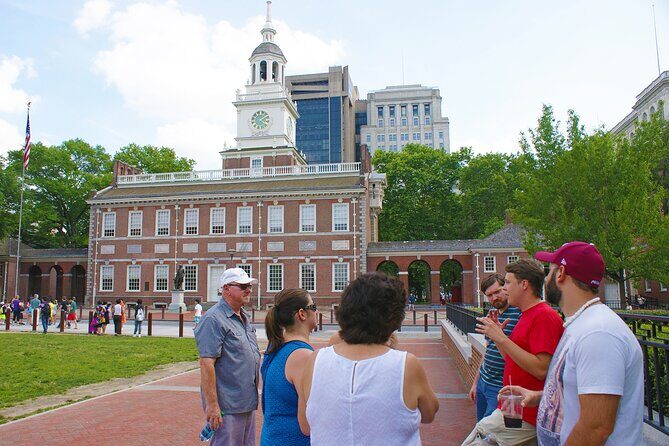
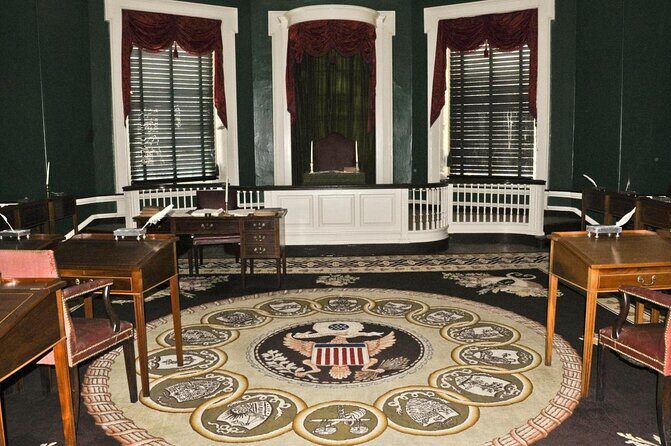
Next comes the part you’ve probably seen on a U.S. bill: Independence Hall. On this tour, you’ll see it from the outside as the group encircles the building and the guide talks through the philosophies, trials, and triumphs of the Founding Fathers who worked there. That outside-view format can actually be a plus. You get the “wow” factor plus the narrative, without spending your time in lines or rushing through interiors.
A few steps later, you’ll also pass by or view the connected governmental landmarks, including:
- Congress Hall, once home for the United States Congress, right alongside Independence Hall’s complex
- Old City Hall, tied to building and testing democratic ideas
These are quick stops, about 10 minutes each, but they work because the guide connects them to a bigger theme: how early American governance was formed in real spaces, with real stakes. If you’re the kind of person who wants to understand what you’re looking at before taking photos, you’ll appreciate this structure.
One scheduling reality to keep in mind: the tour’s plan emphasizes viewing and storytelling, so if you strongly want to go inside multiple historic interiors, you’ll likely want to pair this with separate ticketed time elsewhere.
Liberty Bell area myths, Carpenters’ Hall, and why the walk sets up the museum stop
If Liberty Bell is on your Philadelphia checklist, this tour gives you something more useful than a quick photo. You’ll learn about the history of the Liberty Bell and get help dispelling myths about it. People arrive with guesses, legends, and “I heard it was…” stories. This is your chance to sort the real story from the popular version.
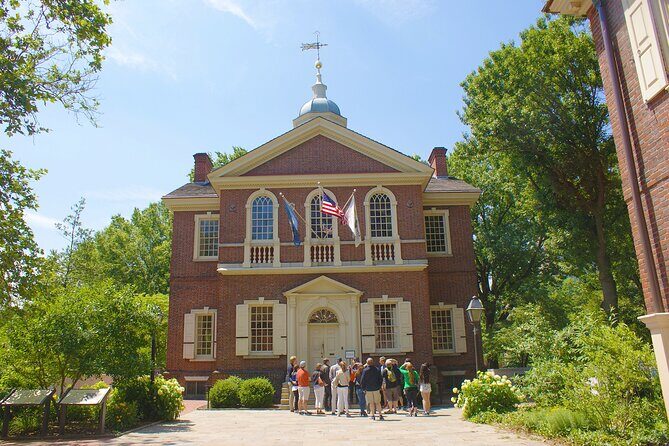
Then you head to Carpenters’ Hall, which is a smart bridge point between politics and organizing. You’ll admire it from the outside and hear why it matters: it’s tied to the Commonwealth of Pennsylvania and also the early Continental Congress story. The guide’s job here is to make the building feel like a verb, not a noun, meaning a place where decisions and alliances were made—not just a preserved structure.
At this stage, about halfway through the walk, the itinerary naturally builds momentum toward the museum. You’re not stopping because you’re tired. You’re stopping because the story now needs an artifact and an indoor setting.
Museum of the American Revolution: Washington’s War Tent presentation and what to do next
The tour’s most “wow” transition is walking into the Museum of the American Revolution for a focused segment about Washington’s War Tent. Expect about 20 minutes inside for the presentation. This is the heart of the experience, especially if you love Revolutionary War details that go beyond general slogans.
The museum stop is also practical: the presentation is designed to orient you quickly, then you’re set loose afterward with a discounted entry ticket for the rest of the museum at the time of your choice. That’s a great value move because you’re not forced to stay for every gallery right then. If you’re sharp-eyed and want to linger, you can. If you’re museum-casual and want a single highlight, you still get it.
One tip: if you have your heart set on particular exhibits, use your post-tour museum time strategically. Start with what interests you most, because that discount ticket effectively turns the tour into a two-part plan—street history now, deeper museum time later.
Also note that timing matters here. If you’re traveling with kids, this museum presentation tends to keep attention because it’s structured, not open-ended.
Other historical tours in Philadelphia






Elfreth’s Alley, Betsy Ross House passing views, Franklin’s grave, and the President’s House dig
After the museum, you shift from Revolutionary politics into daily-life texture—old streets and the places leaders lived.
First, you visit Elfreth’s Alley, described as the oldest continuously occupied residential street in the United States. You’ll see its narrow homes and early architecture dating to the early 1700s. This stop is short (about 10 minutes), but it helps your brain picture what was happening around the official buildings. You can’t fully understand the founding era without remembering it was also neighbors, work, food, and survival.
You’ll then pass Betsy Ross House. You don’t get a long stop here, but you will hear context around the common flag-maker story and how the myths get handled. That myth-correction style keeps the tour from becoming a collection of clichés.
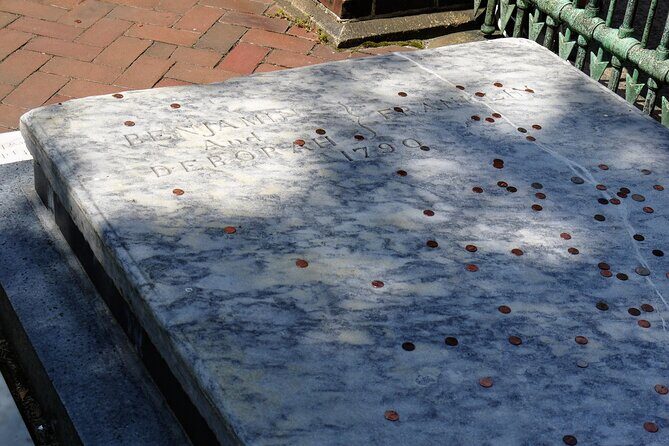
Next comes a walk past Benjamin Franklin’s Grave along Arch Street. Again, it’s brief, but it’s a nice pivot toward invention, ideas, and the broader Enlightenment mind that fed the Revolution.
Finally, the route reaches the President’s House area—where George Washington and John Adams lived as presidents. This stop includes a detail that’s easy to miss on your own: the site also involved enslaved people, and it remains an active archaeological site even in downtown. It’s a sobering reminder that the founding story includes moral contradictions, and the guide’s framing helps you hold both the achievement and the cost in your head.
Pace, group size, and how guides like Tom, Caroline Hodash, or John shape the experience
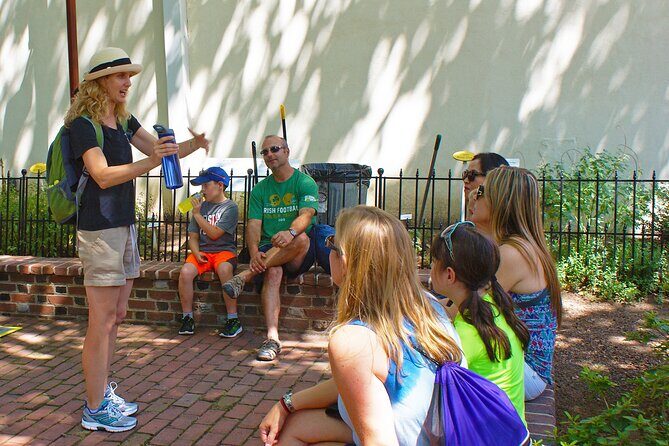
This is where a small-group tour becomes more than a convenience. With a maximum of 12 travelers, you can actually ask questions and get answers that aren’t rushed. That shows up most at the stops where you’re learning interpretation, like Liberty Bell myths or the meaning of the Founders’ choices at Independence Hall.
The guide quality is often the difference between a “see the sites” walk and a “understand the story” walk. In the guides I’ve encountered on tours like this, people such as Caroline Hodash are praised for clear, entertaining explanations, while John is noted for keeping the group engaged and answering questions fully. Other guides (like Tom or PJ) are remembered for being energetic and for connecting the sites together with a clean thread.
If you’re visiting during times when some buildings or areas might be closed, the guide’s role becomes even more important. You’ll still get learning through what you can access and what you can see from the outside, plus recommendations for where to go next when you’re done.
What $45 buys you in real-world value
The price isn’t just for walking. It includes:
- A local expert guide
- A structured route through Old City and Revolutionary landmarks
- The Washington’s War Tent presentation portion at the Museum of the American Revolution
- A discounted museum ticket for the remainder of the museum after the tour
- A donation to a local nonprofit historic organization
When you compare that to piecing together a self-guided walking plan plus paying for a museum highlight, the math often works in your favor, especially if you’re short on time. If you’re in Philadelphia for only a day or two, this tour is a fast way to gather the “why” behind the “where.”
One more value angle: the tour helps you prioritize. After you finish, you’re in a better position to decide what you want to see again longer—Independence Hall area, the Liberty Bell area, or the museum galleries with your new context.
Who this tour is best for (and who might want alternatives)
This tour fits best if you:
- Want a first-timer orientation to Philadelphia’s Revolutionary-era core
- Like walking tours with a clear storyline, not random stops
- Plan to visit the Museum of the American Revolution anyway, and want a guided entry point
- Prefer small-group attention and more conversation time
It may be less ideal if you:
- Need lots of ticketed interior time beyond what’s included
- Want to spend long hours inside multiple big buildings with minimal walking
- Have very limited mobility and need a slower, less stop-and-go plan (the tour is marked as most travelers can participate, but it is still a walking route)
For families, couples, and solo travelers, it’s a strong pick because the route is structured and the story points are frequent. For history buffs, you’ll likely enjoy the myth corrections and the “what happened here” connections.
Should you book the Washington War Tent Philadelphia history tour?
If you want an efficient, guided way to connect Independence Hall, Liberty Bell area context, Elfreth’s Alley, and the Museum of the American Revolution into one coherent plan, this is an easy yes. The Washington’s War Tent presentation is the kind of included highlight that makes the ticket feel worth it, and the discounted museum entry afterward gives you room to go deeper without locking you into a single rigid schedule.
Before booking, just sanity-check your expectations about entrances: you’ll see many top landmarks from the outside, and availability can vary with the day. If you’re okay with that and you’d rather understand the story than chase every interior room, you’re going to be very happy you booked this.
FAQ
How long is the Philadelphia history tour?
The tour runs about 2 hours 30 minutes.
How much does it cost per person?
It costs $45.00 per person.
What’s included during the tour at the Museum of the American Revolution?
You’ll enter for a presentation featuring George Washington’s War Tent, and you’ll also receive a discounted ticket to use for the rest of the museum after the tour.
Which major Revolutionary landmarks are covered?
The route includes Independence National Historical Park and stops/viewpoints around Independence Hall, Congress Hall, Old City Hall, the Liberty Bell Center area, Carpenters’ Hall, Elfreth’s Alley, plus passing views like Betsy Ross House, Benjamin Franklin’s grave, and the President’s House.
How large is the group?
This tour has a maximum of 12 travelers.
Where do I meet the guide and where does it end?
You meet at Signer’s Garden, 434-498 Chestnut St, Philadelphia, PA 19106, and the tour ends in Old City, Philadelphia.
Is food included?
No. Additional food and drink are not included.
Is there free cancellation?
Yes. You can cancel for a full refund up to 24 hours in advance.