REVIEW · PHILADELPHIA
Revolution and the Founders: History Tour of Philadelphia
Book on Viator →Operated by Grim Philly Twilight Tours · Bookable on Viator
A two-hour walk makes 1776 feel close. This Philadelphia tour strings together the Liberty Bell, Independence Hall, and the key founder hangouts with a history-degree guide, so you get the big picture without spending the whole day in lines. I especially like the way the route is built for first-timers and the guide style—storytelling that turns names like George Washington, John Adams, and Benjamin Franklin into people you can picture. The one thing to plan for: it’s mostly outdoors, and depending on the day (cold, wind, or crowds), you may spend more time standing than you want.
Two more things I like: the tour is fast and focused (so you keep the rest of your day free), and it’s structured around the year 1776 and the founders’ influence, not just random monuments. The main drawback to consider is building access. You’ll see major sites from the outside, and while there are short interior moments, you’ll still rely on free timed entry passes for Independence Hall and you may find some interiors limited by closures and crowd flow.
In This Review
- Key things to know before you go
- A Two-Hour Sprint Through Philadelphia’s Founding Era
- Price and value: what $29 really buys in Old City
- Meeting at 523 Market St and how the tour actually flows
- Liberty Bell: the cracked icon, the biblical message, and the line reality
- Independence Hall and the timed entry pass situation
- From Washington’s President House to Congress Hall (1790–1800)
- Franklin Court and the founder sites that connect science, politics, and everyday life
- A “First Pentagon” stop that reframes American military strategy
- Hamilton to Jackson: the banks walk you through power and money
- Beyond the biggest names: Philosophical Society, Library Company, Dolley Madison, and more
- Pacing, comfort, and what to do with your leftover time
- Who this tour is for (and who should pick something else)
- Should you book Revolution and the Founders in Philadelphia?
- FAQ
- How long is the Revolution and the Founders history tour?
- Where does the tour start and end?
- What’s included, and do I need tickets for Independence Hall?
- Is the Liberty Bell pavilion interior included?
- Does the tour run in bad weather?
- Is the tour limited in group size?
- Is the tour family-friendly and can kids join?
Key things to know before you go
- History-degree guides: each guide has a history background, with many serving as history teachers or professors.
- Short group pace: up to 24 people, so you can hear the stories and keep moving.
- A “best of Philly” Old City sweep: Liberty Bell and Independence Hall anchor the walk, with founder sites woven in.
- Free Independence Hall and optional Liberty Bell interior time: you’ll get clear instructions, but some entry needs extra time on your own.
- No hotel pickup: you’ll meet at 523 Market St and end near 3rd St—walkable, transit-friendly, and simple.
- Weather matters: it runs rain or shine, yet it can be rescheduled if conditions are poor.
A Two-Hour Sprint Through Philadelphia’s Founding Era
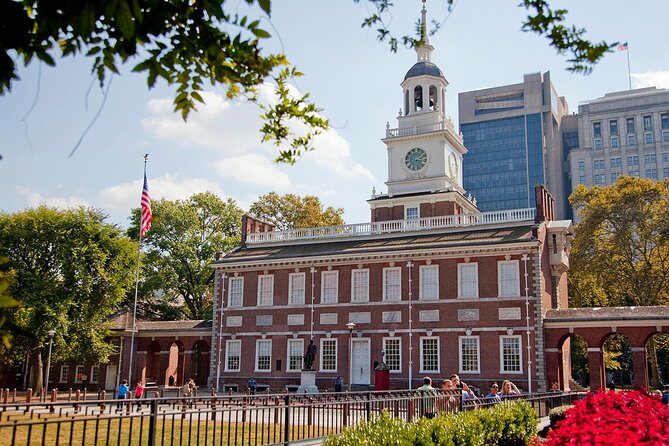
This tour is built for a common Philly problem: you arrive excited, see a lot of “must-sees,” then realize the story pieces don’t connect. The Revolution and the Founders route fixes that by focusing on the turning points around independence—then topping it off with founder-linked sites in the same walking stretch.
At $29 per person for about two hours, you’re not paying for museum ticket prices and you’re not paying for a private guide either. You’re paying for organization: a guide who sets the timeline, tells you what matters, and points you toward what to do next once you’re free to explore on your own.
Other Founding Fathers and Revolutionary history tours we've reviewed in Philadelphia

Price and value: what $29 really buys in Old City
Here’s the deal: major sites like Independence Hall and the Liberty Bell area can eat up time when you’re doing them solo. This tour gives you a ready-made order to see the highlights efficiently, with a guide who helps you understand what you’re looking at right there on the street.
Two value boosters:
- You keep the day open. At roughly two hours, you avoid the “one tour swallowed my entire schedule” feeling.
- You don’t pay for what you can get free. Independence Hall timed entry passes are free, and Liberty Bell interior time is described as optional extra time at no cost (the interior of the pavilion is noted as free).
If you hate waiting in lines and you want context fast, this is a good trade: spend money on the walking story, then use free entry passes and your own pace for the deeper stops.
Meeting at 523 Market St and how the tour actually flows
You meet at Grim Philly Twilight Tours, 523 Market St, then end at the Merchant Exchange Building, 143 S 3rd St—right near City Tavern and the area tied to where the Continental Congress met on Saturdays. That end point matters because it drops you back into the historic heart of Old City, where it’s easy to continue walking, grab food, or head to another site without retracing your steps.
The tour runs in the morning and the afternoon, and it’s in English with a mobile ticket. It’s set up for good weather, even though it runs rain or shine. If you’re visiting in winter, bring layers and be ready for long stretches where the group is paused for instructions and photos.
Liberty Bell: the cracked icon, the biblical message, and the line reality
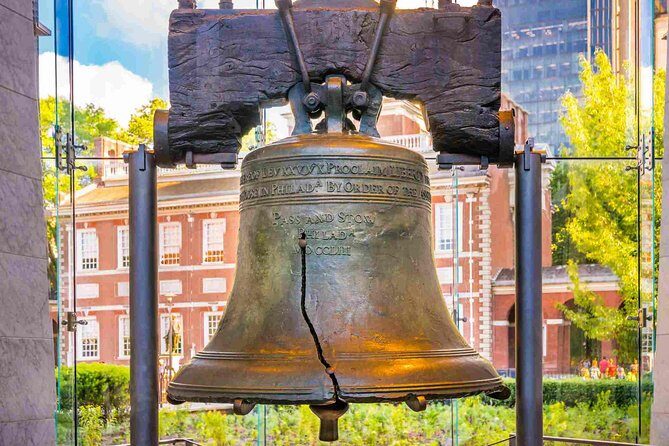
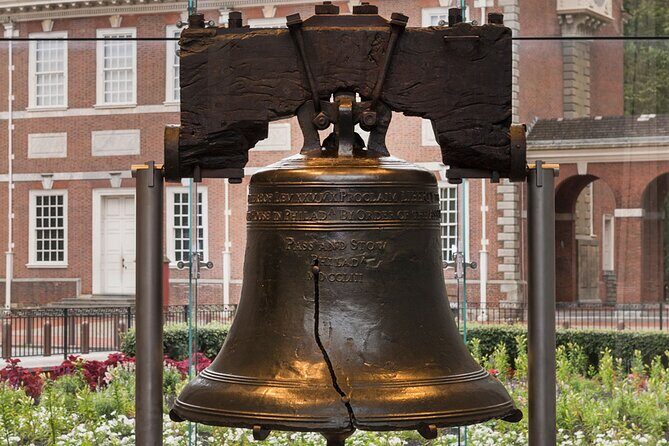
Liberty Bell is where the tour earns its name. You get brought to the Liberty Bell pavilion area and learn what the bell represents—then you get practical guidance on what to do if you choose to add time for the interior.
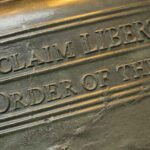
A key detail you’ll hear: commissioned in 1752, the bell cracked during its first testing ring, and it was recast about two years later by local workmen John Pass and John Stow. The famous lettering ties to a biblical jubilee theme—liberty language that connects to freedom and debt forgiveness. It’s a reminder that the bell wasn’t born as a symbol of independence; it became one through the Revolutionary era’s meaning-making.
Practical note: Liberty Bell is a magnet for crowds. The tour describes that peak season can mean long lines, so the guide’s job is to give you the essentials first, then explain how to handle the optional interior time without derailing the whole group schedule.
Independence Hall and the timed entry pass situation
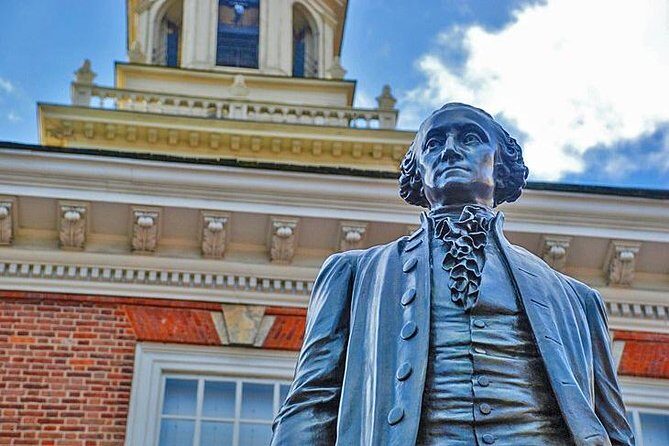
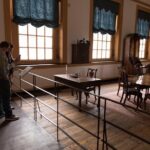
Independence Hall is the anchor of American democracy—two documents debated and adopted there. You’ll walk to the Independence Hall complex and get a quick, high-impact orientation to what you’re seeing.
Here’s the real-world logistics that affect your experience:
- Timed entry passes are required and free.
- Inside exploration is recommended for about two extra hours if you want the full experience of the complex’s interior chambers.
- The tour keeps you moving, with a quick interior pit-stop noted for the East Wing, described as the oldest part that served as Supreme Court Chambers while Philadelphia was the capital.
What this means for you: if you want the “big wow” moments inside, you may need to plan additional time after the tour. If your goal is to grasp the storyline and see the essential areas efficiently, the guided sweep does that well.
Other historical tours in Philadelphia






From Washington’s President House to Congress Hall (1790–1800)

The tour doesn’t treat the founding era like a museum display. It threads it through places where the new government actually functioned.
You’ll visit the site of America’s first “White House”—the President’s House where George Washington and John Adams both served while Philadelphia was the national capital from 1790 to 1800. You’ll also hear that Benedict Arnold lived in the structure as military governor after the British evacuation of the city following the war.
Then you move to Congress Hall, tied to the early government era too. It hosted presidential inaugurations for Washington and Adams and was home to U.S. Congress during the capital years. Seeing these sites in sequence helps you understand a simple point: independence wasn’t just speeches and battles; it quickly became institutions and governance.
Franklin Court and the founder sites that connect science, politics, and everyday life
If you only think of Benjamin Franklin as a signer, this part of the tour will recalibrate that. You’ll visit Franklin Court in Independence National Historical Park and hear how Franklin’s life linked the constitutional era with his earlier work and Revolutionary perspective—especially the famous idea about hanging together so the cause doesn’t break apart.
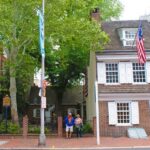
A standout stop is the Benjamin Franklin Post Office & Museum, described as the only Colonial-themed post office operated by the U.S. Postal Service. It’s presented as a “living portrayal” of colonial postal life, and there’s a quirky detail with historical punch: the postmark still uses B. Free Franklin, and the post office doesn’t fly the American flag because it didn’t exist in 1775 when Franklin was appointed postmaster general.
You’ll also visit Carpenters’ Hall, tied to the First Continental Congress in 1774 and secret meetings in December 1775 connected to French support negotiations. The tour stresses the practical outcome: without French help, the colonists would likely have struggled to win. That’s not just trivia—it’s a reminder that diplomacy and alliances mattered as much as battles.
A “First Pentagon” stop that reframes American military strategy

One of the more surprising stops is the location of America’s first Pentagon, where American military strategy and intelligence were formulated during the American Revolution.
Even if you’ve heard bits about Revolutionary war planning, this kind of location-based story helps you see strategy as work that happened locally, in specific buildings and planning spaces—not as vague “war magic.” It’s one of those stops that can be easy to skip if you’re doing Philly on your own, and easier to appreciate when a guide connects it back to the larger independence narrative.
Hamilton to Jackson: the banks walk you through power and money
The tour includes two banking sites that help explain how the new country tried to stabilize itself.
You’ll visit the First Bank of the United States, founded in 1797 and championed by Alexander Hamilton, with architectural significance called out during the stop. Then you’ll move to the Second Bank of the United States, chartered in 1816 and linked to James Madison, later losing its charter under Andrew Jackson in 1834.
You’ll also hear how Hamilton and Jackson get tied together—plus references to famous duels. It’s a useful addition because it shows how the founders’ ideas didn’t end in 1783. They evolved into arguments about finance, power, and who gets to run the system.
Beyond the biggest names: Philosophical Society, Library Company, Dolley Madison, and more
Not every part of the tour is a headline landmark, and that’s a plus. You’ll walk by:
- The American Philosophical Society, founded by Franklin in 1743 and tied closely to the University of Pennsylvania. The tour mentions early members like George Washington, John Adams, Thomas Jefferson, Thomas Paine, and others, plus a note about an adjacent surgical center.
- The Library Company, founded by Franklin in 1731, described as the first institution in the world to lend materials to the public.
- The home of future First Lady Dolley Madison (the Dolley Todd House), where she lived with her first husband John Todd from 1791 to 1793—a glimpse into middle-class life in 18th-century Philadelphia.
- The tour also frames these stops so they don’t feel random; they support the theme that revolution required both political ideas and everyday institutions.
If you like your history grounded in daily life—schools, libraries, science societies, and community spaces—this section can be as satisfying as the headline stops.
Pacing, comfort, and what to do with your leftover time
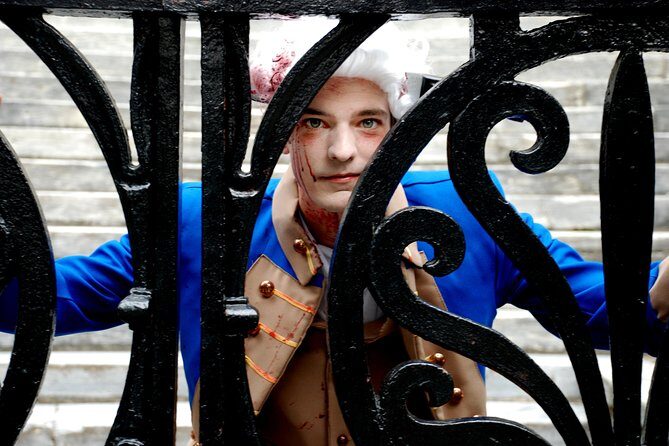
The guiding style seems to be a big part of why people love this tour. Guides such as Josh, Kyle, Ted, Joseph, and Vince are repeatedly described as energetic, funny, and interactive—sometimes with acting-style storytelling. That matters because a two-hour walking tour only works if you stay engaged between photo stops.
Still, plan for bodies and weather:
- It’s a walking tour with frequent stops, so you’ll want comfortable shoes.
- On cold days, some people report the experience can feel more about waiting than learning, especially if the group spends time standing still.
- Independence Hall and other interiors are not guaranteed as full “go inside and linger” time. The tour keeps momentum, and interiors depend on crowd flow and closures.
The payoff is what you get afterward. When you finish back around 3rd St, you’re in a perfect spot to choose your next move: another museum, a longer stop inside the Independence Hall complex if you want it, or just wandering Old City at your own pace.
Who this tour is for (and who should pick something else)
This works especially well if:
- You’re visiting Philly for the first time and want a strong sense of the story fast.
- You like a guided timeline that connects sites to the events around 1776.
- You want a history-focused walking tour with short bursts of optional deeper entry time.
You might choose a different option if:
- You want long indoor time at major buildings as the main goal of your visit.
- You’re traveling in weather you find hard to tolerate for long outdoor stretches.
Should you book Revolution and the Founders in Philadelphia?
Yes—if you want a clean, efficient way to understand how independence formed, where it happened, and who the founders really were beyond names on plaques. For $29 and about two hours, you’re getting a guided route designed to help you connect Liberty Bell, Independence Hall, and the surrounding founder sites into one storyline—then you keep your day free to go deeper where you want.
My practical advice: book it early in your trip. Do this tour first, then use what you learn to decide which interiors and museums you want to spend extra time on.
FAQ
How long is the Revolution and the Founders history tour?
The tour runs for about 2 hours.
Where does the tour start and end?
It starts at Grim Philly Twilight Tours, 523 Market St, Philadelphia and ends at the Merchant Exchange Building, 143 S 3rd St, Philadelphia.
What’s included, and do I need tickets for Independence Hall?
The tour includes guided sightseeing of major historic sites. Independence Hall requires free timed entry passes, and the tour provides direction for getting the most out of the complex, though the tour keeps moving.
Is the Liberty Bell pavilion interior included?
The tour describes the Liberty Bell essentials from the exterior of the pavilion. Interior time is presented as optional additional time.
Does the tour run in bad weather?
It runs rain or shine. If weather is poor, it may be canceled and you’ll be offered a different date or a full refund.
Is the tour limited in group size?
Yes. The tour has a maximum of 24 travelers.
Is the tour family-friendly and can kids join?
Children must be accompanied by an adult. The tour notes that most travelers can participate, and service animals are allowed.