REVIEW · PHILADELPHIA
Driving Tour of Valley Forge National Park from Philadelphia
Book on Viator →Operated by WeVenture · Bookable on Viator
Half a day can change how you see Washington. This Philadelphia to Valley Forge driving tour packs the big moments of the winter encampment—then ties them together with a guide’s storytelling so it feels more like a narrative than a checklist. You’ll ride round-trip from Center City and hit the most important landmarks without wasting your day on parking or navigation.
I especially like the small group setup (capped to keep it personal, with a maximum listed as 6 travelers) and the way the guides stay engaged. In the best runs, guides like Tom, Adam, James, Dale, Laura, Marty, and Rick mix straight facts with humor, handle questions with enthusiasm, and even pause to double-check details when needed.
One consideration: each stop is brief (often around 10–20 minutes), so if you want to linger like a museum marathoner, you’ll feel a little time pressure.
In This Review
- Quick hits before you go
- From 1200 Arch Street to Valley Forge: Getting There Without the Headache
- Price and Value: Why $149 Feels Like More Than a Ticket
- Small-Group Tours That Don’t Waste Your Questions
- Valley Forge in Motion: Your Stop-by-Stop Route
- Visitor Center: Set the Stage Before You Walk Anywhere
- Muhlenberg Brigade Huts: Seeing Winter Quarters Up Close
- National Memorial Arch: A Monument With a Purpose
- George Washington’s Headquarters at 1400 N Outer Line Dr
- Statue of Friedrich von Steuben: Training With a Turning Point
- Artillery Park: The Gear Behind the Fighting
- An Active Chapel Memorial for Washington
- Schuylkill River: Where Travel and Communication Flowed
- What Makes the Best Guides Special Here
- Timing, Walking, and What to Bring (So You Enjoy It)
- Who This Tour Suits Best
- Should You Book This Valley Forge Driving Tour?
- FAQ
- How long is the tour?
- Where does the tour start?
- What time does the tour begin?
- Do I get transportation from Philadelphia?
- Is there an English-speaking guide?
- What’s included in the price?
- Is the tour suitable for most travelers?
- Are service animals allowed?
- What should I bring?
- Can I cancel for a full refund?
Quick hits before you go
- Easy round-trip from Center City so you can focus on the park, not the drive.
- Small-group feel designed for questions and real conversation.
- A stop plan built for momentum, moving from big monuments to specific quarters and training sites.
- Washington’s leadership shown through places, not just dates on a plaque.
- Great guide energy stands out in the reviews—punctual pickup, humor, and patient answers.
- Bring water and plan for quick bathroom breaks when you need them.
From 1200 Arch Street to Valley Forge: Getting There Without the Headache
This is one of those day trips that works because you don’t have to do the hard parts. The tour meets at 1200 Arch St in Philadelphia (start time 9:00am) and returns you to the same place. That matters in a city like Philly where getting from point A to point B can eat time fast—especially if you’re traveling with kids, or you just don’t want to think about parking.
Expect about 4 hours 30 minutes total. That includes the ride out and back, plus the park stops. The driving portion is also where the guide sets context, so when you arrive, you’re not just looking at objects—you’re placing them into the winter story of 1777–78.
If you’re the type who likes to start early and still be back for dinner plans, this fits well. You’re not committing a whole day, but you’re also not stuck on a super-short drive-by where nothing sinks in.
Other Valley Forge and area day trips we've reviewed in Philadelphia


Price and Value: Why $149 Feels Like More Than a Ticket
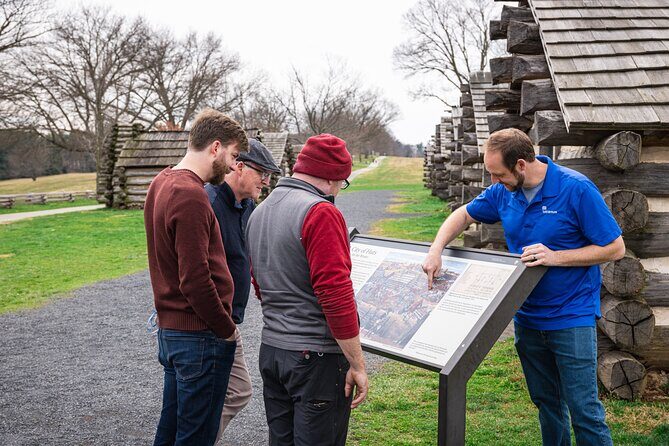
At $149 per person, the big value is what’s folded into the price. You get transportation to and from Philly, an English-speaking guide, and a donation to Valley Forge National Park. That donation part is small on paper, but it’s the difference between visiting and supporting.
You also get admission ticket coverage at the stops listed as free, including the visitor center time block. In other words, you’re not paying extra at each location for the privilege of learning what you came to see.
The half-day timing is another value lever. Instead of spending a full day trying to string together monuments and stops on your own, you get a guided route that hits the core sites. The trade-off is time at each stop (more on that later), but for most people, the efficiency is exactly the point.
And yes, there are group discounts mentioned for this experience, plus mobile ticket convenience. If you’re traveling with someone and you want less friction, those details add up.
Small-Group Tours That Don’t Waste Your Questions
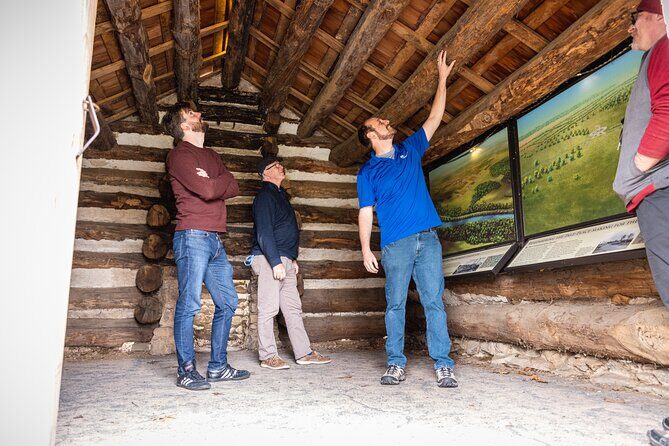
This is built for personal attention. The tour is described as a small group (capped to keep it personal), and the maximum listed is 6 travelers—either way, you should be able to ask questions without feeling like you’re shouting into a crowd.
One thing that comes through strongly in the reviews: guides who are quick with answers, and also honest when they need to confirm something. In a top-rated example, a guide didn’t guess and instead asked a park ranger. That’s the kind of trust-builder you want on a history tour.
You’ll also see a pattern: punctual pickup and an upbeat guide style. Multiple reviews point to guides staying on time, driving safely, and making the ride part of the experience instead of dead time.
There’s also flexibility. When the visitor center situation changed (like a closure), the guide added an interesting stop along the way. So the tour isn’t just stuck in a rigid script.
Valley Forge in Motion: Your Stop-by-Stop Route
This route is designed like a timeline. You start with orientation, then you move into specific quarters, monuments, headquarters, and training themes—so the place starts to make sense as you go.
Visitor Center: Set the Stage Before You Walk Anywhere
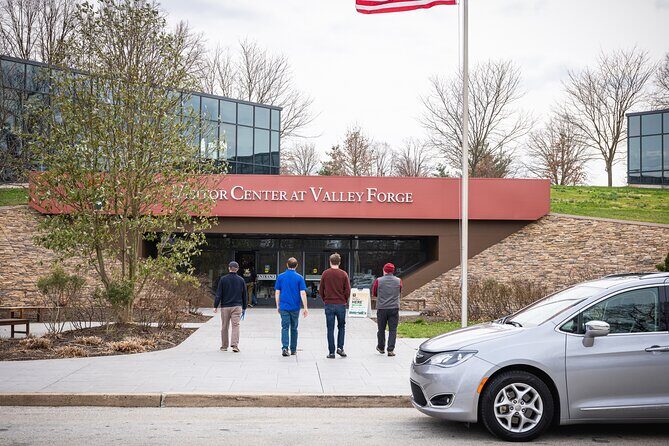
Your first stop is the Visitor Center at Valley Forge, with a revitalized setup for getting oriented. You’ll have time for a self-guided exhibit and a documentary that explains what happened on those grounds in the winter of 1777–78.
This is a smart first stop because it gives you the emotional and historical frame before you start walking among reconstructions. Even if you think you know Valley Forge already, this kind of overview helps you notice what the later landmarks are emphasizing—perseverance, harsh obstacles, and Washington’s leadership.
You’ll have about 15 minutes here, with admission listed as free.
Other driving tours of Philadelphia we've reviewed in Philadelphia




Muhlenberg Brigade Huts: Seeing Winter Quarters Up Close
Next comes the Muhlenberg Brigade winter huts. These are important because they were winter quarters for General Peter Muhlenberg’s brigade in 1777–1778.
What you’ll appreciate isn’t only the name—it’s the idea of survival infrastructure. The huts were built by soldiers under harsh conditions, and today you can explore reconstructed huts to understand what daily shelter meant in that winter.
Plan on around 20 minutes. That’s enough time to walk through the space, notice how it’s laid out, and connect it to the documentary context from the visitor center.
National Memorial Arch: A Monument With a Purpose
The National Memorial Arch is short and powerful. This memorial is there to commemorate the sacrifices of Washington and his soldiers while encamped at Valley Forge.
A stop like this works best on a guided tour because the guide can help you translate what you’re seeing. Without context, an arch can feel like scenery. With context, it becomes a checkpoint in the story—especially right after you’ve seen the reality of quarters and hardship.
You’ll have about 15 minutes.
George Washington’s Headquarters at 1400 N Outer Line Dr
Then you get a place that feels more personal and grounded: 1400 N Outer Line Dr, described as the headquarters of George Washington for much of the encampment.
Here, the time pressure matters. You’ll have about 20 minutes to walk around the restored building and, if the interior is open that day, view the gorgeous interior across three floors.
This is where the tour gives you a concrete sense of command and planning—without turning it into a lecture. If you’re the sort of traveler who loves seeing how space was used, this stop will likely be a highlight.
Statue of Friedrich von Steuben: Training With a Turning Point
The statue dedicated to General Friedrich von Steuben is a fast stop with big impact. Von Steuben is described as someone Washington entrusted to reorganize and retrain the weary troops. According to the tour’s interpretation, he used the Grand Parade grounds to transform Continental soldiers into a more effective fighting force.
The statue stands on a bluff overlooking the fields of the old Parade grounds—an area historians associate with the American army being born.
You’ll have about 10 minutes. Even though it’s short, it’s a meaningful contrast point: you’ve seen shelter and sacrifice, and now you’re seeing training and transformation.
Artillery Park: The Gear Behind the Fighting
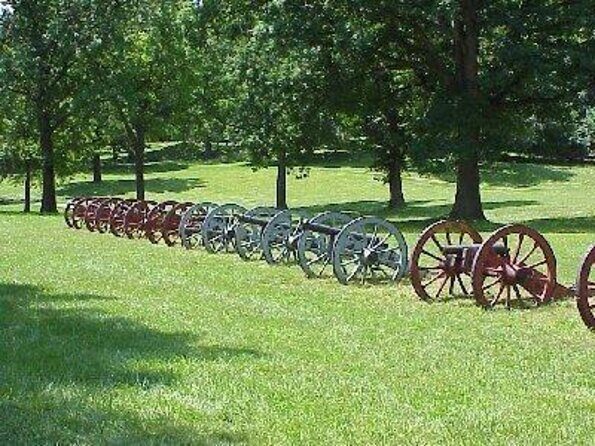
After the statue, you’ll move to the Artillery Park. This part of Valley Forge focuses on logistics and the practical work that makes fighting possible.
You’ll be able to explore reconstructed artillery pieces and exhibits that explain artillery’s role at Valley Forge, including training, maintenance, and deployment.
It’s a different lens than the Washington-centered stops. If you like the nuts-and-bolts side of military history, you’ll probably enjoy this more than you expect—because it turns “war” into systems, tools, and routines.
An Active Chapel Memorial for Washington
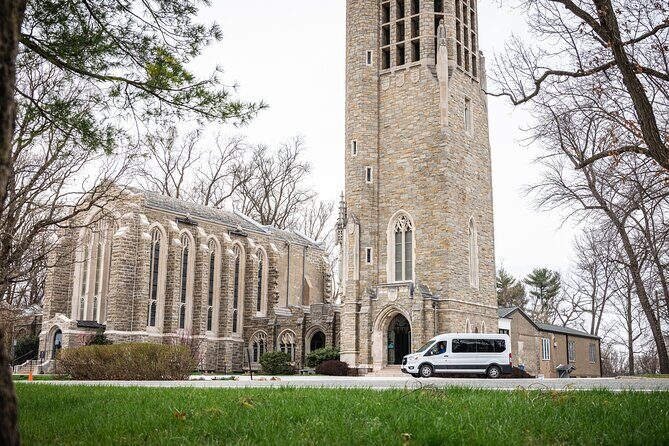
Another standout theme is the spiritual side: an active Gothic Revival-style chapel dedicated to General George Washington.
A chapel stop is only as good as the time you’re given, and on this tour you’ll get enough to pause and reflect. It also helps break up the more military-focused sequence so the day feels balanced.
Schuylkill River: Where Travel and Communication Flowed
You’ll also have time to appreciate the Schuylkill River, which flows through Valley Forge. The tour frames the river as a crucial waterway for transportation and communication for both the Continental Army and the British forces.
This is the kind of stop that works even if you’re not a history superfan. Waterways are easy to visualize, and once you connect the river to movement and communication, you start to see geography as strategy.
What Makes the Best Guides Special Here
This isn’t just about knowing names and dates. The top reviews keep repeating the same strengths:
- Humor and pacing: Guides like Tom, James, and Marty are described as funny, upbeat, and able to keep kids engaged without turning it into a show.
- Q&A confidence: You can ask questions and get thoughtful answers. And when they don’t know, they check—like the guide who asked a park ranger.
- Real storytelling: People repeatedly mention that the guides make the experience feel personal and relatable, not like a slideshow.
- Smart improvisation: When one key place wasn’t available, the guide added an extra stop on the way and kept the day interesting.
If you’ve ever had a tour where you feel talked at instead of guided, this is the opposite. You’re supposed to feel like you’re walking through history with someone who actually cares.
Timing, Walking, and What to Bring (So You Enjoy It)
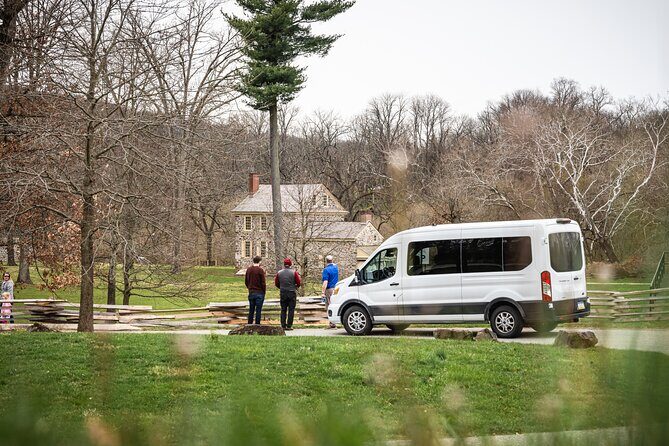
This is a short, moving day. Many stops are 10–20 minutes, so you’ll want to keep your energy up and avoid slow-dawdle pacing.
Do bring water. One review calls that out directly, and it’s good common sense on any outdoors + walking route.
Bathroom access is mentioned too. Reviews note there are a couple of bathroom stops at Valley Forge with clean bathrooms and soap and water. That’s helpful to know so you don’t stress mid-tour.
Footwear matters less than you might fear, but you’ll still be walking around historic areas and outdoors viewpoints. Comfortable shoes will make the day feel easy instead of annoying.
If the weather is cold (and winter visits can be brutal), dress in layers so you can handle the ride, then step outside for short walks.
Who This Tour Suits Best

This tour is a strong fit if you want:
- A half-day Revolutionary War experience without planning your own route.
- A guide to connect the dots between quarters, headquarters, memorials, and training themes.
- A small-group day trip with time for questions.
- Something that works for families and teens—reviews mention a 13-year-old grandson enjoying the practical, hands-on feel.
If you’re a serious history deep-dive person, you may want a longer visit on your own too. But for most travelers, this tour is an excellent starter dose that makes a self-guided visit later much more meaningful.
Should You Book This Valley Forge Driving Tour?
Yes, I’d book it if you want an efficient, well-paced way to see Valley Forge from Philly. The combination of round-trip transit, a small-group guide, and a route that moves through the most important landmarks makes it good value for a half day.
Skip it only if you know you’ll be frustrated by short stop times. If you want hours inside buildings and extensive browsing, you might prefer spending a full day on your own.
If you book, go in with one goal: ask questions. The strongest part of this experience is how the guide turns the sites into a story you can remember.
FAQ
How long is the tour?
It runs about 4 hours 30 minutes, including travel and park stops.
Where does the tour start?
The meeting point is 1200 Arch St, Philadelphia, PA 19107. It ends back at the same meeting point.
What time does the tour begin?
Start time is listed as 9:00am.
Do I get transportation from Philadelphia?
Yes. Transportation to and from Philadelphia (Center City) and Valley Forge is included.
Is there an English-speaking guide?
Yes, the guide is listed as English.
What’s included in the price?
Included: round-trip transportation, a local English-speaking guide, a donation to Valley Forge National Park, and scenic views. Admission at the listed free stops is included.
Is the tour suitable for most travelers?
The activity notes that most travelers can participate.
Are service animals allowed?
Yes, service animals are allowed.
What should I bring?
Bring water, and plan for short stops. Reviews also mention bathroom availability at Valley Forge.
Can I cancel for a full refund?
Yes. Free cancellation is available if you cancel at least 24 hours before the experience starts; otherwise, the amount paid is not refunded.