REVIEW · PHILADELPHIA
Alexander Hamilton Private Group Walking Tour in Philadelphia
Book on Viator →Operated by phillyPHAT · Bookable on Viator
Hamilton clues live on Philly sidewalks. This private Alexander Hamilton walking tour links major moments from the story you know to real, walkable places around Independence Hall and the Old City. It’s guided at a pace that lets you ask questions, not just shuffle past plaques.
I especially like two things about it. First, you get real-life locations tied to Washington, Adams, Hamilton, Franklin, and Madison, including spots that show up again and again in popular Hamilton storytelling. Second, the focus on Hamilton’s banking ideas makes the past feel practical, not just dramatic.
One consideration: it’s about 2 hours 30 minutes of walking, and it’s outdoors. If weather is cold or rainy, dress for that, because you’ll still be moving stop to stop.
In This Review
- Key things to know before you go
- Starting at Independence Visitor Center: a tour that feels personal
- President’s House and the early government that Hamilton had to work with
- Second Bank of the United States: where the money story gets real
- Franklin Court and constitutional debate in walking distance
- Carpenters’ Hall: where Congress met and banking took a turn
- Todd House and the Maria Reynolds to Dolly Madison connection
- Merchant Exchange Building and Hamilton’s family nearby
- First Bank of the United States: marble, style, and a new government building
- Christ Church Burial Area: the emotional finish at Robert Morris’s grave
- The guide matters: singing, humor, and why questions actually work
- Price and value: when $250 per group makes sense
- Timing, walking comfort, and how to dress for 2 hours 30 minutes
- Who should book this Hamilton private walking tour?
- Should you book this tour?
- FAQ
- How long is the Alexander Hamilton private group walking tour in Philadelphia?
- What does the tour cost?
- How many people can be in a private group?
- Where do we meet, and where does the tour end?
- Are any admissions required for the stops?
- What language is the tour offered in?
- What age and fitness level is required?
- Is there a cancellation option if plans change?
Key things to know before you go
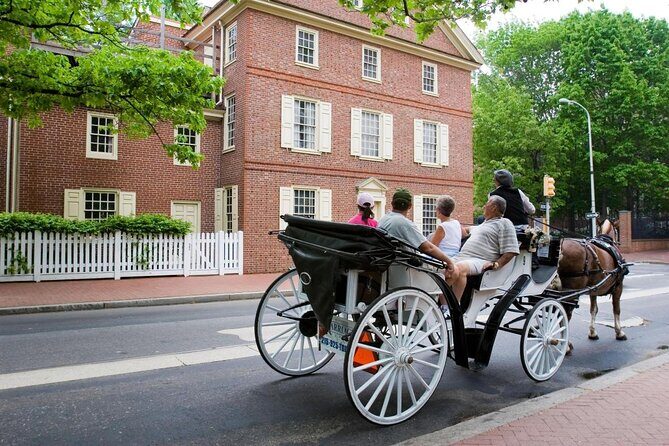
- Private-group format up to 10 people, so you won’t get lost in the back of a big crowd.
- Live guide named Reid, who mixes humor with story and even gets people singing along.
- Hamilton’s banking story is built through multiple stops: the Second Bank and the First Bank.
- Every stop is free to enter per the tour info, so you’re paying for guidance, not site fees.
- You end at Christ Church Burial Area, at the grave of Robert Morris, which lands the emotional bookend for the tour.
- Mobile ticket and easy transit access near public transportation.
Starting at Independence Visitor Center: a tour that feels personal
The tour kicks off at Independence Visitor Center, 599 Market St. It’s a smart starting point because it helps you get oriented quickly in an area where streets and signs can feel confusing. Since this is a private group experience for up to 10 people, you also avoid the usual chaos of waiting for everyone to catch up.
You’ll want to plan to arrive a few minutes early, not because you’re rushing, but because the guide needs a moment to set the tone and match the walking pace to your group. The tour runs about 2 hours 30 minutes, and that time goes by fast when the guide keeps stories connected rather than just reciting facts.
What I like most here is the promise of questions. This is not a lecture where you’re afraid to interrupt. You’re meant to pause, ask, and get direct answers. For families, it matters because pre-teens and teenagers learn better when they can speak up instead of watching silently.
Other Founding Fathers and Revolutionary history tours we've reviewed in Philadelphia



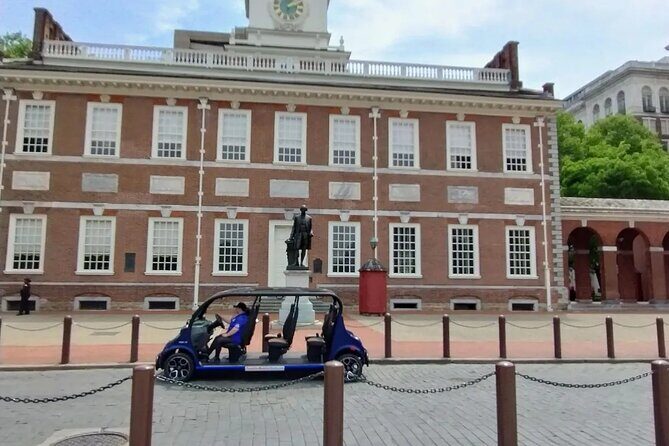
President’s House and the early government that Hamilton had to work with
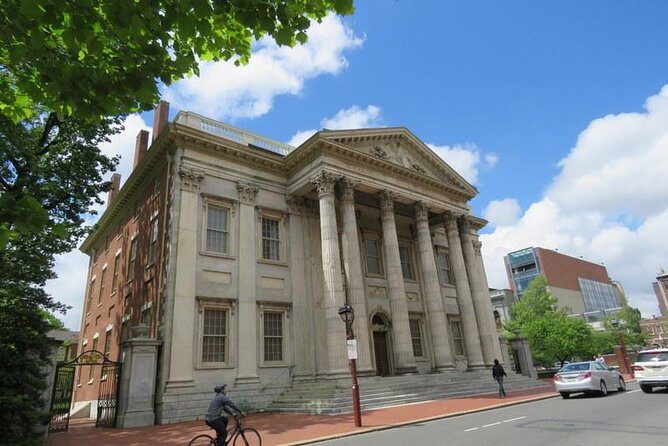
The walk’s first major landing is the President’s House, home of George Washington and John Adams as Presidents. That detail matters because Hamilton’s story doesn’t happen in a vacuum. You’re looking at a place tied to how early U.S. power actually operated, not just how it sounded on a stage.
Then you’re in the orbit of the 2nd Continental Congress and the Constitutional Convention. In a single neighborhood, you get the shift from revolutionary government to the constitutional system that Hamilton later tried to strengthen through practical financial rules.
This stop is only listed as about 10 minutes, so it’s not meant to turn into a long museum visit. Still, it’s a good primer. You’ll hear how new the system was and how messy early leadership could be. That context makes Hamilton’s banking reforms feel less like a random policy topic and more like a response to real problems.
The main drawback at this stage is simply pacing. If you want more time at each site for deep reading, a 2.5-hour walking tour is always a tradeoff. But for most people, the quick rhythm helps you keep moving and absorbing.
Second Bank of the United States: where the money story gets real
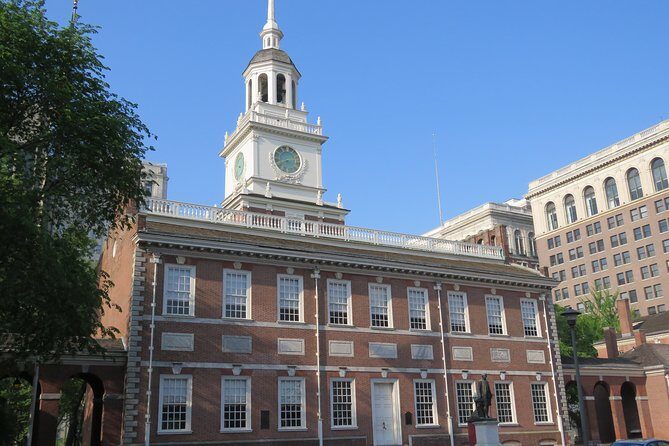
Next is the Second Bank of the United States. This is where the tour really leans into Hamilton’s impact. You’ll learn how he helped reform the banking system, and you’ll see why early America needed something stronger than whatever was rattling around at the time.
The stop is listed as about 5 minutes, which tells you this is a targeted moment. The goal isn’t to exhaust the topic. It’s to give you a clear takeaway you can carry to the next bank-related stops—so the story builds instead of repeating.
If you remember Hamilton mostly as a singer-songwriter founder from popular culture, this is the pivot point. You get reminded that Hamilton was also a system-thinker, trying to shape the financial structure of the country.
Practical tip: if you’re traveling with kids or anyone who gets restless, this is a great place to ask a question right away. A good guide can turn a policy topic into a quick, understandable storyline.
Franklin Court and constitutional debate in walking distance
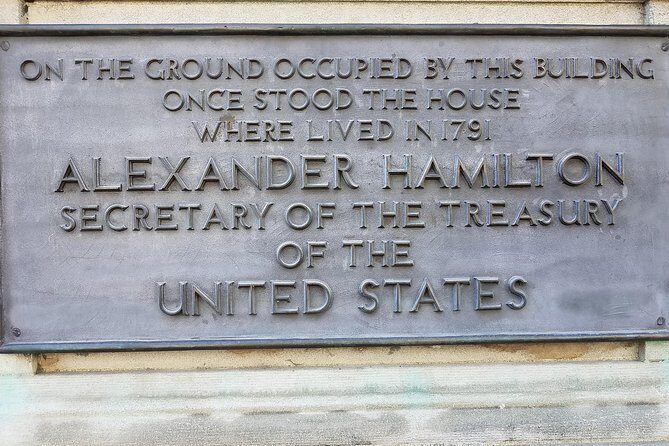
At Franklin Court, you’ll see the setting for discussions where Hamilton, Madison, and Franklin talked about the Constitution. This is one of those stops that feels like a turning point because it connects people to the ideas they argued over.
The time here is listed as about 5 minutes. Like the bank stop, it’s short on purpose. You’ll leave with a mental map: Hamilton wasn’t only writing or managing; he was part of the debate culture around founding-era decisions.
What I appreciate about stops like this is that they keep the tour grounded in relationships. The Constitution isn’t presented as a single document that appeared fully formed. You’re shown it as something negotiated among real figures—Hamilton alongside Franklin and Madison.
If you like learning through dialogue, this part of the walk should click. If you prefer purely visual stops with no talking, you might want to ask fewer questions and just listen for the core connections.
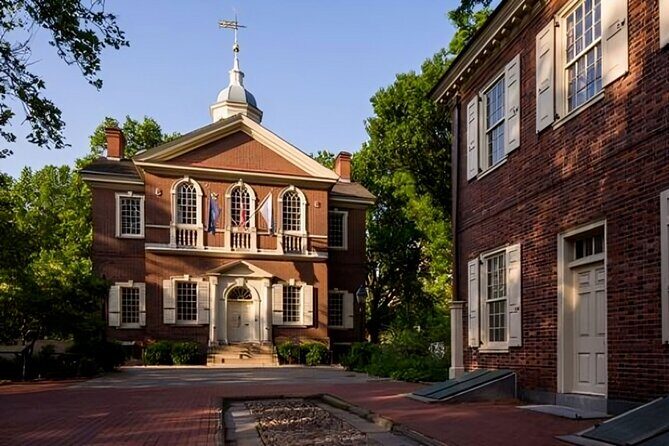
Carpenters’ Hall: where Congress met and banking took a turn
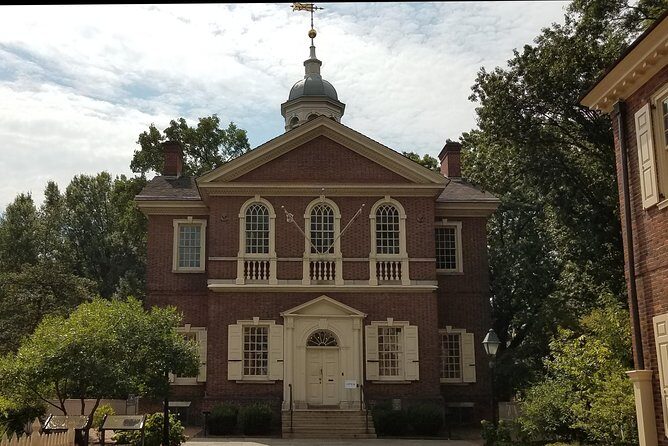
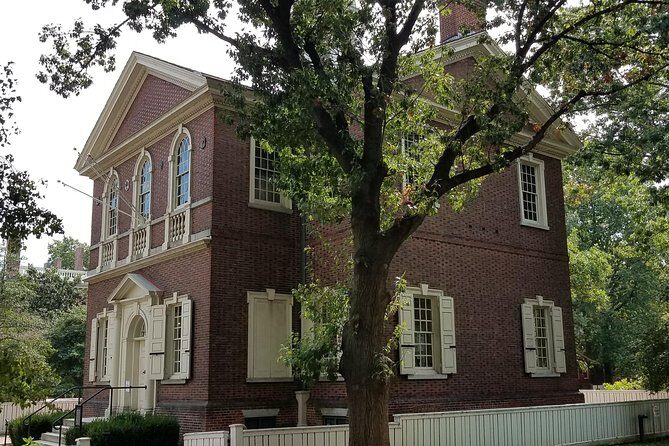
Then you head to Carpenters’ Hall, home of the 1st Continental Congress. The tour also points out that it was home to the 1st Bank of the United States for a while. That combination is one reason this stop feels powerful.
You’re standing in a place that connects legislative beginnings with financial experimentation. The story becomes less linear and more real: early American leaders tried things, tested them, and then adjusted as needed.
This stop is listed as about 10 minutes, giving it a little more air than some of the other sites. That extra time helps you connect the dots between government structure and money—two themes that often get taught separately.
A small but real travel note: because you’re walking between sites, you’ll want to keep your eyes up on street-level details. In a dense historic area, the best learning happens when you look around while the guide is talking.
Other private and custom-built tours we've reviewed in Philadelphia






Todd House and the Maria Reynolds to Dolly Madison connection
At Todd House, the tour shifts gears into personal history. Across the street lived Maria Reynold’s, described here as Hamilton’s mistress for a year. The tour also includes the chain of connections: Maria Reynold’s was introduced to James Madison by Aaron Burr, and Dolly Todd later became Dolly Madison.
This is one of the stops that makes a purely academic tour feel human. People tend to remember names and relationships more easily than policy. And because this is a Hamilton-focused tour, it ties character and plot into real locations.
The listed time is about 5 minutes, so you won’t get a long personal-history lecture. Still, it’s a fast way to pick up the kind of story threads that help the whole Hamilton era feel like more than dates.
If you’re going with a family member who likes the dramatic side of Hamilton storytelling, this stop is likely a favorite. If you prefer strictly political history, you can treat it as a short detour that adds texture.
Merchant Exchange Building and Hamilton’s family nearby
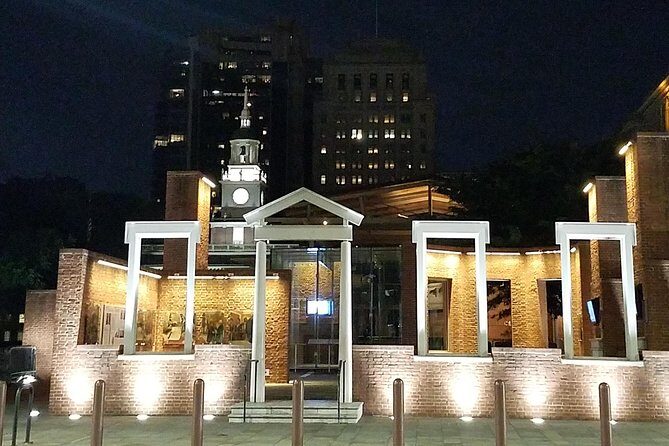
Next is the Merchant Exchange Building. The tour notes that Hamilton lived here across the street from Todd House, and that it was about 1 block from where Maria Reynold’s lived. It also frames this as Hamilton living with his family nearby.
This stop is a clever use of geography. The tour isn’t only naming figures—it’s placing them close enough that you can grasp how public and private lives overlapped in the same city blocks.
Time here is about 5 minutes, again short and purposeful. But if you’re paying attention, this part makes the entire walk feel more grounded. You stop thinking of history as a stage and start thinking of it as neighborhoods.
First Bank of the United States: marble, style, and a new government building
Now comes the headline for the banking theme: the First Bank of the United States. The tour explains it was created by Hamilton in 1791, and it describes the building as one of the first new U.S. government buildings. You’ll also hear about its early Greco-Roman temple style and that it was partially of marble.
This stop is listed at about 5 minutes, but it’s packed with visual cues. Even in a quick stop, the architectural mention helps you understand why the bank felt like more than a financial tool. It was meant to signal stability and seriousness—built in a style associated with authority.
If you’re the type who likes seeing why something looks the way it does, watch for how the guide connects design choices to the message early leaders wanted to send.
The slight drawback here is timing. Five minutes can vanish if someone in your group asks a lot of questions at the same time. The tour is designed for conversation, but you’ll still want to choose what you want to chase: detail or momentum.
Christ Church Burial Area: the emotional finish at Robert Morris’s grave
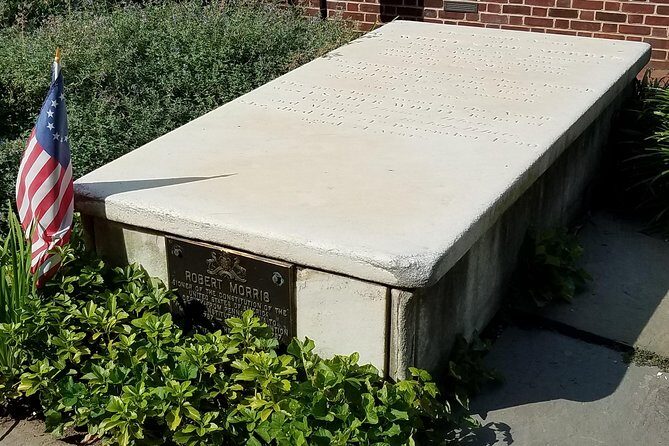
The walk ends at Christ Church Burial Area at 22 N 2nd St. The tour closes by focusing on the grave of Robert Morris, who the tour notes turned down George Washington’s offer to become the first U.S. Secretary of the Treasury.
That’s a strong ending because it flips the script on expectations. Not every major founder role went to the person everyone assumed. The guide uses the final stop to leave you with a thoughtful question about who shapes history and how choices change outcomes.
This is listed as about 5 minutes. Even at five minutes, a burial-area stop can feel weighty if the guide connects it to what the tour has been building: government structure, financial systems, and the people who chose what to accept or refuse.
If you’re walking with kids, this might be the moment where attention holds the longest. It’s not just a fact; it’s a story turn.
The guide matters: singing, humor, and why questions actually work
This tour’s standout from the experience side is the guide’s style. One name that comes up is Reid. He’s described as informative and thought-provoking, and he uses humor to keep the mood light. More than that, he encourages people to participate, including singing along and even dancing during the walk.
There’s also a very practical tip embedded in the stories: if you want to get the most out of the singing parts, practice the lyrics. It’s not about being a superfan. It’s about giving yourself a tool to join in without feeling lost.
That interactive approach is why this tour tends to land well with a range of ages. The tour is set for a minimum age of 10, and it assumes a group can handle walking and listening. The payoff comes when the guide makes the details feel like part of a bigger narrative you can join.
As a traveler, you should expect more than memorizing dates. You’re meant to think about how early financial reform shaped what the government could do next. If your group likes discussion, you’ll probably leave with questions you want to follow up on later.
Price and value: when $250 per group makes sense
The price is $250.00 per group for up to 10 people. That means the real question is how many people you’re bringing.
- If you fill the group size, the effective cost can be as low as $25 per person.
- If you book as a small group of 2 or 3, the per-person price climbs quickly.
So here’s my value lens: this works best when you have a crew—friends, a family with multiple kids, or a mix of ages—because you’re buying conversation time and private pacing. If you’re traveling solo or as a couple and you don’t need a private format, you might compare options.
Another value signal: the tour is often booked about 43 days in advance on average. That suggests a steady demand, likely because people like the combination of Hamilton-themed storytelling and the guided, talk-friendly format.
Also note: the tour includes a live guided tour, and it’s described as mobile ticket. Admission at the listed stops is free, which keeps your spending predictable.
Timing, walking comfort, and how to dress for 2 hours 30 minutes
This is rated for people with moderate physical fitness and a minimum age of 10. That doesn’t mean you need to be an athlete. It does mean you’ll be on your feet for long enough that comfort matters.
I’d plan for:
- sturdy walking shoes
- weather-appropriate layers
- a small water bottle
- a phone charged for the mobile ticket
Also, since the tour is near public transportation, you can build a smooth day around it. If you’re coming in from another part of the city, give yourself buffer time. Historic Philadelphia can slow you down even when you’re moving confidently.
The best part of the walking format is that you’re not stuck. You’re getting constant context as you go. The tradeoff is you don’t have long indoor breaks at each stop.
Who should book this Hamilton private walking tour?
Book it if:
- you want Alexander Hamilton stories grounded in real locations in Philadelphia
- your group likes Q&A and participation, not just passive sightseeing
- you’re traveling with multiple people and can take advantage of the up to 10 group size
- you want both the personality and the practical topic of Hamilton’s banking reforms
Skip it if:
- you hate outdoor walking or don’t do well with cold or rain
- you prefer museum-style browsing over a time-limited, stop-to-stop walk
- your group wants only deep architectural analysis and less storytelling
Should you book this tour?
I’d book it if your goal is a guided, Hamilton-themed Philadelphia walk that actually connects dots. The pairing of private group time, a guide like Reid who keeps energy up, and multiple stops tied to Hamilton’s banking impact makes it feel worth the money when you bring the right-sized group.
If you’re coming as a solo traveler or a couple, do the math first and decide if private pacing is truly your priority. If it is, you’ll likely enjoy how the route threads together Washington and Adams’ early government, Hamilton’s financial reforms, and the tour’s thoughtful ending at Christ Church Burial Area.
FAQ
How long is the Alexander Hamilton private group walking tour in Philadelphia?
It’s about 2 hours 30 minutes.
What does the tour cost?
The price is $250 per group.
How many people can be in a private group?
The tour is for up to 10 people per group.
Where do we meet, and where does the tour end?
You start at Independence Visitor Center, 599 Market St, Philadelphia, PA 19106, and you end at 22 N 2nd St, Philadelphia, PA 19106 at the Christ Church Burial Area.
Are any admissions required for the stops?
The tour info lists admission as free at each stop.
What language is the tour offered in?
The tour is offered in English.
What age and fitness level is required?
The minimum age is 10, and travelers should have a moderate physical fitness level.
Is there a cancellation option if plans change?
Yes. You can cancel for a full refund up to 24 hours before the experience’s start time.