REVIEW · PHILADELPHIA
Philadelphia: Revolutionary Walk Through Historic Old City
Book on GetYourGuide →Operated by Founding Footsteps Tours · Bookable on GetYourGuide
Old City in 90 minutes sounds tight. That is exactly why this walk is so appealing: you get a focused route through Philadelphia’s founding landmarks with stories that stick. I love how the tour retraces the Road to the Revolution step by step, starting at Betsy Ross House and ending with the kind of landmarks that help everything make sense.
Two things I especially like: the guide brings a laugh-and-learn style (often with a teacher’s clarity and a comedian’s timing), and the stops cover the big-name sites plus the streets you would usually miss on your own. One drawback to plan for: Independence Hall can require separate tickets, so you may not always go inside every stop the way you hope.
In This Review
- Key points to know before you go
- Why this 90-minute Revolutionary Walk works in Philly
- Getting your bearings: starting at Betsy Ross House
- The Road to the Revolution route: what you’ll actually see
- Independence Hall and the Liberty Bell: the core debate and symbol
- Betsy Ross, plus Elfreth’s Alley: history with texture
- Christ Church and Carpenter’s Hall: the city beyond the obvious
- What makes the guides work: teacher clarity meets stand-up timing
- Price and logistics: getting your money’s worth in 90 minutes
- A simple stop-by-stop rhythm you can plan around
- Who should book this Revolutionary Walk?
- Should you book this tour?
- FAQ
- FAQ
- How long is the Philadelphia Revolutionary Walk Through Historic Old City?
- Where does the tour start?
- Is Independence Hall admission included?
- What’s included in the price?
- What should I bring?
- What language is the tour in?
- Is there free cancellation?
- Can I reserve now and pay later?
Key points to know before you go
- Starts at Betsy Ross House near the legend of the first U.S. flag
- Road to the Revolution route that ties Benjamin Franklin to the city’s key moments
- Hits the classics: Independence Hall, Liberty Bell, Christ Church, and Elfreth’s Alley
- Quick but full: 90 minutes means lots of ground, so comfortable shoes matter
- Guides with real performance energy often blending teaching and stand-up humor
Why this 90-minute Revolutionary Walk works in Philly
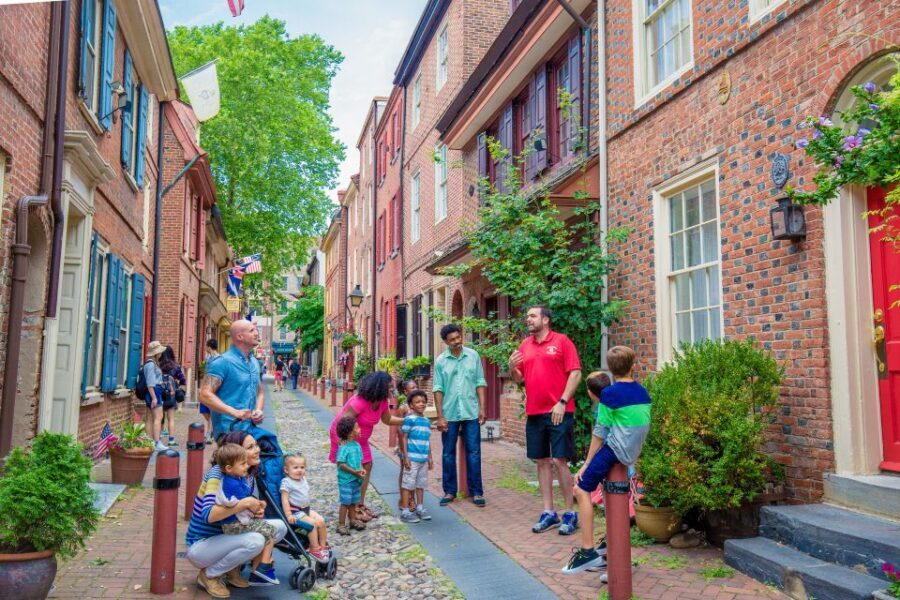
Philadelphia’s Old City can feel like a lot at once. You see the big signs, you take the photos, and then you wonder what actually happened where. This tour solves that problem with a tight timeline and a clear theme: how people and ideas moved through the city during the Revolution.
At a $35 price point for 90 minutes, it is built for people who want value without spending a whole day in lines. The route is concentrated around the historic core, and the guide keeps steering you back to cause and effect: who was where, why it mattered, and how the story connects landmark to landmark.
You also get something that is hard to get on your own: a human voice that explains what you are looking at. The best parts are not just the famous stops. It is the way the guide helps you connect them, so the names start to sound less like trivia and more like real people making real decisions.
Other historic Old City walking tours we've reviewed in Philadelphia



Getting your bearings: starting at Betsy Ross House
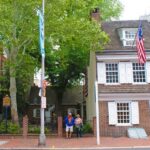
The walk begins at Betsy Ross House, one of the first stops that sets the tone for the entire Revolution story. The connection you are given here is the legend tied to the U.S. flag’s early days. Even if you already know the headline, this start helps because it frames the tour as more than “big buildings.” It is also about the symbols and the people tied to them.
From the beginning, the guide tends to keep the pace lively and the explanations practical. You will be walking soon after hearing the setup, so you do not just listen. You start seeing the city as a map of the Revolution.
If you are visiting for the first time, this starting point is smart. You can use what you learn here to make the next stops easier to follow, especially the Franklin thread that runs through the route.
The Road to the Revolution route: what you’ll actually see
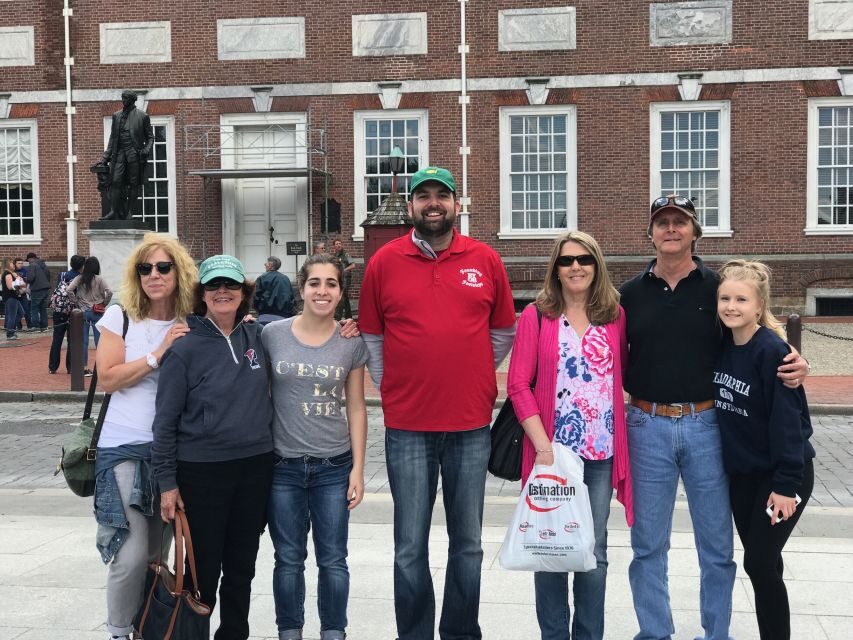
This is a classic Old City circuit, but it is not a random shuffle of monuments. The route is built around a clear theme: retracing steps associated with the founding era and the Revolutionary period.
You should expect an outside-focused walk with frequent stops to look at architecture, street layout, and site significance. Because it is 90 minutes long, the guide keeps each location moving at an efficient pace. If you love history, you will want to take your time after the tour on your own. But if your schedule is tight, this format is perfect.
The included live guide is the engine of the experience. Without that, you would be standing in front of impressive buildings with no thread tying them together. With the guide, you get a quick narrative arc that turns the names into a story you can repeat to friends.
Independence Hall and the Liberty Bell: the core debate and symbol
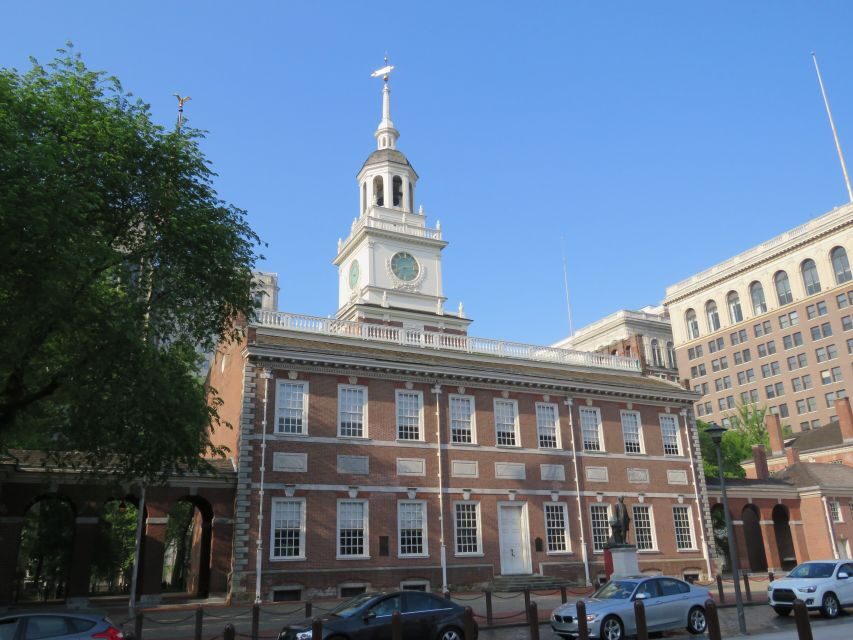
Two stops anchor the whole Revolution theme: Independence Hall and the Liberty Bell. They are the reason most people come to Old City, and the tour treats them like the emotional center of the story.
Independence Hall is presented as the place where the Declaration of Independence and the U.S. Constitution were debated and adopted. That matters because it shifts your attention from the building itself to the process inside. You are not just looking at a landmark. You are learning what debate looked like in that specific historical moment.
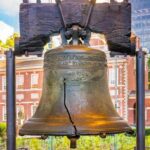
Then you move to the Liberty Bell, an iconic symbol of American independence. This part works well even if you have seen photos before. The guide explains why the bell became more than an object. It is a public symbol, and symbols are how political ideas spread when most people are not sitting in the room for the decisions.
One practical note: Independence Hall tickets are not included. So think of this tour as a smart, story-driven way to orient yourself around the hall and the surrounding area. If you want interior time, you will likely need to plan tickets separately.
Betsy Ross, plus Elfreth’s Alley: history with texture
After the big governmental and symbolic stops, the tour adds places that give the era texture. That is where it stops feeling like a checklist.
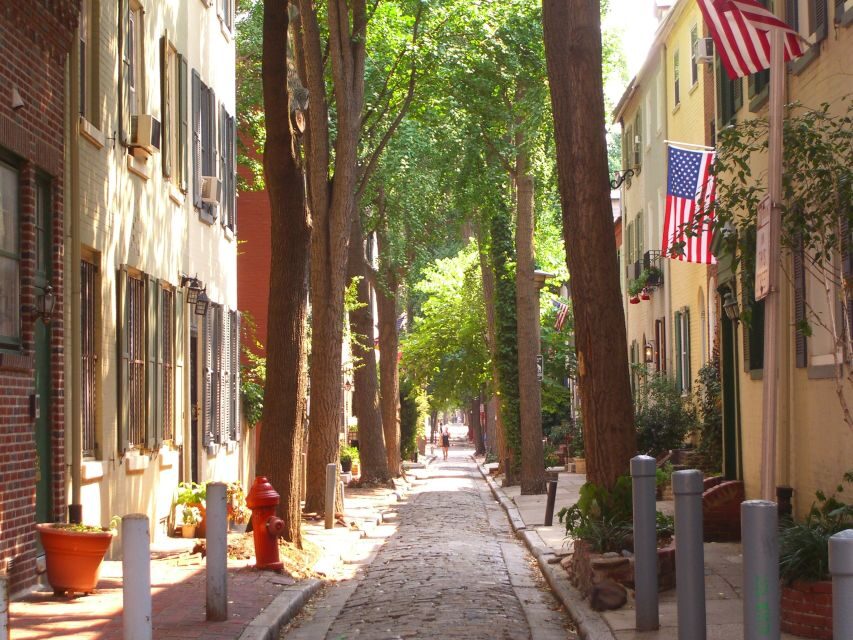
Elfreth’s Alley is a standout for many people because it lets you picture day-to-day life alongside the headline events. Instead of only focusing on documents and speeches, you get a sense of a street that helped shape how people lived in the colonial city. The alley feels small and human-scale, which makes the Revolution story feel less distant.
From there, the guide’s job becomes translation: turning architecture and street layout into context. You start noticing things like how buildings sit relative to the street, and how that influences what daily life would have looked like.
This is also where the comedic, teacher-like style pays off. You are not just hearing facts. You are hearing them in a way that makes you remember the scene, not just the date.
Other Founding Fathers and Revolutionary history tours we've reviewed in Philadelphia




Christ Church and Carpenter’s Hall: the city beyond the obvious
Not every Revolution story fits neatly into the same kind of building. The walk leans into that reality with Christ Church and Carpenter’s Hall, plus a couple of key Franklin-connected stops.
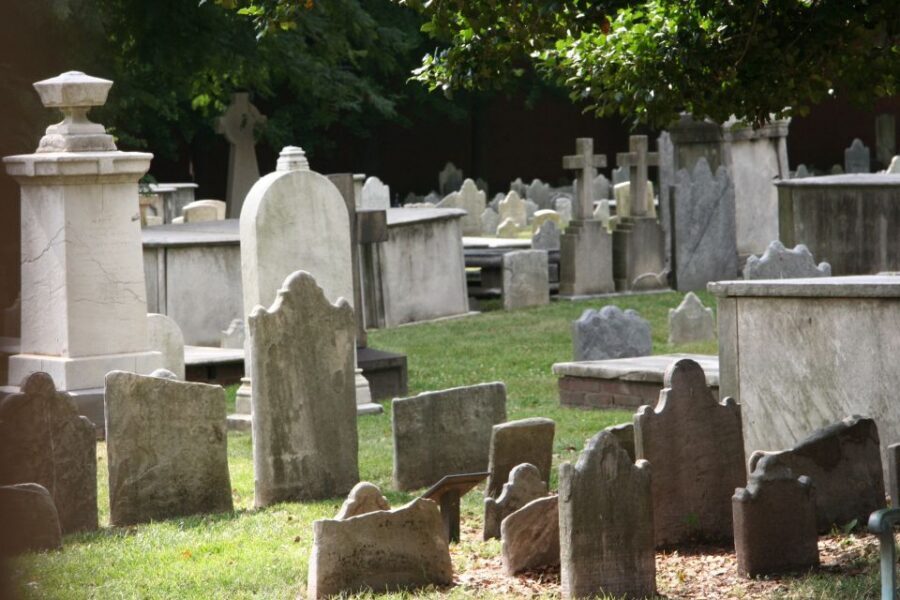
Christ Church is included because it has deep ties to the founding-era community. Even when you cannot go inside, it is the kind of landmark where the guide’s explanation makes the architecture and setting feel meaningful instead of decorative.
Then comes Carpenter’s Hall, another important piece in the Revolutionary-era puzzle. It helps you see that the Revolution was not only speeches and signatures. It also involved meetings, plans, and people gathering in spaces like this.
A detail that helps the tour feel specific (and not generic) is the inclusion of the B. Free Franklin Post Office stop. Benjamin Franklin shows up not just as a name you already recognize, but as a thread through Philadelphia’s civic life. That matters if you like history that connects individuals to everyday systems like communication.
What makes the guides work: teacher clarity meets stand-up timing
This tour’s highest praise tends to circle the same theme: the guide is engaging. The walking pace would be fine on its own, but the real value is how the guide brings it to life.
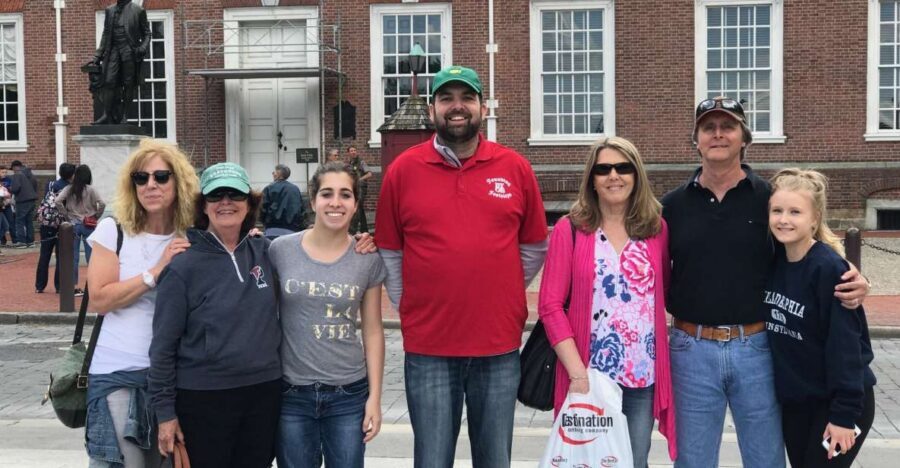
A common name you will hear in the mix is Seamus. Many people describe him as funny, friendly, and easy to follow, with an ability to make details feel conversational instead of like a lecture. Others mention guides like Jay and Greg, also described as an effective blend of history teacher and stand-up comedian energy.
You should also expect a guide who is attentive to different group members. Some feedback notes that the guide can shift tone and pace depending on whether the group includes younger people or older visitors. That is important because Old City can be boring fast if the guide treats everyone the same.
Practical tip: Philly sidewalks can be noisy, and hearing can be an issue for some people. If you know you struggle with audio, try to position yourself close to the guide so you can catch the explanations clearly.
Price and logistics: getting your money’s worth in 90 minutes
At $35 per person for 90 minutes, you are buying a guided story that covers a lot of meaningful ground. The value comes from how tightly the tour is packed around major landmarks, while still adding context you would not get from passively walking.
Here is the real-world takeaway: this is not a tour where you comfortably linger at every building. It is a tour where you get oriented fast, learn how the sites connect, and then decide what you want to see more slowly afterward.
Also, food and drink are not included. So if you have a longer day in the city, plan a snack break after the tour. Since you will be in the Old City walking district, that usually pairs well with nearby casual spots.
Most importantly: paid admission to additional sites is not included, and Independence Hall tickets are not included. So if your must-do is interior time at specific venues, check ticket needs ahead of time.
A simple stop-by-stop rhythm you can plan around
Here is how the tour pacing typically feels, so you can match it to your own travel style:
- You start with Betsy Ross House, which gives the symbolism and the Franklin-themed thread early.
- You move toward the major political landmarks, with Independence Hall and Liberty Bell serving as the big story points.
- Then you shift to “place and people” history, including Elfreth’s Alley and the surrounding civic landmarks.
- Along the way, you also see the institutional anchors like Christ Church and Carpenter’s Hall, plus the B. Free Franklin Post Office stop for a more specific Franklin connection.
Because you see multiple famous names in one short walk, this tour is ideal when your schedule is limited but your interest level is high. If you want a day built around deep museum time, this walk is still useful, but you might want to add museum visits separately afterward.
Who should book this Revolutionary Walk?
Book this tour if you want a smart first pass at Old City. It works especially well if:
- You are visiting Philadelphia for a day or a short window
- You want a guided overview before choosing what to see longer
- You like your history with humor and clear explanations
- You are bringing a teen or a mixed-age group who might otherwise lose interest during a traditional lecture-style tour
It also makes sense if you are a first-timer who feels overwhelmed by the number of famous stops. This route helps you choose what matters and why.
If you are expecting a tour where every famous building includes guaranteed interior access, then you may feel disappointed. Independence Hall tickets are not included, and that can shape what you can enter versus simply view from the outside.
Should you book this tour?
If your goal is to understand Philadelphia’s Revolutionary-era story quickly, I think this is a strong choice. The guide-led style is the main reason it performs well: you get a clear route, a laughable tone, and explanations that help you remember what you saw.
I would book it if you want to start your Philly visit with momentum and walk away feeling oriented. Just pair it with a separate plan for any interior tickets you truly care about, especially around Independence Hall.
FAQ
FAQ
How long is the Philadelphia Revolutionary Walk Through Historic Old City?
The tour lasts 90 minutes.
Where does the tour start?
It starts in the Philadelphia Old City district at the Betsy Ross House.
Is Independence Hall admission included?
No. Paid admission and Independence Hall tickets are not included.
What’s included in the price?
The live guide is included. Anything requiring paid admission at additional sites is not included.
What should I bring?
Wear comfortable shoes for the walking.
What language is the tour in?
The tour is in English.
Is there free cancellation?
Yes. You can cancel up to 24 hours in advance for a full refund.
Can I reserve now and pay later?
Yes. The experience offers a reserve now & pay later option.