REVIEW · PHILADELPHIA
The Constitutional Walking Tour of Philadelphia
Book on Viator →Operated by The Constitutional Guided Walking Tour · Bookable on Viator
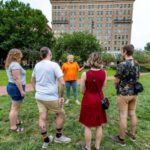
If you want the fastest way to get oriented, this is it. You’ll cover the key sites tied to the U.S. Constitution and Declaration of Independence on a 1.25-mile route through Philadelphia’s Independence National Historical Park area. I love how much you fit in for the price, and I also like that it’s built for real sight-seeing: stop, look, learn, move on. One thing to consider: it’s an outdoor walking tour, so you won’t go inside the major sites during the tour window.
The best part is the flow. You start at the National Constitution Center and move across the neighborhood in a tight circuit, stopping at more than 20 historic spots tied to the early republic. It operates rain or shine, and the guide paces it so you get context without turning this into a museum day.
In This Review
- Key Highlights at a Glance
- Why This Constitutional Walking Tour Gets the Independence District Right
- Price and Value: $30 for a High-Density Historic Walk
- Meeting at the National Constitution Center: Where the Tour Actually Starts
- How the Walk Really Feels: Brisk Stops, Rain or Shine, and Good Listening Tips
- Stop-by-Stop Through the Independence District (and What Each Place Adds)
- National Constitution Center to Independence Hall: The Core Story in One Loop
- Congress, Courts, and Early Government Infrastructure
- Philadelphia’s Learning and Money: The American Philosophical Society and the Banks
- Carpenters’ Hall, Military, and the “American Identity” Thread
- Franklin Court and the Church Stops: The People Behind the Founding
- Betsy Ross House, Quaker Meeting House, and the Freedom-Builders
- The Inside-Access Reality Check (and How to Plan for It)
- What You’ll Learn from Great Guides (Without Needing Fancy Theory)
- Who Should Book This Walking Tour (and Who Might Want Something Else)
- Should You Book This Constitutional Walking Tour?
- FAQ
- How long is the Constitutional Walking Tour of Philadelphia?
- What’s the price per person?
- Does the tour include admission to Independence Hall, the Liberty Bell, or other sites?
- Is the tour only outside, or do we go inside buildings?
- Does the tour run in bad weather?
- Where do I meet the tour guide?
- Do I need a printed ticket?
- What language is the tour in, and who can join?
Key Highlights at a Glance
- 20+ Constitutional-era stops in about 75 minutes across the Independence District
- Outdoor-only format: you’ll see the places, then you can plan inside visits separately
- Small group size (max 40) that makes it easier to hear the guide on busy streets
- A tight, walkable route (about 1.25 miles) with frequent short stops
- Guides who tell the stories and answer questions, often with a focused, no-drama approach
Why This Constitutional Walking Tour Gets the Independence District Right
This tour works because it does one job really well: it helps you connect the buildings to the story of how the United States formed. Instead of treating Philadelphia like a pile of separate monuments, the walk ties each stop to the political ideas and everyday realities behind them.
You’ll get a clear sense of where power sat—who lived here, where government met, where ideas and debates happened, and how institutions like courts, banks, and churches shaped early American life. That’s exactly why this kind of tour is so useful on your first day in town. You’re not just collecting photos. You’re building a map in your head.
And since it’s only about 1.25 miles, it’s an easier “big impact” choice than longer walking marathons. You can keep the rest of your schedule flexible afterward.
Other Independence Hall and Liberty Bell tours we've reviewed in Philadelphia


Price and Value: $30 for a High-Density Historic Walk
At $30 per person for roughly 75 minutes, this isn’t trying to replace paid museum admissions. It’s priced like an orientation. And honestly, that’s a smart match for what you’re getting.
Here’s the value logic:
- You’re paying for guidance and context across a concentrated area.
- You’re not paying for site-by-site entry fees, which vary and can add up fast.
- If you’re traveling with a group, this can be a cost-effective way to see the big landmarks without paying for everything twice.
One practical note: because admissions to historic sites are not included, plan for the fact that you may want a second visit to go inside. The tour sets you up for that.
If you’re the type who wants the story and the landmarks, this price-to-time ratio is hard to beat.
Meeting at the National Constitution Center: Where the Tour Actually Starts
You’ll meet at the National Constitution Center at 525 Arch St, Philadelphia. The meeting spot is outside the main entrance, by three large stone benches.
I’d plan to arrive early. Check in is specifically described for 15 minutes before departure. On walking tours, that matters more than people think, because the guide typically needs a clean start with the group gathered and accounted for.
The tour ends back at the meeting point too, so you’re not doing a confusing “drop-off and disappear” setup.
How the Walk Really Feels: Brisk Stops, Rain or Shine, and Good Listening Tips
This is a rain-or-shine tour. That’s great for planning, but it also means you should dress like you’re walking outdoors for about an hour and a quarter with short breaks.
The route moves at a steady pace, with most stops lasting just a couple minutes. That’s the design: you get a highlight and a connection to the overall Constitutional story, then you keep going. One review tip I strongly agree with: bring practical shoes. You’ll be standing and walking in a historic district with real traffic sounds, wind, and street noise.
If you want to hear well, don’t hang back at the far edges of the group. Stand where you can catch the guide’s voice, especially at the busier intersections.
Stop-by-Stop Through the Independence District (and What Each Place Adds)
Other walking tours we've reviewed in Philadelphia



National Constitution Center to Independence Hall: The Core Story in One Loop
You start at the National Constitution Center, where the tour kicks off with the big picture: this area isn’t just old buildings—it’s the stage where American government’s key ideas took public form.
Then you move to the President’s House, an open-air site commemorating the predecessor to the White House. This is where presidents lived while Philadelphia served as the national capital from 1790–1800, including George Washington and John Adams. The value here is simple: it helps you picture power as lived-in and human-sized, not just symbolic.
Next is the Declaration House (Graff House), connected to Thomas Jefferson, when he wrote the Declaration of Independence. Seeing this kind of location from street level helps the story feel less abstract. You’re not just reading names; you’re standing where key work happened.
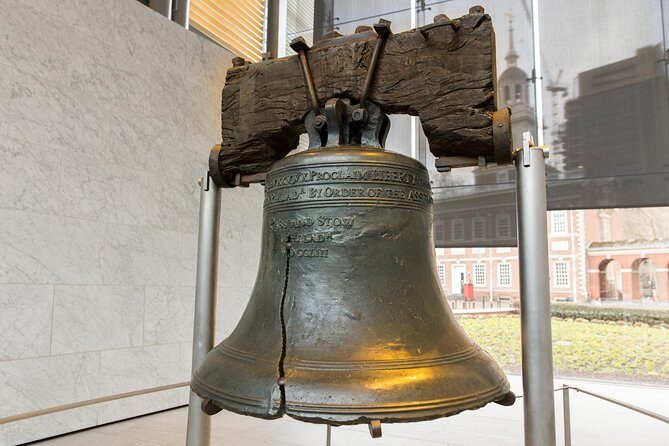
Then comes the big icon stop: the Liberty Bell Center. During the tour you’ll experience it from the outside. Still, the moment works because the guide links the bell to the idea of freedom that repeated itself through early American politics.
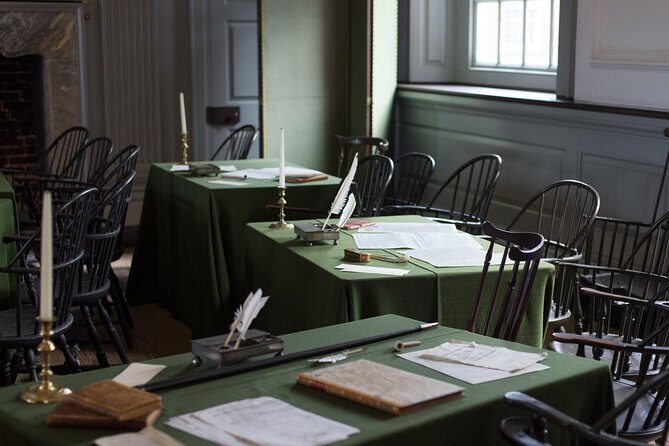
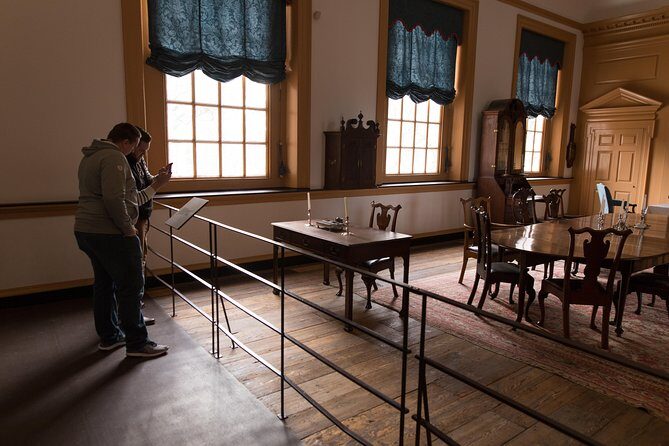
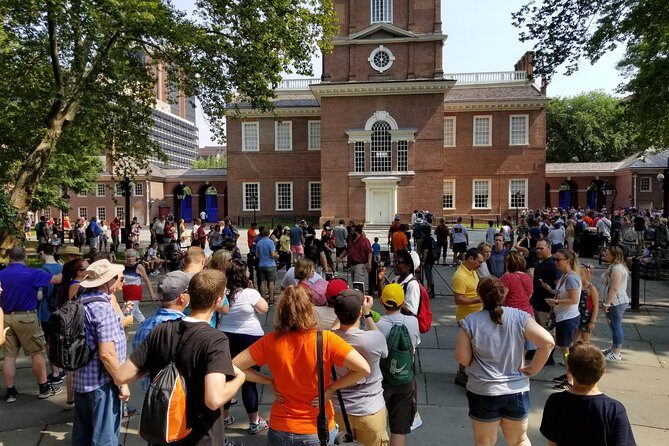
After that, you reach Independence Hall, the birthplace of America. The tour frames its significance clearly: built in 1732 as the Pennsylvania State House, it became the place where the founding-era government story concentrated into one location. Even without going inside during the walking tour, the stop gives you the right “why this matters” lens.
And yes—this is where timing and access come into play. The tour is structured as an outdoor orientation, so you’ll get views and context, not inside entry during the walking segment.
Congress, Courts, and Early Government Infrastructure
From Independence Hall, you head toward the structures that made government run.
Congress Hall is next. It was constructed between 1787 and 1789 as the Philadelphia County Court House, then served as the United States Capitol and the meeting place of Congress from 1790 to 1800. This is one of those stops where you learn to see the same walls with a different role depending on time. It’s a strong reminder that institutions can move and evolve.
Then you visit Old City Hall, the former home to the U.S. Supreme Court. This helps you connect the early legal system to the physical streets of the city. When you later read about landmark cases and constitutional interpretation, you’ll remember that this wasn’t theoretical—it had a location.
At The Signer, you’ll see a statue inspired by George Clymer. This stop is more interpretive than documentary. It’s meant to put a face—or at least a memorial—onto the people behind the ideas. If you like history that includes personalities, this is a nice break in the sequence.
Philadelphia’s Learning and Money: The American Philosophical Society and the Banks
A big part of “Constitutional America” wasn’t only courts and speeches. It was learning and economics.
You’ll stop at the American Philosophical Society Museum, described as the oldest scholarly society in the U.S. That matters because early leaders treated knowledge like a public good. They weren’t just governing; they were building systems for thinking and measurement.
Then you’ll see Library Hall, called the nation’s first public library and the former Library of Congress. This is where the tour quietly connects the Constitution to literacy, civic access, and the spread of ideas. It’s a great stop if you’re trying to understand the founding era as a culture of institutions, not just famous documents.
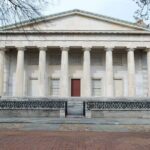
Next are the banks. First you’ll reach the Second Bank of the United States, one of the most influential financial institutions in the world (and now used as a portrait gallery). Then comes the First Bank of the United States, described as a spark for the first great Constitutional debate.
That last part is important. The point isn’t just that banks existed. It’s that even finance created constitutional arguments. When you stand near these stops, you start to see the Constitution as something that got tested in real life.
Carpenters’ Hall, Military, and the “American Identity” Thread
Some stops feel like they’re about the inner engine of the new nation.
Carpenters’ Hall is described as the birthplace of American Identity. Even if you don’t know the details before you arrive, the guide’s framing helps you understand why meetings in buildings like this shaped what Americans would claim as their own.
Then you’ll move to the New Hall Military Museum, where the tour addresses the role of the military in early U.S. history. This is a reminder that independence wasn’t just paperwork. It took force, planning, and a lot of people doing hard things.
After that, the tour swings back to individuals and symbols that make the story feel personal.
Franklin Court and the Church Stops: The People Behind the Founding
Franklin Court is one of the most memorable stops for a lot of visitors because it connects Benjamin Franklin’s home with the note that it’s the only Colonial-themed Post Office. That pairing makes Franklin feel like a real-world builder, not a distant statue.
You’ll then see Christ Church, an active parish since 1695, often called the Nation’s Church. It’s a powerful “alive today” reminder. Founding-era America wasn’t sealed off in a museum bubble.
From there you’ll reach Christ Church Burial Ground, described as Benjamin Franklin’s final resting place. It’s a quieter stop, but it adds meaning because it grounds the larger national story in an individual life.
Betsy Ross House, Quaker Meeting House, and the Freedom-Builders
The tour closes with stops that highlight the social and civic fabric around the founding era.
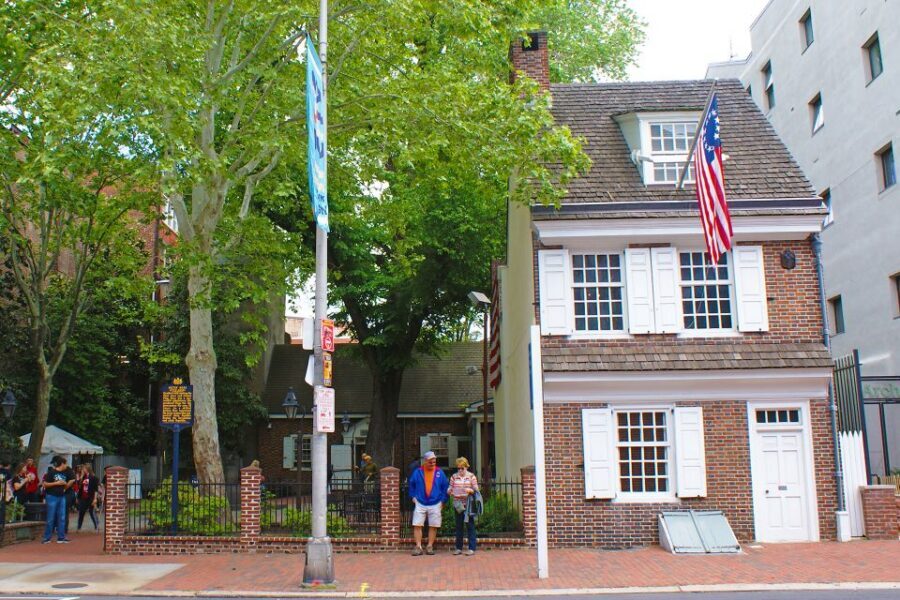
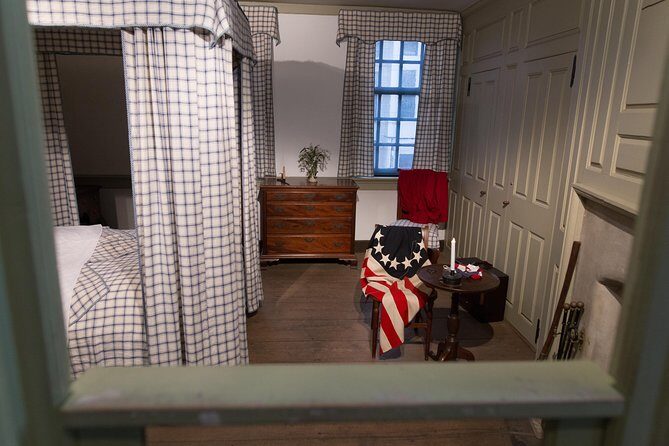
At Betsy Ross House, you’ll hear how she sewed the first Stars and Stripes. This is where the story gets concrete and visual—ideas become cloth, and symbolism becomes something you can imagine hanging on a wall.
Then you’ll reach the Arch Street Meeting House, home to the Society of Friends. This helps you round out the founding-era picture. Not everyone fit into the same political mold, and community life mattered as much as formal government.
By the time you’re finishing this section, the tour has done its job: it shows you that the Constitution came out of a living city, with many different beliefs and roles running side by side.
The Inside-Access Reality Check (and How to Plan for It)
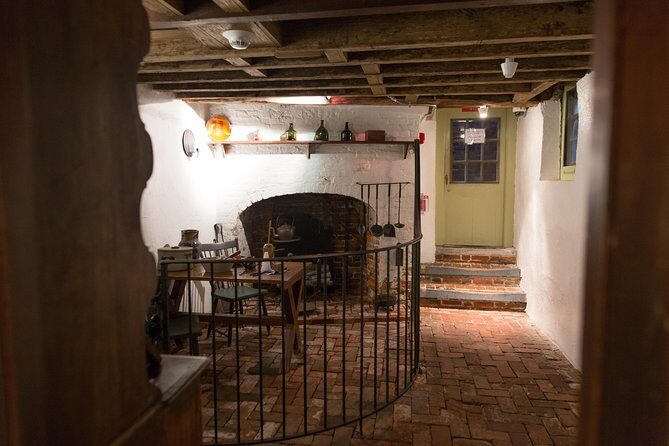
The tour is designed for outside viewing and orientation. Admissions to the historic sites are not included, and the format is meant to fit the time window and security realities of the most popular places.
In practical terms:
- You’ll see big landmark buildings like Independence Hall and the Liberty Bell Center from the outside during this walk.
- If you want to go inside, you should plan a separate visit after the tour.
- It helps a lot to do this tour first, because you’ll know what you actually want to prioritize when you buy entry tickets.
This approach is not a dealbreaker. It’s often the best way to handle a crowded district without losing your whole day to line time and timed entry rules.
What You’ll Learn from Great Guides (Without Needing Fancy Theory)
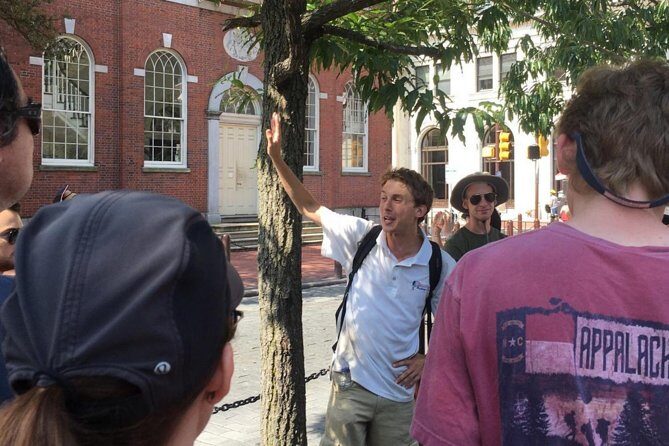
One reason this tour keeps landing high ratings is how guides deliver the story. Names like PJ, John, Will, Avi, Connor, Michael, Viv, Jon, and Abby show up in recent experiences, and the consistent theme is a strong storytelling focus paired with room for questions.
You’ll get context that makes the stop-by-stop highlights click. For example:
- You learn how Philadelphia’s status as capital shaped where leaders lived and met.
- You understand why legal and financial debates were part of building a functioning government.
- You connect symbols like the Liberty Bell to a broader idea of freedom and civic authority.
And here’s the practical bonus: if the group is small (and it maxes at 40), the guide is more likely to keep your whole unit together so you don’t miss key explanations.
Who Should Book This Walking Tour (and Who Might Want Something Else)
This tour is a strong pick if:
- You want an efficient first-day introduction to Independence National Historical Park
- You like your history tied to real places you can see quickly
- You want a guided route that helps you decide which sites deserve a deeper visit later
It’s also a good fit for families, since the stops are short and the pace is structured. Bring kids’ patience for short walks and outdoor noise.
You might want a different format if:
- You specifically want to spend the majority of your time going inside major sites during the same outing
- You want a longer sitting-and-reading experience instead of a brisk orientation
Should You Book This Constitutional Walking Tour?
I think you should book it if you want the “map and meaning” version of Philadelphia founding history. For $30 you’re buying guidance across the core sites tied to the Declaration and Constitution, with a time window that protects your schedule.
Do it early in your trip, then follow up with inside visits where your interests land. If you’re the kind of traveler who likes to understand the why behind the photo, this tour earns its place.
FAQ
How long is the Constitutional Walking Tour of Philadelphia?
It runs about 1 hour 15 minutes.
What’s the price per person?
The tour costs $30.00 per person.
Does the tour include admission to Independence Hall, the Liberty Bell, or other sites?
No. The tour includes the walking experience, but admission to historic sites is not included.
Is the tour only outside, or do we go inside buildings?
It’s an outdoor walking tour. You’ll view the sites from outside, and if you want to go inside, you’ll need to plan those site visits separately.
Does the tour run in bad weather?
Yes. It operates rain or shine.
Where do I meet the tour guide?
Meet at the National Constitution Center, 525 Arch St, Philadelphia, PA 19106, outside the main entrance by three large stone benches. Check in 15 minutes before the tour.
Do I need a printed ticket?
No. The tour uses a mobile ticket.
What language is the tour in, and who can join?
The tour is offered in English, and most travelers can participate. The group size is capped at 40 travelers.