REVIEW · PHILADELPHIA
Philadelphia: History, Highlights & Revolution Walking Tour
Book on GetYourGuide →Operated by WeVenture · Bookable on GetYourGuide
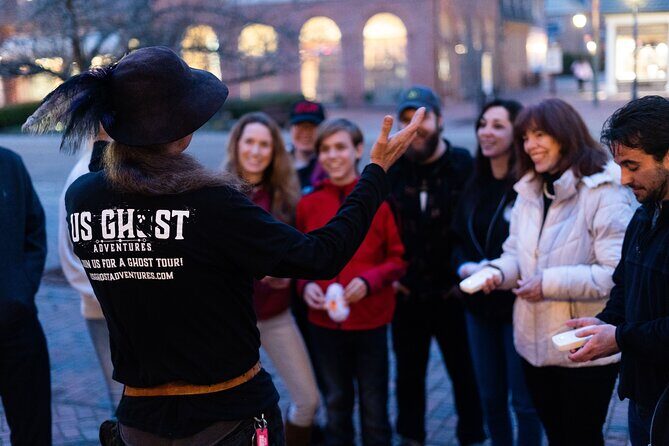
Revolutionary Philadelphia fits neatly into one walk. You’ll move through Old City and Independence National Historical Park, with stops built around Independence Hall and the Liberty Bell, plus a hands-on Museum of the American Revolution moment. I especially like how guides such as David and Adam turn famous landmarks into clear cause-and-effect stories, not just dates on a plaque.
I also like the way the tour mixes big symbols with real street scenes, including Elfreth’s Alley and a photo moment outside the Betsy Ross House. The museum stop adds value beyond sightseeing because you’ll watch a live presentation connected to Washington’s camp life, and you’ll get discounted admission you can use after the tour. One drawback to plan for: you’ll be on a steady walking path for about 2.5 hours, and at certain places you’ll mainly be there for viewing and photos rather than long, sit-down time.
In This Review
- Key highlights to look for
- Why This 2.5-Hour Revolution Walk Feels So Efficient
- Signer’s Garden Start: Your Orientation Point in Old City
- Independence Mall to Independence National Historical Park: From Setting to Story
- Independence Hall: The Declaration and Constitution Moment, Made Practical
- Congress Hall: When Founding Politics Was Still a Work in Progress
- Liberty Bell: The Icon, Plus the Meaning Behind It
- Carpenters’ Hall: A Key Stop That Isn’t Always in Everyone’s First Draft Plan
- Museum of the American Revolution: Washington’s Tent Demo + Discounted Entry
- Elfreth’s Alley: A Revolutionary-Era Story Told Through a Street
- Betsy Ross House and the Photo Moment That Makes History Stick
- Ben Franklin’s Grave: A Quiet Break Built Into the Route
- North 6th Street and Market Street: Finishing With City-Life Perspective
- The Guide Factor: What Makes This Tour Feel Top-Tier
- Price and Value: Why $41 Can Be a Smart Use of a Half Day
- Who Should Book This Tour (and Who Might Want a Different Option)
- Practical Walking Tips for Old City Streets
- Should You Book This Revolution Walking Tour?
- FAQ
- How long is the Philadelphia history walking tour?
- How much does the tour cost?
- Where do I meet the guide?
- What are the main stops on the tour?
- Is there a museum component included?
- What is included besides the guide?
- Is the tour wheelchair accessible?
- What language is the tour offered in?
- If I’m driving, is street parking a good idea?
Key highlights to look for
- Independence Hall and the Liberty Bell, explained in a real sequence so the story clicks fast
- A live Museum of the American Revolution demonstration, tied to George Washington’s tent
- Old City street stops like Elfreth’s Alley (nation’s oldest continuously inhabited residential street)
- Betsy Ross House and Ben Franklin’s grave, built for photos and reflection
- Carpenters’ Hall and other lesser-known stops that connect politics to people
- Guides who keep the pace conversational, often answering lots of questions
Why This 2.5-Hour Revolution Walk Feels So Efficient
If you’re short on time, this is one of the smarter ways to “get it” in Philadelphia. In about 2.5 hours, you cover the core Independence National Historical Park zone without having to stitch together tickets, transportation, and guesswork.
The value isn’t just that you see famous places. It’s that the tour is structured like a story arc, moving from the founding setting to the revolutionary lived experience. And because the guide controls the flow, you spend your energy looking at the right things instead of wandering with a phone map.
Other Founding Fathers and Revolutionary history tours we've reviewed in Philadelphia


Signer’s Garden Start: Your Orientation Point in Old City
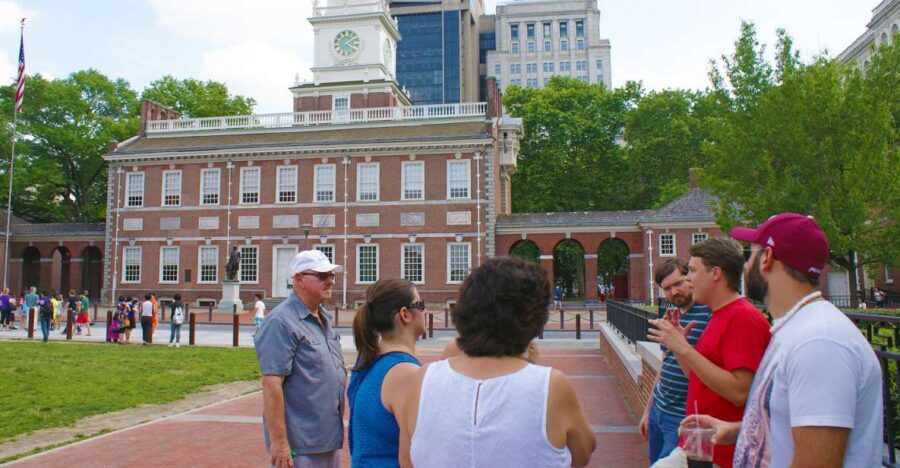
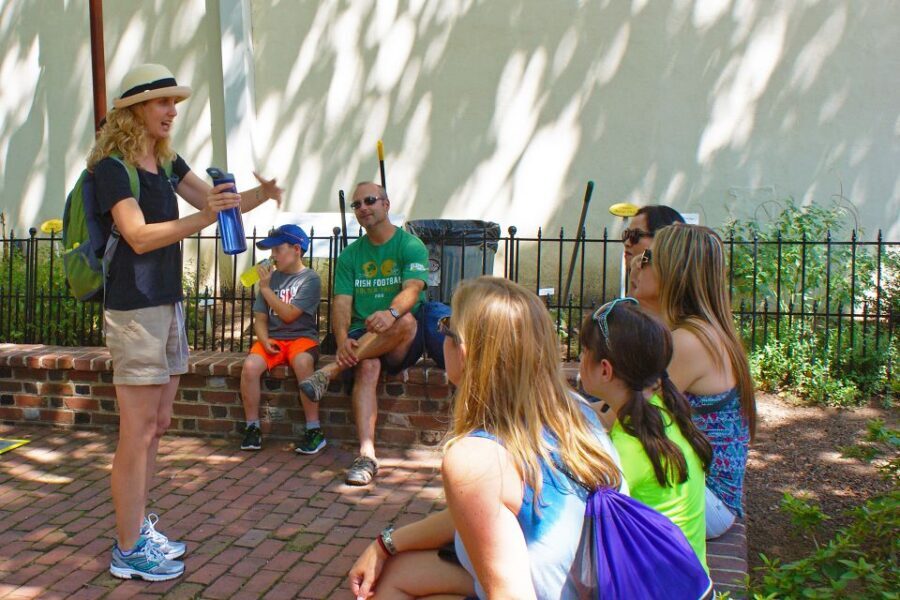
You meet your guide at the Signer Statue in Signer’s Garden. Starting here matters because it sets the tone: Philadelphia’s Revolution wasn’t abstract. It was built by people making decisions, arguing, drafting, and then living with consequences.
You’ll then head toward the Independence Mall area, where the scale of the federal story can feel bigger than a typical city walk. Your guide will help you connect the modern layout to what it meant for the founding era, so you’re not just staring at impressive buildings.
Quick tip: If you’re driving, park-planning is part of your success. Street or metered parking isn’t recommended because the time limit can be less than your tour window. Give yourself extra time to find parking in the lots and decks around Old City.
Independence Mall to Independence National Historical Park: From Setting to Story
As you pass through Independence Mall and into Independence National Historical Park, you’re doing more than sightseeing. You’re getting the geographic backbone of the whole Revolution timeline—where power gathered, where decisions were shaped, and why these spaces became symbols.
This section is also where the guide’s style really shows. The best versions of this tour use short, clear narration to connect what you’re looking at with what happened there. If your guide is one of the standout storytellers (names like Alex, David, and Adam show up a lot), you’ll feel like you’re walking through a well-paced film rather than a checklist.
A small consideration: this is an active route. You’ll keep moving, so if you’re the type who likes to linger for 20 minutes per stop, you may wish you had more time later to return on your own.
Independence Hall: The Declaration and Constitution Moment, Made Practical
Independence Hall is the headline, and the tour doesn’t treat it like a museum selfie line. Your guide points you toward the specific significance tied to what was created here—the Declaration of Independence and the US Constitution.
What makes this stop valuable is context. You’re not just learning that these documents exist. You’re getting help understanding what it would have meant for a brand-new nation to put those ideas into official form.
Even if you’ve seen the building in pictures for years, the on-site explanation helps it become less distant. That’s the difference between memorizing facts and understanding how the world was changing fast.
Congress Hall: When Founding Politics Was Still a Work in Progress
Next up is Congress Hall, another crucial piece of the same founding puzzle. The guide’s job here is to connect leadership and decision-making to the building itself—how a government in motion worked, and how the people inside were navigating enormous uncertainty.
If you care about the human side of history, this stop can be surprisingly good. The narration often pulls in individuals beyond the most famous names, including the kinds of roles that don’t always show up on school worksheets.
Potential drawback: Congress Hall can feel more “process” than “photo.” If you only want the biggest icons, you’ll still get them in the bigger stops, but this part is where you benefit most if you enjoy explanation.
Other walking tours we've reviewed in Philadelphia





Liberty Bell: The Icon, Plus the Meaning Behind It
The Liberty Bell stop is a photo stop, which is good to know upfront. You’ll get your chance to frame the famous symbol, but the tour’s deeper payoff is what your guide adds around it—why it became one of America’s most recognizable signals of freedom.
This is where a strong guide makes the bell feel less like a relic. The best tours help you see it as part of a chain of events: declarations, debates, and the reality of trying to build a new nation with old problems still hanging around.
If you’re sensitive to crowds or prefer slow pacing, the good news is you’ll still have a structured moment here rather than being stuck waiting around. The pace is purposeful.
Carpenters’ Hall: A Key Stop That Isn’t Always in Everyone’s First Draft Plan
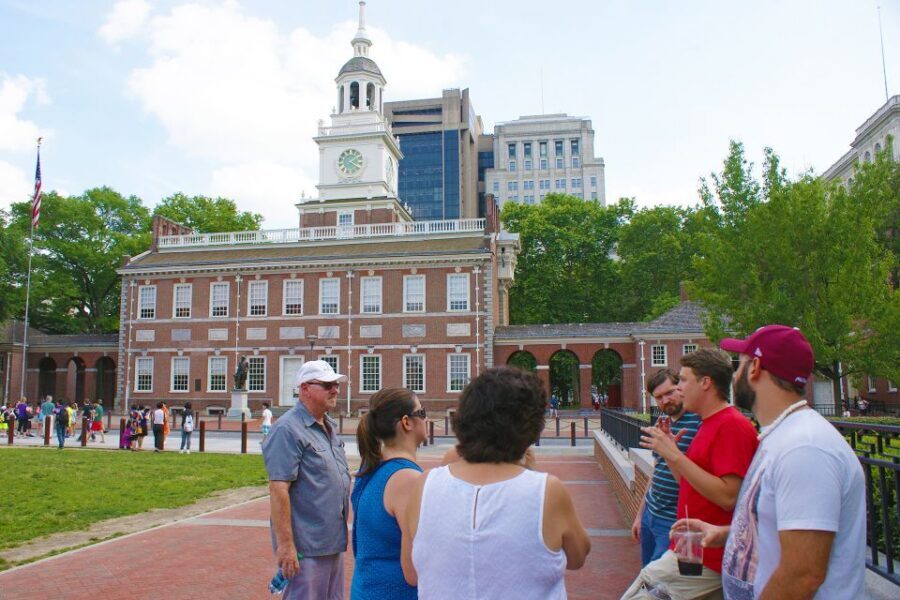
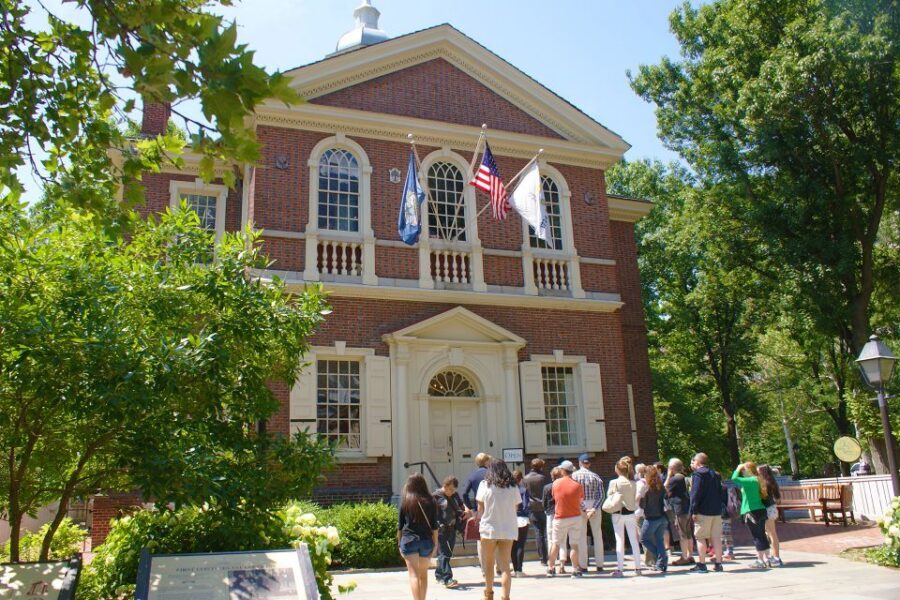
Carpenters’ Hall rounds out your Old City walk with a stop that broadens the story beyond the single most famous building. Your guide uses it to explain how revolutionary-era institutions tied together—politics, civic life, and the ongoing work of organizing society.
I like Carpenters’ Hall on tours like this because it acts as a bridge. After Independence Hall and Congress Hall, the story can start to feel like it lives only in those rooms. A place like Carpenters’ Hall helps you see the broader ecosystem around the founding era.
One consideration: if you’re traveling with someone who wants only famous landmarks, you may need to set expectations that this is more about ideas than instant “wow” visuals.
Museum of the American Revolution: Washington’s Tent Demo + Discounted Entry
The Museum of the American Revolution stop is where the tour steps into “experience” mode. You’ll get a guided museum visit and a special presentation that features the tent George Washington lived in during the war.
This is a big deal for two reasons. First, the live demonstration makes the past feel physical—you can almost picture camp life rather than just reading about it. Second, the tour includes discounted admission into the museum that you can redeem after the walk, so you get a second chance to explore at your own rhythm.
If you only do one museum stop in Philadelphia besides the Independence sites, this is a smart pick. It’s directly tied to the revolutionary story you just heard, instead of feeling like a separate topic.
Elfreth’s Alley: A Revolutionary-Era Story Told Through a Street
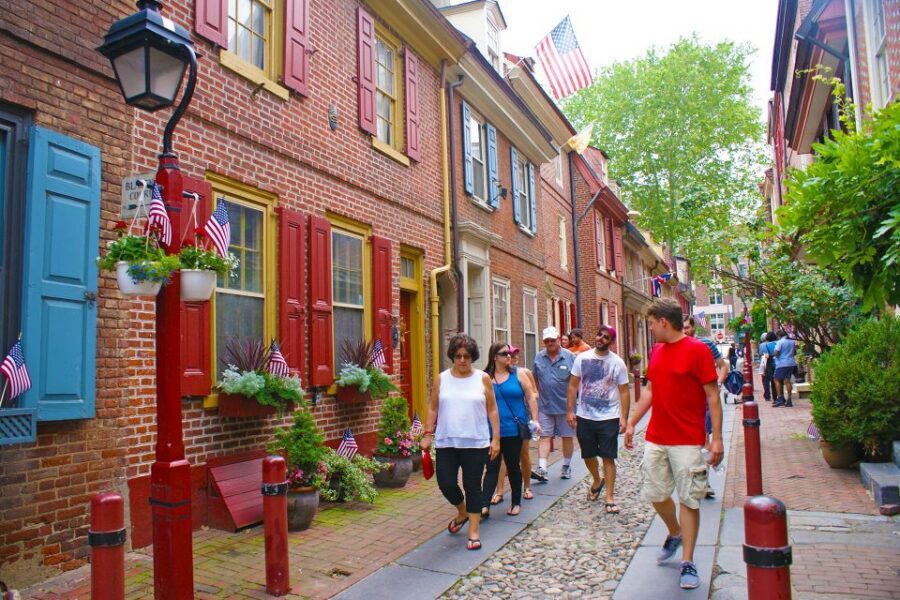
Then you hit Elfreth’s Alley, where you’ll hear why it’s famous: it’s the nation’s oldest continuously inhabited residential street. The guide doesn’t just name-drop. The explanation helps you connect daily life to the larger events of the Revolution.
What I like here is the contrast. After the grand civic buildings, Elfreth’s Alley gives you a human scale. It’s easier to imagine conversations, routines, and neighborhood politics when you’re standing on a street that’s still shaped by time.
You’ll get time for guided stops and sightseeing, plus that all-important moment for photos—because sometimes a still image is the best way to remember a place you might not otherwise revisit.
Betsy Ross House and the Photo Moment That Makes History Stick
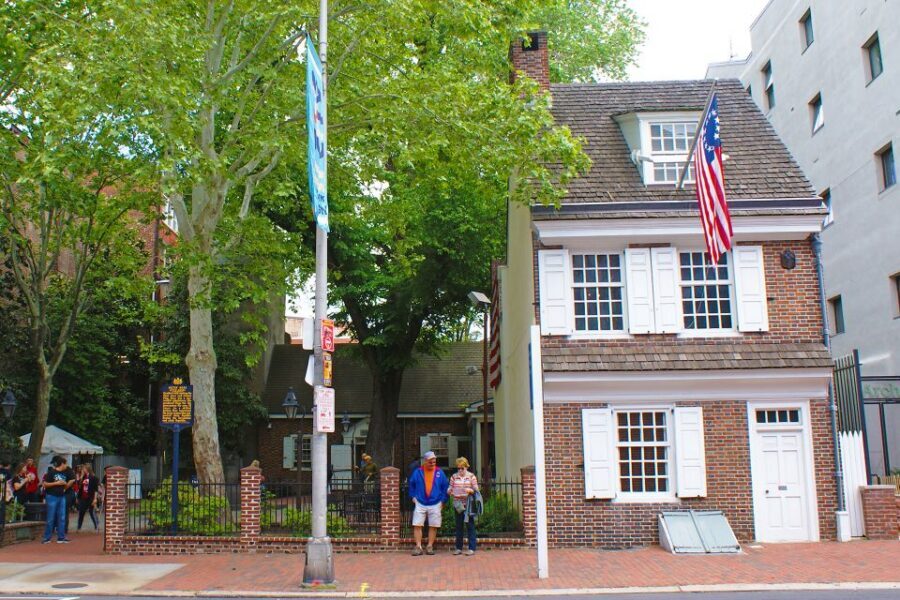
You’ll walk to the Betsy Ross House, with a stop designed for learning and a memorable photo opportunity at the home connected to Betsy Ross, credited with creating the first American flag.
This portion works well for two types of travelers. If you’re new to the subject, it helps you anchor a key figure into a real location. If you already know the story, the guide’s context can sharpen how the founding-era culture valued symbols and communication.
A small caution: figure out in advance what matters to you. If you’re expecting a long, in-depth museum-style experience at each stop, this is more of a guided, on-site moment—then you move on.
Ben Franklin’s Grave: A Quiet Break Built Into the Route
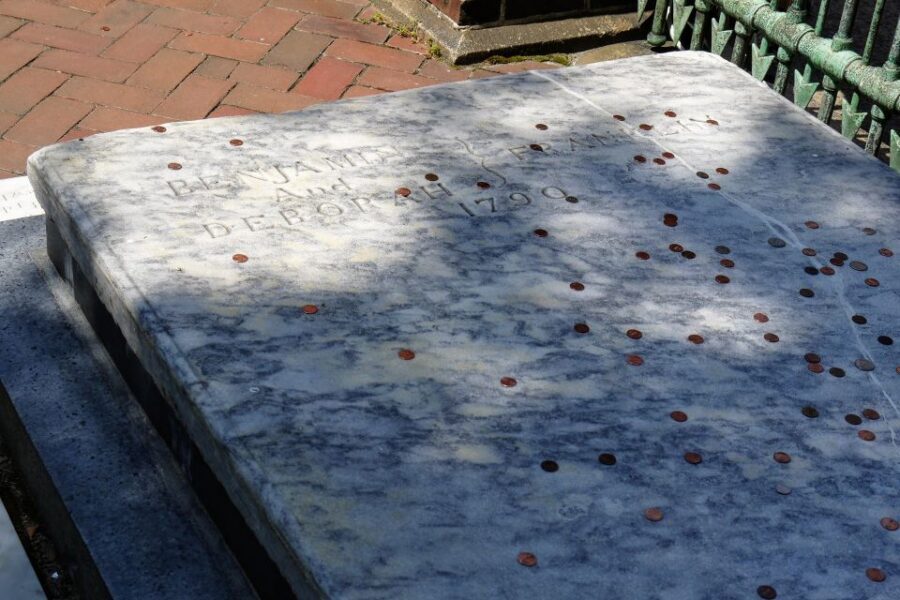
Ben Franklin’s grave is another structured moment, with a photo stop plus guided context. It’s a nice change of pace after the busier icon stops, and it can feel more reflective than the big spectacle sites.
This is also a chance for the guide to connect Franklin’s legacy to the wider revolutionary period. It’s one thing to learn he was important. It’s another to understand why his presence, ideas, and actions mattered in a time when a nation was being invented in real time.
If your group likes to ask questions, this is often a good spot for it. You tend to get better conversation when the setting is calmer.
North 6th Street and Market Street: Finishing With City-Life Perspective
As you move through North 6th Street and Market Street, the tour keeps the story grounded in the city itself. You’re reminded that the Revolution didn’t happen in a vacuum. It happened inside a functioning place—traders, neighborhoods, and daily logistics included.
This segment is guided sightseeing, so your guide will tie what you’re seeing to the broader narrative you’ve been hearing. It’s a practical way to wrap up: you leave with not only what happened, but a sense of how the city’s layout and street life support the story.
The tour ends back at Old City, closing the loop so you can either continue wandering or pivot to food and museums on your own.
The Guide Factor: What Makes This Tour Feel Top-Tier
The highest praise centers on the guide experience. Names like David, Alex, Adam, John, Tom, and PJ show up often for a reason: the storytelling tends to be clear, the pacing feels right, and questions get real answers.
I like tours where you don’t feel rushed through the facts. This one usually gives you enough space to ask follow-ups, and that makes the landmarks more memorable. When a guide can explain what you’re looking at in plain language, you walk away with the sequence of events, not just a list of sights.
Also, the guides often come across as genuinely in love with the city. That matters. You can tell when someone is reading a script versus when someone is helping you see the place the way locals do.
Price and Value: Why $41 Can Be a Smart Use of a Half Day
At $41 per person for about 2.5 hours, the price can make sense quickly if you plan to do the major sights anyway. The big value add is that your museum experience isn’t only passive. You get the Museum of the American Revolution demonstration and discounted admission you can redeem after the tour.
Plus, the tour price supports a local community organization through a donation, and it includes a National Park Service fee. So you’re not just paying for narration—you’re funding site upkeep and a local connection.
If you were trying to DIY this route, you’d still pay for some admissions and you’d spend time deciding what’s worth your attention. This tour compresses that decision-making into a guided path.
Who Should Book This Tour (and Who Might Want a Different Option)
This is a great fit if you want an overview that still feels grounded. The tour is designed for everyone from American history newcomers to history buffs, and it works well when you only have a half day in Philly.
It’s also a good choice if you like both big icons and real streets. You’ll get the Independence Hall and Liberty Bell core, but you’ll also get Elfreth’s Alley and the Betsy Ross House moment—plus Ben Franklin’s grave.
If you prefer spending most of your time inside museums rather than moving through outdoor sites, you might want to pair this with a separate museum plan later. Think of this walk as the map for your next visits, not as the final word.
Practical Walking Tips for Old City Streets
This tour is a walking route, so comfortable shoes are not optional. You’ll spend much of the time outdoors moving between stops, so plan for changing conditions and bring layers you can adjust.
If you’re driving, keep the parking constraints in mind. Allow extra time, and don’t count on street parking working out smoothly given the short time limits near Old City.
Finally, make your photo plan flexible. Liberty Bell and Ben Franklin’s grave are specifically photo stops, so you’ll get moments to capture them without losing the flow of the tour.
Should You Book This Revolution Walking Tour?
I’d book it if you want a fast, meaningful introduction to Philadelphia’s founding story without wasting time figuring out logistics. The mix of Independence National Historical Park icons, street-level scenes like Elfreth’s Alley, and the Museum of the American Revolution demo (including Washington’s tent) gives you both big moments and memorable details.
Skip it only if you know you want long, museum-style time at every location. This walk is built for learning on the move. Used that way, it’s one of the most efficient ways to understand why Philadelphia became the story’s headline.
FAQ
How long is the Philadelphia history walking tour?
The tour lasts about 2.5 hours.
How much does the tour cost?
The price is $41 per person.
Where do I meet the guide?
Meet your guide at the Signer Statue in Signer’s Garden.
What are the main stops on the tour?
You’ll see Independence Hall, the Liberty Bell, Congress Hall, Carpenters’ Hall, the Museum of the American Revolution, Elfreth’s Alley, the Betsy Ross House, and Benjamin Franklin’s grave, along with additional Old City streets and sightseeing points.
Is there a museum component included?
Yes. The tour includes a guided visit to the Museum of the American Revolution and a live demonstration. You also receive discounted museum admission to redeem after the tour.
What is included besides the guide?
In addition to the local guide, the tour includes the demonstration at the Museum of the American Revolution, discounted museum admission, a donation to a local community organization, and a National Park Service fee.
Is the tour wheelchair accessible?
Yes, the tour is listed as wheelchair accessible.
What language is the tour offered in?
The tour is offered in English.
If I’m driving, is street parking a good idea?
Street or metered parking isn’t recommended due to the maximum time allowed, which can be less than the tour duration. There are parking lots and decks nearby, and you should allow extra time to find parking.