REVIEW · PHILADELPHIA
Philadelphia Walking Tour: A Lot of Colonial Nonsense
Book on Viator →Operated by Offbeat Philly · Bookable on Viator
Colonial America gets weird fast. This walk through central Philadelphia takes the big Founding-Era names you think you know and reframes them with street-level stories and specific places you can actually see.
What I like most is the way the tour leans on story craft, not lecture mode, guided by Fayge’s habit of connecting the colonial era to modern life. I also like that the route hits major landmarks while keeping it practical: mostly free exterior viewing, plus short stops at places like the President’s House archaeology area and Franklin Court. One consideration: the pacing is brisk, with about ten minutes at many stops, so if you want long museum time or quiet reading breaks, you may feel slightly rushed.
In This Review
- Key highlights to look for
- Why this short 2-hour walk can feel like a reset button
- Price and logistics: what $45 buys you (and what it doesn’t)
- Meet at 522 Arch St, end by Betsy Ross House: how the walk actually flows
- The “colonial nonsense” concept: what the guide is doing with the route
- Stop-by-stop: what you’ll see and why it matters
- 1) Benjamin Franklin’s Grave (outside Christ Church Cemetery)
- 2) Independence Hall (exterior view)
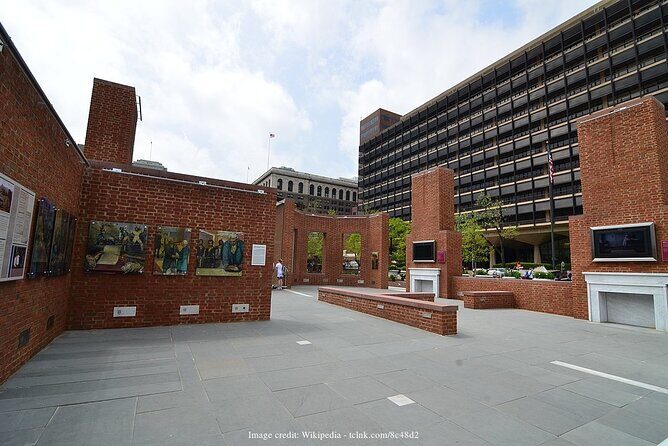
- 3) The President’s House (brief archaeology view)
- 4) Liberty Bell Center (view from outside)
- 5) Washington Square (tomb of the Revolutionary War unknowns)
- 6) Carpenters’ Hall (outside, and inside if open)
- 7) Franklin Court (ghost houses and the archway)
- 8) Elfreth’s Alley (walk down the alley)
- 9) Betsy Ross House (exterior view)
- The guide effect: what Fayge adds to the walk
- How to get the most from short stops (without losing your vibe)
- Who should book this walking tour—and who should skip it
- Should you book A Lot of Colonial Nonsense?
- FAQ
- What is the duration of the Philadelphia walking tour?
- How much does the tour cost?
- Where does the tour start and end?
- What language is the tour offered in?
- Is admission included for the stops?
- Is bottled water included?
- What is the group size?
- Can I cancel and get a full refund?
Key highlights to look for

- Fayge’s story-first approach: humor, perspective shifts, and answers to even the odd questions you didn’t know you’d ask.
- Small group, max 5 people: easier to hear your guide and get your questions handled.
- Free viewing at major stops: you see a lot without being forced into paid entrances.
- A route built for walking: the tour expects you to cover about two miles at an easy-to-moderate pace.
- Texture beyond the textbook: ghost-house details, Revolutionary-era references, and the kinds of context most classroom time skips.
- Real-world logistics that matter: mobile ticket, near public transportation, and a smart ending point near Old City’s action.
Why this short 2-hour walk can feel like a reset button

There’s a reason this tour works: it doesn’t try to cover everything. Instead, it gives you a tight route through the sites people associate with independence—then it uses those locations to challenge the way we usually tell the story.
The best part is the tone. The tour treats colonial Philadelphia like a lived-in city with messy motives, everyday consequences, and competing versions of what counts as “important.” It’s not just dates and quotes. You’ll get the sense that history is still arguing with itself.
And because it’s only about two hours, you can fit it into a normal day in Philadelphia. You’re not committing your whole morning or afternoon to a slow march through history. You’re getting oriented fast, then you can explore on your own.
Other Founding Fathers and Revolutionary history tours we've reviewed in Philadelphia
Price and logistics: what $45 buys you (and what it doesn’t)
At $45 per person for about two hours, this tour sits in a fair middle ground: it’s not a cheap “self-guided map,” and it’s not a premium private tour either. The value comes from guided interpretation plus a route that keeps you from constantly wondering what you can see without extra ticketing.
Here’s what you’re paying for:
- A guide who tells stories with nuance and humor
- A curated walk through high-interest Old City sites
- A pace designed to fit multiple stops into one outing
Here’s what you’re not paying for:
- Bottled water (you’ll need to buy it)
- Long indoor museum time (several key sights are viewed from outside)
- Anything beyond the guide services
A small but useful tip: bottled water isn’t included, but you can grab it nearby at Wawa for about $3. Bring a refillable bottle if you like, and make it your own system.
Meet at 522 Arch St, end by Betsy Ross House: how the walk actually flows
The tour starts at 522 Arch St, Philadelphia, PA 19106, beginning at 10:00 am. You’ll finish outside the Betsy Ross House at 239 Arch St, and your guide can point you where to go next.
The route is compact, but it’s still a walk. The tour isn’t recommended if you can’t comfortably travel about two miles and don’t have assistance or a mobility aid. If you do need extra support, it’s worth thinking carefully before booking.
Also, keep the group size in mind. With a maximum of 5 travelers, this is the kind of tour where you can actually hear what’s being said without craning your neck the entire time. It also tends to mean fewer “lost people” moments, because the whole group stays together.
Finally, plan for phone use: it’s a mobile-ticket format, so have your ticket ready on your device when you meet up.
The “colonial nonsense” concept: what the guide is doing with the route
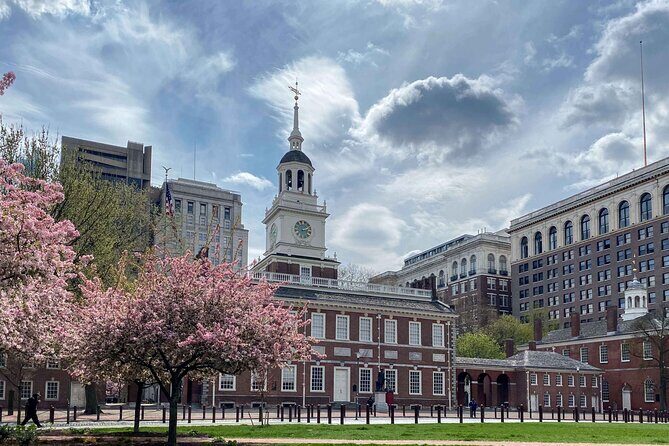
This tour name isn’t just a joke. It signals the approach: you’ll see the usual symbols of early America, but you’ll also get the messy context underneath them.
That means:
- You’ll look at familiar landmarks and hear unfamiliar angles
- You’ll get quick contrasts between past and present
- You’ll be encouraged to think about perspective, not just facts
The reviews put a spotlight on this. Fayge’s storytelling style is built around nuance—answering big questions and the obscure ones, and connecting early American life to today in ways that feel practical, not academic.
Stop-by-stop: what you’ll see and why it matters
Most stops are short, so think of this as a series of “fast looks with big context.” Each stop gives you a visual anchor, and your guide supplies the interpretation.
Other comedy and adult-only tours we've reviewed in Philadelphia



1) Benjamin Franklin’s Grave (outside Christ Church Cemetery)
You’ll view Benjamin Franklin’s grave area from outside Christ Church Cemetery. The stop is about ten minutes, and there’s no admission fee for this outside view.
Why it’s worth even a short look: it reminds you that the founding story isn’t only speeches and documents. It’s also bodies, burial places, and how memory gets curated over time. You’ll likely hear details that reframe Franklin from myth into a real person with a real legacy.
Drawback to consider: you’re not going inside for a long cemetery visit. If you’re hoping for a deep dive into cemetery history, budget extra independent time.
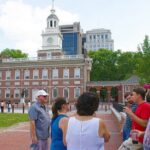
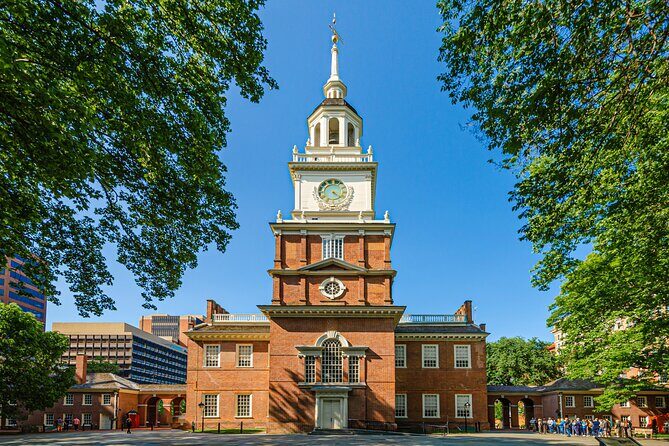
2) Independence Hall (exterior view)
Next up is Independence Hall, again with a view of the exterior only. Expect about twenty minutes.
This is a good move for most people. You get oriented to the landmark’s scale and layout, and your guide can frame why this specific building matters—without you losing half your time standing in line for an indoor experience.
Possible consideration: if you already planned to go inside Independence Hall as a priority, this tour won’t replace that. It sets context, but it doesn’t act like an all-day ticket.
3) The President’s House (brief archaeology view)
You’ll get around fifteen minutes to view the archaeology site connected to the President’s House area.
This stop is where the tour’s “beyond textbook” energy really shows. Archaeology is history you can’t polish into a single heroic narrative. It forces uncertainty, layered time, and physical evidence into the story.
Why it’s valuable: it makes early national government feel grounded. You’re not just hearing about leadership; you’re seeing proof of how complicated the early built environment was.
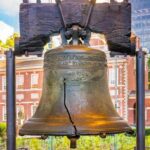
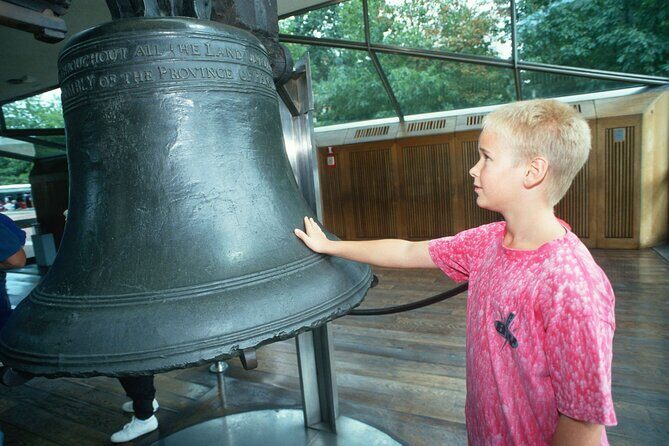
4) Liberty Bell Center (view from outside)
You’ll look at the Liberty Bell from outside the Liberty Bell Center for about ten minutes.
This works well if you want the iconic moment without turning the tour into a queue marathon. It’s also a reminder that “famous symbol” and “human story” are not the same thing.
Consideration: if you want to stand closer for viewing inside the center, plan that separately. This stop is about context and orientation.
5) Washington Square (tomb of the Revolutionary War unknowns)
You’ll enter Washington Square and view the tomb of the Revolutionary War unknowns. The time here is about ten minutes.
This is a smart contrast stop. A lot of tours over-focus on famous founders. This one nudges your attention toward people who don’t get names in schoolbooks—an important perspective shift.
What to expect: a quiet, reflective break in the middle of the route, plus context for why the city remembers the unknown soldier at all.
6) Carpenters’ Hall (outside, and inside if open)
You’ll view Carpenters’ Hall from outside for about ten minutes. If it’s open, you may be allowed inside as well.
This stop is good for understanding architecture and civic spaces. Carpenters’ Hall is tied to early American organizing, and your guide will help connect the building to how people discussed and shaped the new society.
Consideration: the inside portion depends on whether it’s open during your visit. Even if it’s closed, the exterior view still gives you something to connect later if you pass by again.
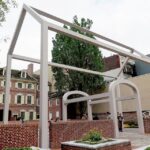
7) Franklin Court (ghost houses and the archway)
At Franklin Court, you’ll see the ghost houses and walk through the archway. Expect about ten minutes.
This is one of those places where the physical layout does some storytelling for you. “Ghost houses” can sound mystical, but the real value is how it shows that streets and structures carry memory—even when the original purpose is gone.
Why you’ll enjoy it: you get a real sense of how a neighborhood evolves, and your guide’s commentary helps you avoid treating old buildings like museum props.
8) Elfreth’s Alley (walk down the alley)
Next, you’ll walk down Elfreth’s Alley for about ten minutes.
This is a slower visual check. You’ll notice the narrow scale and the way everyday life would have felt in a tight lane of houses. It’s the kind of stop that makes the founding era feel less like a distant concept and more like a lived neighborhood.
Practical tip: take a couple of photos, but also look up and down the street line. It’s easy to just point your camera at the most famous building and miss the alley’s overall feel.
9) Betsy Ross House (exterior view)
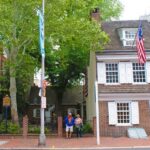
The tour ends with a look at the Betsy Ross House from the exterior, about ten minutes. The guide will end outside, and you’ll get directions to wherever you want to go next.
This stop is less about proving a single story and more about understanding how legends attach to places. It’s a good final anchor because by the time you reach Betsy Ross House, you’ve already heard enough context to separate what feels famous from what’s actually meaningful.
The guide effect: what Fayge adds to the walk
A walking tour lives or dies on the guide’s ability to turn facts into meaning. Fayge’s approach, based on the strongest feedback, is built around:
- nuanced takes on early American history
- humor that keeps the pace friendly
- answers to questions, including the oddly specific ones
- connections between colonial-era life and modern life
If you’re the type who usually pays attention in history class but feels bored by “textbook only,” this format is a good match. You get the same subjects—founders, institutions, big events—but they’re framed so the story feels like it has edges and consequences.
And if you think you’re not a history person, this is also a potential win. The guide style described in the reviews suggests you’ll still be able to follow along and get something out of each stop.
How to get the most from short stops (without losing your vibe)
Because many stops are around ten minutes, you’ll do best if you prepare for quick processing.
What helps:
- Wear comfortable shoes. Old City streets don’t care that you only planned for a “casual” walk.
- Bring water. Bottled water is available nearby at Wawa for about $3.
- Keep your questions ready. With a max group size, you’ll have an easier time getting an answer.
- Take photos early, then listen. If you spend five minutes framing every shot, the guide’s context rushes by.
Also, treat the tour like an orientation tool. You’ll see a lot, but you won’t leave with every detail memorized. The goal is to leave with better questions for your self-guided time afterward.
Who should book this walking tour—and who should skip it

This is a strong fit if you want:
- a small-group walk through major Old City sites
- interpretation that challenges the standard version of the colonial story
- a route that’s easy to combine with the rest of a Philadelphia day
You might want to skip it if:
- you can’t handle about two miles of walking
- you need a more relaxed pace with longer indoor time at multiple landmarks
- you’re looking for a museum-heavy experience rather than guided site context
On the other hand, most people can participate, and the tour includes guide services throughout. It also allows service animals, and it’s near public transportation—good for building it into a longer itinerary.
Should you book A Lot of Colonial Nonsense?
I think this tour is worth booking if you want your first taste of Philadelphia’s founding-era landmarks to feel more alive than a standard “here’s the plaque” stop. At $45, you’re buying a small-group guide and a focused route that keeps seeing and learning tightly connected.
Book it if you:
- like story-driven history with perspective
- want free exterior viewing across several major sites
- prefer a two-hour plan over a day-long commitment
Skip or add extra time separately if you:
- know you’ll want lots of inside access at places like Independence Hall or Liberty Bell Center
- need slower breaks and more time per stop
If you’re aiming for a smart, compact way to understand Old City without losing your day, this one is a solid choice. Free cancellation is available up to 24 hours in advance if you need flexibility.
FAQ
What is the duration of the Philadelphia walking tour?
It runs for about 2 hours.
How much does the tour cost?
The price is $45.00 per person.
Where does the tour start and end?
It starts at 522 Arch St, Philadelphia, PA 19106 and ends outside the Betsy Ross House at 239 Arch St, Philadelphia, PA 19106.
What language is the tour offered in?
The tour is offered in English.
Is admission included for the stops?
The itinerary stops are listed with admission ticket free for the viewing included on the route.
Is bottled water included?
No. Bottled water is not included, and you can purchase water at the nearby Wawa for $3.
What is the group size?
The tour has a maximum of 5 travelers.
Can I cancel and get a full refund?
Yes. You can cancel up to 24 hours before the experience’s start time for a full refund.