REVIEW · PHILADELPHIA
Valley Forge Revolutionary War Self-Guided Driving Tour
Book on Viator →Operated by Action Day Trips · Bookable on Viator
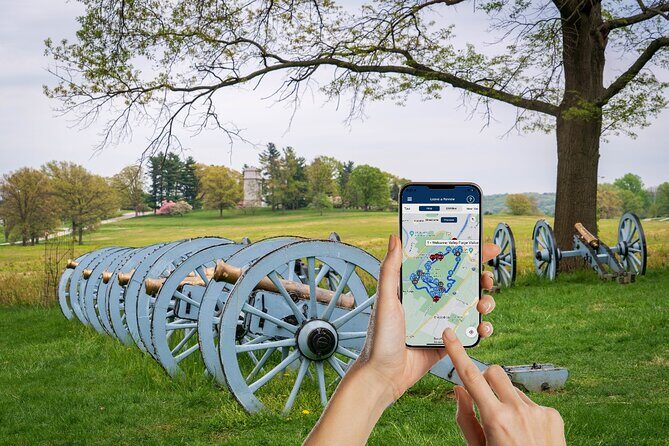
Valley Forge hits different with audio on your dashboard. This self-guided driving tour strings together major sites from Washington’s winter command into a live GPS map experience with offline playback.
I like two things a lot: the stories are hands-free and triggered by your location, and the price is per group (up to 4 in one car), which makes it easy to share without doing math every time you add a family member.
One drawback to plan around is navigation friction: the experience relies on your phone GPS and correct app setup, so if your directions/maps don’t line up quickly, you can wander or miss a stop.
In This Review
- Key things to know before you go
- Valley Forge on a road trip timer: how this drive-tour really feels
- Price and value: $16.99 per group can be a bargain
- Setup that takes 5 minutes: download first, then trust the GPS
- Where you start and how long the loop takes
- The itinerary: from Washington’s winter reality to the monument trail
- 1) Visitor Center at Valley Forge: set the stage before you move
- 2) Muhlenberg Brigade: “Devil Pete” and the turn from sermon to rifle
- 3) Maine Memorial: the colonies weren’t a single unit
- 4) National Memorial Arch: the whole Continental Army story
- 5) General Wayne Statue: Mad Anthony isn’t just a nickname
- 6) Knox’s Quarters parking: Henry Knox and reason in winter
- 7) Delaware Memorial: why everything started to unravel
- 8) Washington’s Headquarters (guards’ huts): plots and power at the top
- 9) Valley Forge National Historical Park (Washington himself): leadership and limits
- 10) New Jersey Brigade Memorial: trained troops in a ragtag army
- 11) Statue of General Friedrich von Steuben: turning survival into readiness
- 12) Varnum’s Quarters: an advisor’s house and a major first
- 13) Patriots of African Descent Monument: a necessary correction in the story
- 14) Philander Chase Knox Estate (optional): law, presidents, and a personal detour
- 15) Valley Forge Train Station (optional): Washington and rails
- 16) Washington Memorial Chapel: a Liberty Bell replica
- 17) Washington Memorial Cemetery: where the story leaves markers
- 18) Maurice Stephens House: quarters history on a second layer
- 19) Port Kennedy Railroad Station: abandoned space with a past
- Road-trip practicalities: when the app shines and when you’ll work a bit
- Who should book this Valley Forge self-guided driving tour
- Should you book? My decision guide
- FAQ
- FAQ
- How long does the Valley Forge self-guided driving tour take?
- How much does it cost?
- Do I need an internet connection during the tour?
- Is this an entry ticket to Valley Forge attractions?
- How does the audio start while I’m driving?
- Where do I start and end the driving route?
- What language is the tour offered in?
- Can I get a refund if I cancel?
Key things to know before you go
- Offline-first audio: download the tour on strong Wi‑Fi/cellular, then it runs without reception.
- Location-triggered stories: audio plays automatically as you reach each numbered point.
- One purchase per car: $16.99 per group (up to 4) keeps this in the “real value” zone.
- 30+ stories over 10+ miles: you’ll get more than quick monument viewing.
- Some stops aren’t just drive-by: plan for short walks if you want the full experience.
- A lifetime license: access doesn’t expire, so you can repeat later if roads or closures affect your route.
Valley Forge on a road trip timer: how this drive-tour really feels

If you only have a short window at Valley Forge, this format is smart. You’re not stuck waiting for a group pace, and you’re not stuck reading tiny plaques while traffic noise fights your attention. The tour is designed to move you from place to place while keeping the context running in your ears.
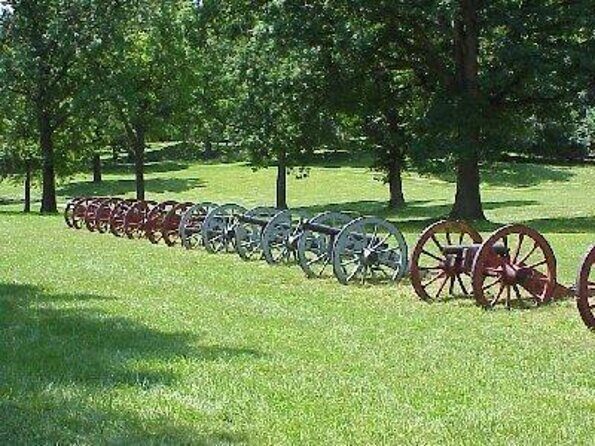
The best part is that the audio isn’t one long lecture. It’s broken into 30+ separate stories, each tied to a spot along a route that’s over 10 miles long. That means you get bite-sized backstory where it matters—at Muhlenberg’s brigade site, at the National Memorial Arch, near Washington’s Headquarters, and so on—rather than dumping all the history at the visitor center.
That flexibility cuts both ways. Yes, you can pause for photos and snacks. But if you pause a lot, it can stretch beyond the typical 1 to 2 hours estimate. If you’re the type who stops the moment you see a good view, plan closer to the longer end.
Other Founding Fathers and Revolutionary history tours we've reviewed in Philadelphia

Price and value: $16.99 per group can be a bargain

At $16.99 per group (up to 4), this isn’t priced like a “pay-per-head” attraction. That matters at Valley Forge because families often end up with a pile of separate tickets elsewhere.
Think of it this way: the cost is tied to your vehicle, not your headcount. If two adults plus two kids are riding together, you’re effectively buying one narration system for the whole car. If you’re coming solo or in a couple, it’s still low enough that you won’t feel like you have to rush.
Also, this is new, lifetime access with no expiry. Even if you hit roadblocks or a couple areas are closed on your date, the tour doesn’t disappear afterward. You can return another time and run it again.
Setup that takes 5 minutes: download first, then trust the GPS
This tour is self-guided, which means no one is waiting at the curb to help you start. You’ll pick the app on your phone (Action’s Tour Guide App) and use a password sent by email/text after booking.
Here’s what you need to do to avoid the most common headaches:
- Download the tour while you’re in strong Wi‑Fi/cellular. Offline playback only works after download.
- At the start point, open the app and start the correct tour version if there are multiple options.
- The audio should begin automatically when you’re at the first story location. If it doesn’t, don’t guess—double-check you started the right tour and that GPS is working.
If you’ll listen while driving, connecting your phone to the car stereo via Bluetooth, USB, or AUX can help a lot. And if anyone will be walking short stretches, headphones are often the cleanest way to keep audio clear.
One practical tip: stick to the intended route and speed limit. This tour is built around location cues. If you shortcut or take a detour that isn’t part of the path, the timing can slip and you’ll feel it.
Where you start and how long the loop takes
The tour begins at the Valley Forge Visitor Center on N Outer Line Drive (the details list 1400 N Outer Line Dr, and the instructions also reference 1000 N Outer Line Dr). It ends at 3113 Valley Forge Cir, King of Prussia, PA 19406.
Expect opening hours of 9:00 AM to 5:00 PM daily (based on the listed schedule). If you’re arriving late in the day, it’s worth moving briskly—there’s enough history here that “we’ll just do the highlights” can easily become “why is it already getting dark?”
The itinerary: from Washington’s winter reality to the monument trail
This route is a mix of major monuments, memorials tied to specific units or colonies, and a handful of house/estate-adjacent stops. The driving part keeps things efficient. The audio part makes each stop feel like a scene, not a postcard.
Below is what you’ll run into in order, with what each stop is good for and what to watch out for.
Other Valley Forge and area day trips we've reviewed in Philadelphia





1) Visitor Center at Valley Forge: set the stage before you move
Start at the Visitor Center area. The audio frames what happened when George Washington and the Continental Army arrived in December 1777 and faced a brutal winter. The core idea you’ll hear is that Washington understood the odds were grim—survival wasn’t guaranteed until spring arrived.
Plan note: admission ticket is not included for this stop. Even if you don’t go inside, you’re using this location as the story’s starting context.
If you only do one thing before you start listening, do this: read what you can near the start point and then let the audio take over. It makes the rest of the drive click faster.
2) Muhlenberg Brigade: “Devil Pete” and the turn from sermon to rifle
Next comes the Muhlenberg Brigade. You’ll hear about John Peter Muhlenberg—often nicknamed Devil Pete—and his switch from being a reverend to picking up arms during the Revolution.
This is a great stop if you like human stories inside military history. It also reminds you that Revolutionary-era decisions were personal, not abstract.
This one is marked as free to view, so you can keep your time efficient here.
3) Maine Memorial: the colonies weren’t a single unit
Then you’ll reach the Maine Memorial. This one leans into relationships between men from different colonies—how connections were real, but not automatic. The audio helps explain that the Revolutionary cause was shared, yet the people weren’t all the same, or from the same place.
It’s a short stop, but it adds a layer that many “battlefield-only” visits miss.
4) National Memorial Arch: the whole Continental Army story
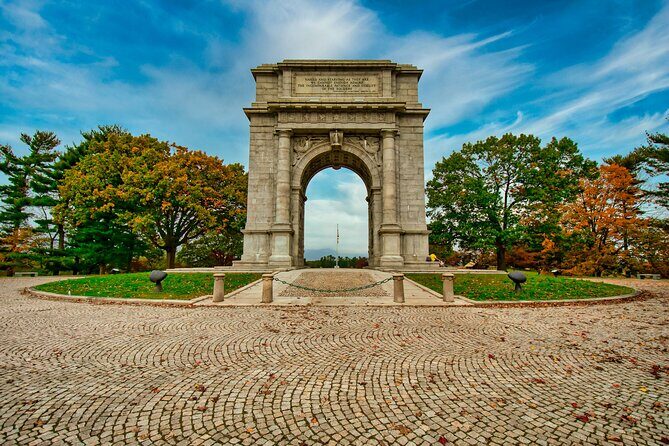
The National Memorial Arch is probably the most visually iconic moment on the drive. It honors the Continental Army that wintered here, including those who didn’t make it through the season.
When the audio is timed well, this stop lands with weight. You’re not just seeing a structure—you’re hearing what it represents right as you arrive.
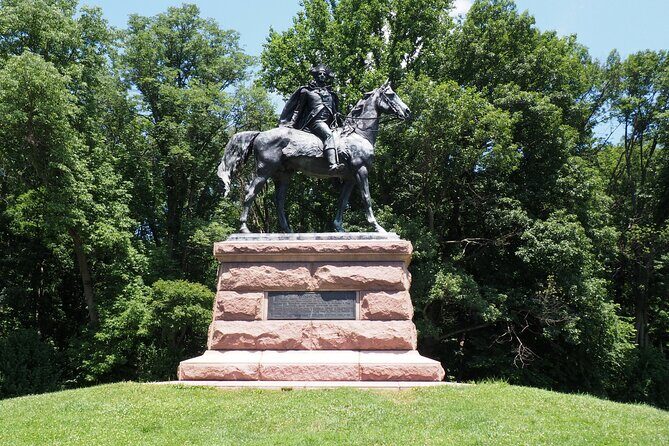
5) General Wayne Statue: Mad Anthony isn’t just a nickname
You’ll roll past the statue of General Wayne, tied to the story behind “Mad Anthony.” Wayne gets framed as one of Washington’s fiercest fighters, and the audio gives you why that reputation grew.
If you want more personality in the history, this is one of the stronger monuments for it.
6) Knox’s Quarters parking: Henry Knox and reason in winter
Next is Henry Knox’s quarters parking. Henry Knox was a self-taught artilleryman who became a general, and the audio positions him as a key voice during the winter months.
Plan note: admission ticket is not included for this stop. So if the area you want to see requires entry, you may need to arrange that separately.
7) Delaware Memorial: why everything started to unravel
At the Delaware Memorial, the audio explains how the situation at Valley Forge began to unravel. This stop works like a turning-point marker. After you’ve absorbed suffering and resilience, you start hearing how pressure and uncertainty strain the system.
It’s also a good pause point if you want a quick mental checkpoint before the tour moves deeper into Washington’s headquarters area.
8) Washington’s Headquarters (guards’ huts): plots and power at the top
Then you’ll reach Washington’s Headquarters, described as the huts of Washington’s personal guards. The audio includes a “secret plot” theme—details around risk close to the commander in chief.
This stop is especially good if you want the Revolutionary War to feel less like marching and more like politics, suspicion, and survival.
Most of the nearby memorial viewing points here are labeled free, so this part is usually low-cost.
9) Valley Forge National Historical Park (Washington himself): leadership and limits
This stop is essentially the Washington focus in the route, with the audio discussing his background and why he was appointed in 1775. You’ll also hear a grounded take on his leadership style—more organizational and analytical than tactical.
That framing helps you understand why Valley Forge matters. It wasn’t only about one battle. It was about keeping the army functioning long enough to fight again.
10) New Jersey Brigade Memorial: trained troops in a ragtag army
You’ll reach the New Jersey Brigade Memorial, centered on troops described as well-trained and dependable. The audio places them in contrast with the broader image of a ragtag force.
If you’re trying to make sense of how the Continental Army improved over time, this is one of your “proof points.”
Plan note: admission ticket is not included is listed for this stop, so check whether the view area you want requires any entry.
11) Statue of General Friedrich von Steuben: turning survival into readiness
Next comes the statue of Friedrich von Steuben. The audio underscores the crisis: Washington recognizes the army isn’t ready for war, and surviving winter is only step one. Steuben becomes the force behind turning volunteers into a real fighting unit.
This is a strong stop for audio-driven storytelling because it links events across months. One minute you’re inside hardship; the next you’re hearing how training becomes the bridge to future battles.
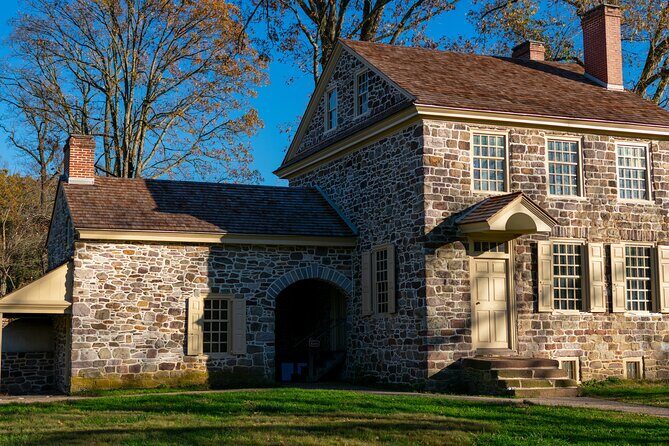
12) Varnum’s Quarters: an advisor’s house and a major first
Then you’ll see Varnum’s Quarters, a stone house used during the winter by General James Mitchell Varnum, Washington’s advisor. The audio also notes Varnum for bringing the first Black soldiers into the Continental Army.
This is the kind of stop where you’ll likely linger. Even if it’s only a short pause, the content gives it depth beyond a quick photo.
Plan note: admission ticket is not included is listed for this stop.
13) Patriots of African Descent Monument: a necessary correction in the story
After that is the Patriots of African Descent Monument. The audio frames it as an often overlooked slice of history tied directly to the people described at Varnum’s quarters.
If you’re trying to understand Valley Forge as more than “white men in uniforms,” this stop is an important course-corrector.
14) Philander Chase Knox Estate (optional): law, presidents, and a personal detour
There’s an optional detour to the Philander Chase Knox Estate. The audio notes Philander Chase Knox served as Attorney General under Presidents McKinley and Roosevelt.
This isn’t strictly a Valley Forge military stop, but it’s a nice way to connect the Revolutionary era to later American history. If you’re short on time, you can skip without breaking the main narrative.
Plan note: admission ticket is not included for this stop.
15) Valley Forge Train Station (optional): Washington and rails
Another detour takes you to the Valley Forge Train Station area, with audio info about trains and Washington.
If you like the layers of how places change over centuries, this stop can be satisfying. If you’re only in “Revolution mode,” treat it as a bonus.
Plan note: admission ticket is not included is listed for this stop.
16) Washington Memorial Chapel: a Liberty Bell replica
For monument-lovers, the Washington Memorial Chapel is a standout. The audio points out that the chapel boasts a replica of Philadelphia’s Liberty Bell.
It’s a neat reminder of how Revolutionary symbols traveled in American memory—turning one famous icon into a local statement at Valley Forge.
This stop is marked free.
17) Washington Memorial Cemetery: where the story leaves markers
Behind the chapel is the Washington Memorial Cemetery, with the audio noting key figures like Philander Knox laid to rest here.
This works best if you don’t rush. Even a short listen can make the cemetery feel purposeful, not like just another field.
Also marked free.
18) Maurice Stephens House: quarters history on a second layer
Next is the Mauricce Stephens House, described as built atop the site of another general’s quarters used during the winter of 1777.
This stop is great when you enjoy “same place, different occupants” history. It emphasizes how Valley Forge reused space and how quarters mattered for command operations.
Marked free.
19) Port Kennedy Railroad Station: abandoned space with a past
Finally, the route heads to Port Kennedy Railroad Station, described as a defunct station shuttered since the 1980s.
This is a very different vibe than the Revolutionary core, but it gives you the feeling of time moving on. The audio keeps it connected by tying local history to what came later.
Marked free.
Road-trip practicalities: when the app shines and when you’ll work a bit
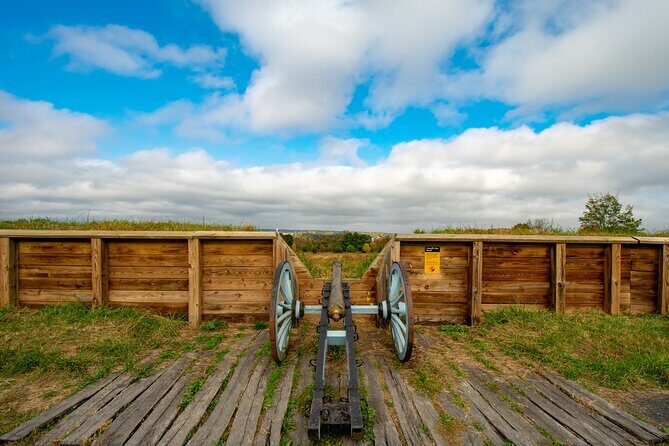
The technology can be excellent when conditions cooperate. Offline playback is a big deal at Valley Forge, because signal can be spotty and you don’t want your history to buffer right as you arrive at Washington’s Headquarters.
But you’ll get the best experience if you’re realistic about two things:
- Expect short walks and getting out of the car at several points. The drive tour format doesn’t mean everything is visible from the windshield.
- If you stop for photos a lot, the audio can pause and then resume. That’s not a bug. It’s the app trying to keep story timing aligned with where you are.
If hearing is an issue for anyone in your group, consider headphones or keep volume steady before you reach each stop.
Who should book this Valley Forge self-guided driving tour
This is a strong pick if:
- You want flexibility without a timed group schedule.
- You’re bringing kids or multiple adults and you like the per-car pricing.
- You want your history delivered in manageable segments while you drive.
It may not be ideal if:
- You hate depending on phone GPS and apps for directions.
- You don’t want to leave the car at all. Some stops likely reward those quick walks.
Should you book? My decision guide
Book it if you’re looking for a low-cost, no-pressure way to make Valley Forge feel like a story instead of a set of monuments. The offline audio plus location-triggered playback is the real value, and the lifetime access makes it a “use it now, repeat it later” purchase.
Skip or consider another approach if you strongly rely on physical signage and you’re worried your phone setup might fail. In that case, the tour can still contain great content, but you’ll need to manage the navigation piece carefully.
FAQ
FAQ
How long does the Valley Forge self-guided driving tour take?
It’s designed for about 1 to 2 hours to complete, and the route is over 10 miles long.
How much does it cost?
The price is $16.99 per group, up to 4 people, and it’s sold per group rather than per person.
Do I need an internet connection during the tour?
No. The tour works offline after you download it while you have strong Wi‑Fi/cellular.
Is this an entry ticket to Valley Forge attractions?
No. It’s a self-guided experience and not an admission ticket. Some stops note admission tickets are not included.
How does the audio start while I’m driving?
After you open the Action’s Tour Guide app at the starting point, the audio is designed to begin automatically once you reach the first story location, then play as you approach each stop.
Where do I start and end the driving route?
The tour starts at the Valley Forge Visitor Center on N Outer Line Drive (1400 N Outer Line Dr is listed, and the instructions also reference 1000 N Outer Line Dr). The route ends at 3113 Valley Forge Cir, King of Prussia, PA 19406.
What language is the tour offered in?
The tour is offered in English.
Can I get a refund if I cancel?
Yes, free cancellation is available. You can cancel up to 24 hours in advance for a full refund. If you cancel less than 24 hours before the start time, the amount paid isn’t refunded.