REVIEW · PHILADELPHIA
Philadelphia Historical Independence Walking Tour
Book on Viator →Operated by Bow Tie Tours · Bookable on Viator
Independence Hall is the headline. This guided walk threads together the birth of US government and Pennsylvania’s colony story, with stops tied to the Declaration and Constitution debates, plus the people behind them. I especially like the storytelling style that makes each building feel like a scene, not a plaque.
I also love the small-group pace. Reviews mention groups as small as 6, and even one near-private setup with guides like Neil and Matt adjusting on the fly and answering every question you throw at them.
One thing to plan for: it’s an outdoor walk and it’s weather-dependent, so you’ll want good walking shoes and a flexible attitude if any site is temporarily inaccessible.
In This Review
- Key highlights at a glance
- A 90-minute walk that explains how the US government was invented
- Starting at Independence Visitor Center on Market Street
- Independence Hall: the Constitution and Declaration story, in order
- Franklin Court and the places behind Benjamin Franklin’s everyday influence
- Carpenters’ Hall and the First Continental Congress momentum
- Congress Hall: learning how power transfer was supposed to work
- The President’s House spot and how Washington’s role looked on the ground
- Supreme Court origins and the federal government’s early footprint
- Declaration House and the meanings behind the stories
- Betsy Ross House: the flag story you’ll want to pin down
- How guides like Neil, Matt, Andrew, and Mike bring the whole walk alive
- Small-group pace, walking comfort, and family-friendly value
- Price and timing: why $25 makes sense for this much context
- A smart way to plan your Independence Day (and any founding-era trip)
- Should you book this walking tour?
- FAQ
- Where does the tour start?
- How long is the Philadelphia Historical Independence Walking Tour?
- What does it cost?
- What language is the tour offered in?
- How many people are in a group?
- Can I get a full refund if I cancel?
Key highlights at a glance

- Independence Hall first: you start where the Constitution and Declaration story becomes real.
- Over 20 historical stops: you’ll pass many landmark locations, not just a few “photo stops.”
- Franklin and the civic mindset: Franklin Court and the Library Company angle toward how ideas shaped the city.
- Government themes throughout: peaceful transfer of power shows up more than once.
- Guides who handle questions well: expect clear explanations and extra context, even for kids.
- $25 for a story-focused walk: short on time, strong on meaning.
A 90-minute walk that explains how the US government was invented
Philadelphia is where “the United States” stopped being a concept and started acting like a system. This tour is built around that idea. You’re not just looking at famous buildings. You’re walking through the logic of how a new government tried to work, and how the colony of Pennsylvania fit into that bigger American shift.
What makes it work is the mix of big landmarks and smaller civic details. You’ll connect the dots between Independence Hall, where major founding debates happened; the meeting spaces linked to early Congress activity; and the later institutions that represented the federal government on the ground. The result is a story you can actually follow while you’re standing in the street.
And you don’t need a background course. The tour frames events in plain language and keeps returning to themes like legitimacy, representation, and peaceful transfers of power. If you’ve ever visited Independence Hall and wondered what it all meant, this walk gives you a map for your brain as you go.
Other historic Old City walking tours we've reviewed in Philadelphia



Starting at Independence Visitor Center on Market Street

You begin at the Independence Visitor Center, 599 Market St, in downtown Philadelphia. It’s easy to find and well-located for transit, which matters because you’ll be walking from stop to stop as the story unfolds.
From the start, you get the tour’s rhythm: short explanation, quick look at the place, then onward. The walk is designed to fit the core highlights without turning into an all-day marathon. That timing is important if you’re also planning to do Liberty Bell area sights, a museum or two, or just grab a good Philly meal afterward.
Also note the format: you get a mobile ticket, and the tour is offered in English. If you’re juggling phones, tickets, and changing plans during a trip, that’s one less thing to stress about.
Independence Hall: the Constitution and Declaration story, in order
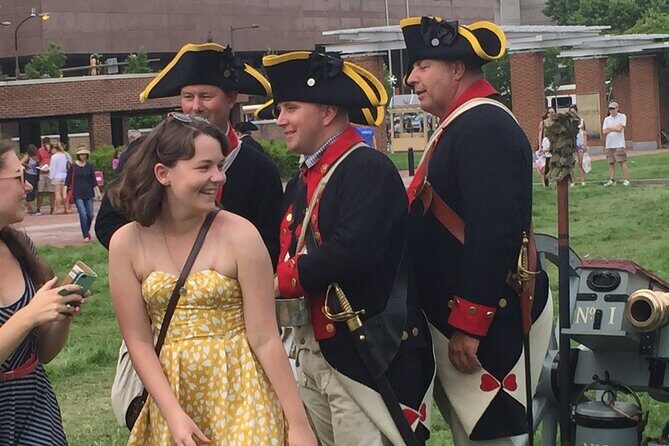
Independence Hall is the anchor. Your guide sets it up so it doesn’t feel like random heritage tourism. You’ll hear why this building is central to American identity, with a focus on the Constitution and the Declaration—plus what the process looked like when power shifted from thought to policy.
Here’s what makes this stop especially useful: you’re not only learning names. You’re learning the mechanics of government as they were forming. That includes the idea of peaceful transfer of power, which is a recurring theme you’ll see again later in the route.
Plan on spending a brief but meaningful window here. The tour keeps moving, so if you’re the type who wants 30 photos of one doorway, you may need to balance your camera time with your listening time. The payoff is that the details your guide explains tend to make what you see next easier to understand.
Franklin Court and the places behind Benjamin Franklin’s everyday influence
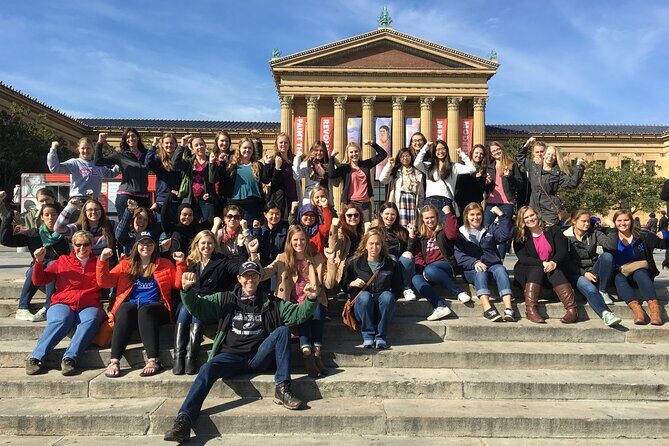
After Independence Hall, you shift to Franklin-related ground with Franklin Court. This is the spot where Benjamin Franklin’s house once stood, and the tour uses it to connect Franklin’s role to the broader civic and political culture of the city.
This stop works well because it widens the lens. Independence Hall represents the moment the nation’s governing ideas took shape. Franklin Court helps you see that Philadelphia wasn’t only about public drama. It was also about information, networks, and the kind of practical thinking that keeps a revolution from turning into chaos.
If you love the “how did this society function” side of history, you’ll likely enjoy this part. It gives you a sense of Philadelphia as a working brain trust, not just a stage set.
Carpenters’ Hall and the First Continental Congress momentum
Next you’ll walk through Carpenters’ Hall. This is one of those locations where the story is bigger than the building itself. Your guide ties it to the First Continental Congress, and this is where the tour’s theme really becomes clear: people had to meet, coordinate, and argue out structure long before the country became a settled thing.
This stop gives you context for why Philadelphia became such a magnet during the founding era. Congress didn’t just spring up fully formed. It was built through gatherings, proposals, and compromises—often in places that look ordinary from the outside.
A quick note for timing: this tour is short, so you’ll get the essentials rather than a full museum-style interpretation. Think of it as an “orient you to the subject” stop. If you want extra depth, you’ll know what topic to search for after the walk.
Other Independence Hall and Liberty Bell tours we've reviewed in Philadelphia

Congress Hall: learning how power transfer was supposed to work
Congress Hall is where you’ll hear about the first peaceful transfer of power. The phrase matters because it turns the history from biography into a systems story. You’ll see that early American leaders were trying to build legitimacy through process, not force.
This is also where the tour gets useful for modern visitors. It’s easy to say “the government was founded here.” It’s harder to understand how leaders aimed to keep transitions calm and lawful. Congress Hall gives you that bridge.
One small travel tip: in this part of the route, you’ll likely be close to the busiest historic zones. If you care about photos, step aside for a few seconds after your guide finishes the point, rather than trying to frame shots while the guide is explaining. You’ll keep your attention sharper, and your photos will come out better.
The President’s House spot and how Washington’s role looked on the ground
You’ll also visit the spot associated with the President’s House, where George Washington lived during his presidency. The tour uses this to make the early executive branch feel physical. You’re not just learning that Washington was president. You’re seeing how the role was housed and experienced in Philadelphia.
This stop tends to stick because it adds everyday realism. Even for serious history buffs, it’s a reminder that power operates through ordinary routines: where leaders lived, how they moved through the city, and how government life looked when it wasn’t yet global spectacle.
If you like “human scale” history, this is one of the most satisfying stops. If you prefer pure dates and documents, you may still find it helpful because it explains why location mattered to authority.
Supreme Court origins and the federal government’s early footprint

The tour includes the original Supreme Court building. That matters because the US Supreme Court is often treated like an abstract symbol. Standing on the trail of its early physical presence helps you understand that it wasn’t only about famous cases. It was also about establishing a real institution in real time.
This portion of the walk also reinforces what the tour does best: it keeps returning to how institutions were built. You’ll keep seeing the same idea from different angles—meeting places, legislative activity, executive life, and judicial authority—so the whole system becomes easier to picture.
If you’re visiting with teens or adults who like to know why something exists, this part is a strong payoff. It answers the unasked question: why was the court there when the country was still forming?
Declaration House and the meanings behind the stories
You’ll hear about Declaration House, linked to the time when Thomas Jefferson wrote the Declaration of Independence. For many visitors, this stop becomes more than trivia because it connects the “big text” moment to a real address in Philadelphia.
This is the kind of stop that helps you slow down mentally. You stop being impressed by the document as an object and start appreciating the fact that it had to be drafted, refined, and communicated in a living political environment.
If you like reading primary-source history, this stop gives you a reason to care about wording and intent. Even if you never read Jefferson straight through, you’ll understand the context around why the declaration landed when it did.
Betsy Ross House: the flag story you’ll want to pin down
The tour also includes the Betsy Ross House, described as the site where she lived when the first American flag was sewn. The flag story is one of the most recognizable parts of American founding history, so it’s often where visitors get that quick jolt of excitement.
Here’s my practical advice: if Betsy Ross is a must-see for your trip, be ready to ask your guide to point out the spot clearly and connect it back to the flag narrative. The tour is designed to cover it, but in a real walking-tour world, the order and emphasis can shift if any site is inaccessible.
Even so, this stop adds texture. It reminds you that independence history wasn’t only paperwork and speeches. It was also symbols—things people could point to and rally around.
How guides like Neil, Matt, Andrew, and Mike bring the whole walk alive
The tour’s real engine is the guide. You’ll see that in the consistent praise: guides who explain clearly, answer questions, and keep the tone engaging for all ages.
Specific guide names show up in the feedback, including Neil, Matt, Andrew, and Mike. People also mention Dave and Cpl Mike in the same spirit: strong storytelling, humor, and an ability to adjust the tour when a family’s interests change mid-walk. One helpful pattern: guides tend to make time for questions rather than treating them as interruptions.
One practical takeaway for you: if you have a topic you care about—government structure, the Revolution lead-up, or how the city influenced decisions—bring it up early. In this format, a guide can often steer the spotlight without changing the whole route.
Small-group pace, walking comfort, and family-friendly value
This tour caps at a maximum of 30 travelers, which helps keep the experience manageable. Many times, the group is smaller than that, and the tour can feel like a more personal conversation on foot rather than a lecture with a hundred legs attached.
It’s also set up for a range of visitors. Service animals are allowed, and most travelers can participate. Families report that it works even with strollers, which matters because Independence National Historical Park area sidewalks can get busy.
The best way to enjoy it is to treat it as a guided primer. You’re walking the historic core and getting context fast. The duration is about 1 hour 30 minutes, give or take based on the group and conditions. That makes it ideal if you’re doing other things later the same day and don’t want to lose half your daylight.
If you’re traveling with kids, expect the guide to work hard to keep attention. Reviews mention engaging younger travelers and helping them stay involved without turning the tour into a kids-only version.
Price and timing: why $25 makes sense for this much context
At $25 per person for around 90 minutes, this tour is priced like a value-driven “foundation lesson.” It’s not competing with a full museum ticket day. Instead, it buys you something harder to do on your own: a guided sequence that ties the landmarks together so your brain stops treating the sites as a random checklist.
Also consider scheduling. The tour is booked about 8 days in advance on average, so if you’re traveling during peak season or near major holidays, booking earlier can help you land a departure time that fits your plans.
Departure timing is flexible too, with options including morning and multiple afternoon slots. That gives you room to decide whether you want your historic walk before crowds swell or as part of an afternoon sightseeing block.
A smart way to plan your Independence Day (and any founding-era trip)
If you’re pairing this tour with other Philadelphia stops, think about it like this:
- Do this tour earlier in your day block if you want the landmarks to make sense later.
- If you plan to revisit Independence Hall or nearby sites on your own, take notes during the walk so you know what to look for.
For what to bring: comfortable shoes. The tour is walking-focused, and the “good weather required” condition is real. If weather turns, the tour provider will offer a different date or a full refund, so flexibility helps.
And since you’ll see a lot of the Independence National Historical Park area in a short time, don’t overload the day with too many other heavy activities. Let this tour be your anchor experience, then add lighter stops after.
Should you book this walking tour?
Yes, you should book it if you want a quick, structured way to understand how Philadelphia shaped the early United States. It’s especially a good fit for first-time visitors who want the big story of independence government without spending hours inside multiple museums.
Skip it or reconsider if your priority is deep, document-level reading at every site. This tour is short by design. It gives context and connections, not a full-blown academic seminar. Also, if you’re extremely sensitive to exact timing or specific sites being the focus, it’s smart to communicate your must-sees before the walk begins.
FAQ
Where does the tour start?
The tour departs from the Philadelphia Independence Visitor Center at 599 Market St, Philadelphia, PA 19106.
How long is the Philadelphia Historical Independence Walking Tour?
The duration is about 1 hour 30 minutes.
What does it cost?
The price is $25.00 per person.
What language is the tour offered in?
The tour is offered in English.
How many people are in a group?
The tour has a maximum of 30 travelers.
Can I get a full refund if I cancel?
Free cancellation is available. You can cancel up to 24 hours in advance for a full refund, and cancellations within 24 hours are not refunded.