REVIEW · PHILADELPHIA
Walking Tour of Historic Philadelphia
Book on Viator →Operated by Tours By TR · Bookable on Viator
Philadelphia’s founding story is close enough to touch. This 90-minute walk ties together Independence Hall, the Liberty Bell, and lesser-known spots with clear context and lots of chances to ask questions. I love the outside-only format that keeps things moving while still giving you a real sense of the city’s key moments, from the Declaration era to later institutions.
I also love the way the guide explains the details people miss—like how the Liberty Bell crack became part of the legend, and the founding father stories that don’t usually fit on a postcard. One consideration: you won’t go inside the historic sites on the walking portion, so a few big stops (like Christ Church or the African American Museum) have extra admission if you want more.
In This Review
- Key takeaways before you go
- A 90-minute “hits and context” walk around Independence Mall
- Where the tour starts: Liberty View at Independence Visitor Center
- Stop 1: Independence National Historical Park, aka the square-mile lesson
- Independence Hall: where the Declaration gets its setting
- Liberty Bell Center: the crack, the name, and why it no longer rings
- Declaration House (Graff House): where the wording mattered
- Congress Hall and Old City Hall: the laws behind the drama
- Carpenters’ Hall and Franklin Court: the revolution starts close to street level
- Christ Church: the former tallest building and the museum detail people miss
- Elfreth’s Alley: the oldest continually lived on street in America
- Betsy Ross House: the legend, the question, and the answer
- Federal Reserve stop: the “Bank of Banks” you use without realizing it
- African American Museum of Philadelphia and beyond: serious learning at museum speed
- Two banks, a military museum, and the “plain” worship house
- The U.S. Mint and the Constitution Center: big American systems, close up
- What makes the guide experience work so well (Tom, Joe, and question-friendly pacing)
- How to get the most out of the walk
- Should you book this Historic Philadelphia walking tour?
- FAQ
- What is the price of the walking tour?
- How long does the tour take?
- Is admission included to the historic sites?
- Are there any stops with extra admission fees?
- Where does the tour start and end?
- Is the tour offered in English?
- What happens if the weather is poor?
Key takeaways before you go
- Outside-only, high value: you’ll see the major sites around Independence Mall without paying entry at most stops
- The Liberty Bell story gets untangled: you’ll hear why it no longer rings and what you’re actually looking at
- Guides like Tom and Joe set the tone: friendly, funny, and very receptive to questions
- A tight route with real variety: from founding buildings to Franklin-era streets to later American institutions
- Good for a first-time Philly orientation: it helps you understand where everything fits before you pick deeper dives on your own
A 90-minute “hits and context” walk around Independence Mall
This tour is priced at $25 per person, and the best part is what you get for that money: a guided walk that turns the names you already know—Independence Hall, the Liberty Bell, Congress Hall—into a connected storyline. The timing is also smart. About 1 hour 30 minutes gives you enough time to learn a lot without burning your whole day.
It’s also designed for real-life touring. You’re in a group limited to 20, so you’re not stuck in a massive crowd. You’ll be part of a larger group of paying customers, which usually means a steady pace and a guide who can manage questions without turning it into a free-for-all.
One more practical detail: this is a walking tour where sites are experienced from the outside. That means you can get the big picture fast. If you want to go inside a museum, that may require separate admission at select stops.
Other historic Old City walking tours we've reviewed in Philadelphia



Where the tour starts: Liberty View at Independence Visitor Center
You’ll meet at Liberty View at Independence Visitor Center, 599 Market St, Philadelphia, PA 19106, and the tour ends back at the same meeting point. That round-trip setup is nice because it reduces the stress of figuring out how to link the tour to your next stop.
It’s also a convenient base for the rest of your day. You’ll be near public transportation, and service animals are allowed, so it’s easier to plan around your needs. The tour runs with the assumption you’ll walk for the full approx. 90 minutes, so wear shoes that handle pavement well.
Tip: bring your phone battery. You’ll use a mobile ticket, and you don’t want to be hunting for your confirmation while you’re standing at the meeting spot.
Stop 1: Independence National Historical Park, aka the square-mile lesson
The tour kicks off with a welcome from the guide and a quick game plan for where you’ll go and what you’ll see. You also get the key framing: why this area is often described as America’s Most Historic Square Mile.
What I like about this start is that it prevents the usual problem—seeing famous buildings but not understanding how they relate. The guide’s opening gives you a mental map for the walk, so later stops don’t feel like random photo spots.
Independence Hall: where the Declaration gets its setting
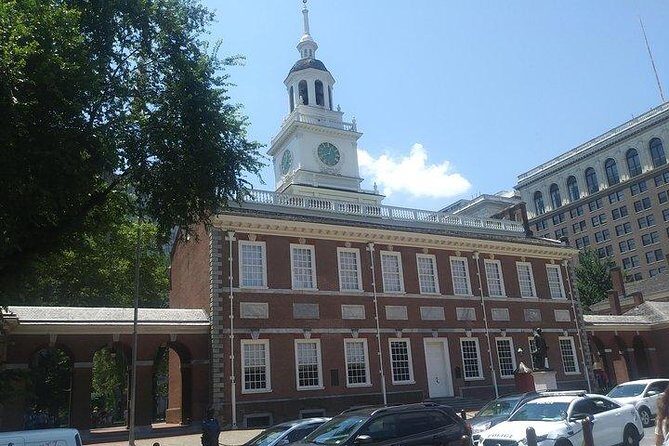
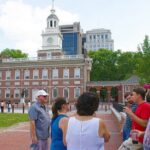
At Independence Hall, you’ll focus on what happened there: the Declaration of Independence was signed. You’ll also hear about the famous founding fathers and the kind of moments that made this place more than a building.
Because you’re viewing from outside, the guide’s job is especially important. The stories help you look past the obvious—so when you pause, you’re not only staring at stone. You’re seeing the political stakes and the people trying to pull an idea into reality.
If you’re visiting Philadelphia for the first time, this stop is usually the anchor. It sets the emotional tone for everything that comes next.
Liberty Bell Center: the crack, the name, and why it no longer rings
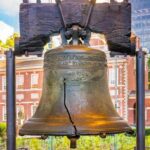
Then you get the Liberty Bell Center, and this stop is a favorite topic for a reason. You’ll learn the bell’s significance and history, including:
- why it no longer rings
- how it earned the name Liberty Bell
- why the crack you see isn’t the simple explanation many people assume
The big value here is perspective. The bell is famous worldwide, but most quick stops don’t explain how legends form. This walk does, and you’ll leave understanding the story behind what’s on display, not just the object itself.
Other walking tours we've reviewed in Philadelphia



Declaration House (Graff House): where the wording mattered
At the Declaration House (Graff House), the guide connects the site to the writing you associate with it—what was written there, and why the house was chosen. You’ll also hear about who helped Thomas Jefferson with his writing.
This is the kind of stop that makes the tour feel like more than a greatest-hits list. You’re not only learning what was decided—you’re learning how decisions got drafted, argued, and shaped.
Congress Hall and Old City Hall: the laws behind the drama
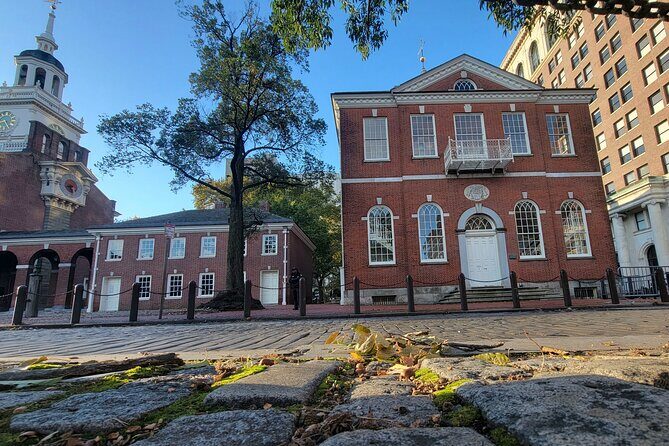
Next comes Congress Hall, where the guide sets the stage for how the new union worked on the ground. You’ll learn:
- which states became part of the union in this building
- where the two houses each met
- why the most significant achievement there isn’t something you’d spot with the naked eye
That last point matters. It’s a reminder that history often happens through process, not just big speeches. This tour leans into that idea.
Then you’ll pass by Old City Hall, and the theme continues: the building is more than “old.” It also included the Supreme Court, but not in the way people picture today. Again, it’s context you can carry with you as you keep exploring Philadelphia.
Carpenters’ Hall and Franklin Court: the revolution starts close to street level
At Carpenters’ Hall, the guide tells you why it matters: this is where the independence movement began in a meaningful, practical way. You’ll also hear about the famous words spoken and by whom—and you’ll learn there was a conspiracy connected to the second floor.
That blend of public action and private plotting is exactly what makes this area feel real. History here isn’t polished. It’s tense and political.
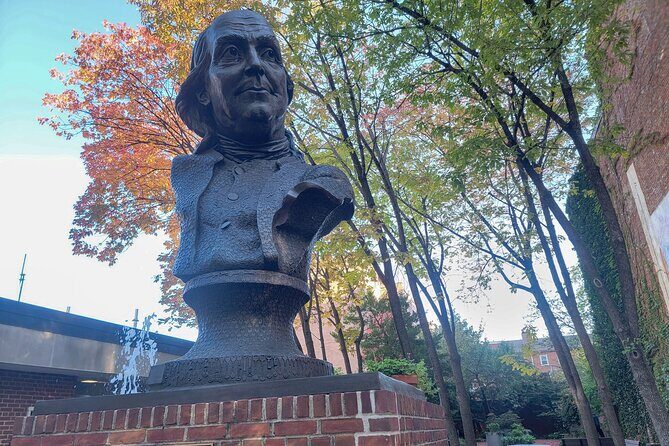
Then comes Franklin Court, tied to Ben Franklin’s home and workshops. You’ll learn why his house no longer stands, but also why the post office at the end of the court is so special even today. It’s a smart stop for seeing how ideas about communication and public life continued long after the founding years.
Christ Church: the former tallest building and the museum detail people miss
The tour continues to Christ Church, described as the onetime tallest building in America. It’s more than a church—it also functions as a museum.
You’ll get a tip for how to look once you’re there: an item is easily overlooked, and the guide points it out so you know what to watch for.
Admissions for Christ Church are $5.00 for adults and $2.00 for kids, but remember: the walking tour itself keeps things outside. If you want to go in, you’re paying extra.
Elfreth’s Alley: the oldest continually lived on street in America
At Elfreth’s Alley, you’ll learn it’s the oldest continually lived-on street in America. What makes this stop better than a quick photo is that the guide tells you what to notice: the subtle amenities in the homes that other tours often skip.
You’ll also literally walk through history here, not just read about it from a curb. Even if you don’t go inside any buildings, the street layout and the way the houses line up helps you “see” daily life in the past.
Museum admission is $3.00 for adults and $2.00 for kids if you choose to enter.
Betsy Ross House: the legend, the question, and the answer
Then there’s Betsy Ross House, where the guide focuses on her legacy—and the most surprising part is how it challenges the standard story. You’ll hear whether she really sewed the first flag, and the answer may catch you off guard.
This is one of those stops that’s great for families and teens because it turns history into a question. You’re learning how stories get repeated, and how details change when you look closer.
Admission is $10.00 for adults and $8.00 for kids if you go in.
Federal Reserve stop: the “Bank of Banks” you use without realizing it
At the Federal Reserve Bank of Philadelphia, you’ll hear it called the Bank of Banks. The guide explains it’s not just a government building—this is a place you interact with regularly without thinking about it.
Even though you only see it from the outside, the framing is useful. It connects revolutionary-era institutions to modern money systems, which helps the tour feel like a living timeline rather than a frozen-in-time museum.
African American Museum of Philadelphia and beyond: serious learning at museum speed
Next up is The African American Museum in Philadelphia, a stop that adds a major shift in perspective. The guide notes it’s the first museum of its kind in America, founded in 1976, and focused on research and education. You’ll hear that the museum holds thousands of exhibits and that the building itself is worth noticing.
Admission is $14.00 for adults and $10.00 for kids if you want to enter.
The walk also passes the American Philosophical Society Museum, where scholars have gathered (and still do) with a mission to improve the world. You’ll learn that rare antiquities are housed there, and it’s a good reminder that Philadelphia’s story isn’t only about politics. It’s also about research, learning, and networks of thinkers.
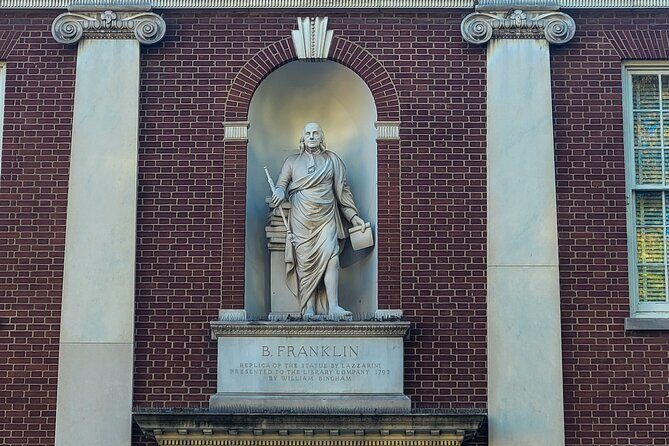
From there, you’ll stop by Library Hall, where the guide talks about what’s inside and who studied there for an important journey. You’ll also hear that the founder accidentally made the world smarter, and you’ll learn who.
Two banks, a military museum, and the “plain” worship house
At the Second Bank of the United States, the guide makes a point that it’s not a typo: a second bank exists for a reason. You’ll learn why the first needed to be replaced and why the building had more than one very important role—details you won’t usually get from quick signage.
Then comes New Hall Military Museum, described as the colonial version of The Pentagon. You’ll hear it has military attractions from the 18th and 19th centuries and that it’s easy to overlook if you don’t know where to look.
After that is the Arch Street Meeting House. From the outside, it can look plain, but the guide explains why that simplicity is actually the unique feature worth paying attention to.
The U.S. Mint and the Constitution Center: big American systems, close up
Finally, you’ll pass by the United States Mint, with a practical takeaway: almost half the coins in your pocket are made here. The guide also points out that the building produces famous and valued items from history.
Then you reach the National Constitution Center, singled out as the only museum in the country dedicated solely to the constitution. You’ll hear about taking an oath there and how it helps you see facts about the founders, including differences in height. Admission is $19.00 for adults and $15.00 for kids if you want to go inside.
This last stretch is a nice payoff. After all the founding-era steps, you end at institutions that keep shaping American life.
What makes the guide experience work so well (Tom, Joe, and question-friendly pacing)
The biggest consistent pattern in the tour experience is how the guide brings the walk to life. In the feedback, you’ll see names like Tom and Joe, and a repeated theme: clear storytelling, friendly energy, and a willingness to answer questions. One review even notes the guide’s voice was easy to hear and he made a point to stop and look at the group while explaining.
That matters more than people think. On a walking tour, you’re bouncing between stops quickly. If a guide can keep things clear and still make room for questions, you feel like you’re learning instead of just following.
Also, pace matters. One review mentions patience with slower walkers, and another points out how the guide handled cold weather without slowing the value of the tour.
How to get the most out of the walk
You’ll cover a lot of ground in about 90 minutes, and one review mentions roughly 3,500 steps. That’s not a marathon, but it’s enough to make shoes and weather choices matter.
Here are a few simple things to do before you go:
- Dress for the weather. The tour requires good weather, and you don’t want to cut your day short.
- Bring a charged phone for the mobile ticket.
- Have 2–3 questions ready about the parts you care about most (Declaration, institutions, or later American systems).
- If you plan to enter any paid sites (Christ Church, Elfreth’s Alley, Betsy Ross House, the African American Museum, or the Constitution Center), decide ahead of time so your budget stays under control.
Should you book this Historic Philadelphia walking tour?
If you want a smart first look at Philadelphia’s founding-and-beyond story, this tour is a strong pick. The $25 price works best when you treat it as orientation: you get the meaning behind the landmarks, then you choose where to spend extra time or money.
Book it if:
- you like a guided storyline more than self-guided wandering
- you want lots of chance to ask questions
- you’re planning a multi-stop day and want the route to make sense
Skip it or adjust expectations if:
- you need inside access to historic buildings during the tour (this one is outside-only)
- you’re hoping most stops are included with admission (several are separate-cost)
FAQ
What is the price of the walking tour?
The tour costs $25.00 per person.
How long does the tour take?
It’s listed as about 1 hour 30 minutes.
Is admission included to the historic sites?
The tour is experienced from the outside, and admission is not included for historic site entry. Some places have separate admission costs if you want to go in.
Are there any stops with extra admission fees?
Yes. Examples listed include Christ Church ($5 adults, $2 kids), Elfreth’s Alley ($3 adults, $2 kids), Betsy Ross House ($10 adults, $8 kids), The African American Museum ($14 adults, $10 kids), and the National Constitution Center ($19 adults, $15 kids).
Where does the tour start and end?
It starts at Liberty View at Independence Visitor Center, 599 Market St and ends back at the same meeting point.
Is the tour offered in English?
Yes, it’s offered in English.
What happens if the weather is poor?
The tour requires good weather. If it’s canceled due to poor weather, you’ll be offered a different date or a full refund.