REVIEW · PHILADELPHIA
Discovering Colonial Philadelphia Private Walking Tour
Book on Viator →Operated by phillyPHAT · Bookable on Viator
Philadelphia history is best on foot.
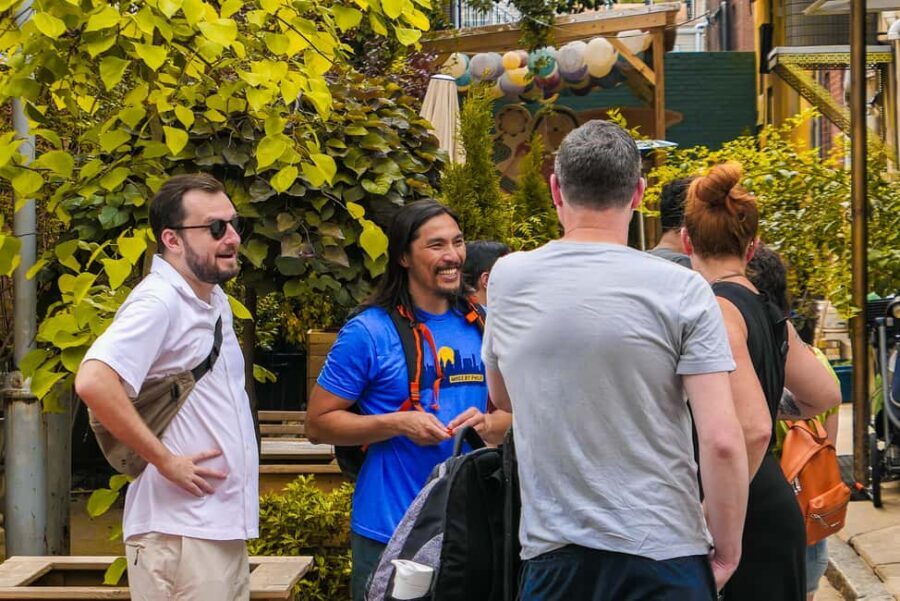
This private Colonial Philadelphia walking tour strings together real places where the early United States got shaped, from Elfreth’s Alley to Independence Hall. I like that it’s built as a focused route with a private guide for your group, and I also like the mix of American political milestones and everyday street-level history. One thing to consider: it’s a 2.5–3 hour walk, so you’ll want shoes you trust and a moderate fitness level.
With a private setup for up to 8 people, you’re not just passing landmarks—you’re getting context while you walk, plus architectural callouts along the way. Stops also include several spots with free admission, but two major ones (Christ Church and Independence Hall) are not included, so you should plan for separate ticketing there.
This tour works best if you like seeing how ideas connect to buildings. It’s also a good choice for adults who want a guided day without the bus-and-regret rhythm.
In This Review
- What makes this route feel different (and worth it)
- How good value works on a private tour
- Start at 146 Race St, end near 52 S 3rd St
- Elfreth’s Alley: America’s oldest lived-in street
- Christ Church: Andrew Hamilton, Pierce Butler, and Robert Morris
- Franklin Court: Ben Franklin’s home location
- Carpenters’ Hall: the 1st Continental Congress in action
- Second Bank of the United States: Greek revival with marble ambition
- Independence Hall: where the Declaration and Constitution took form
- What pace and fitness feel like on the ground
- Guide Reid: why the experience comes alive
- Admissions, tickets, and how to plan your day
- Who this tour fits best
- Should you book this private Colonial Philadelphia walking tour?
- FAQ
- How long is the Colonial Philadelphia private walking tour?
- Is this tour private?
- Where does the tour start and end?
- What’s included in the price?
- Which stops have admission included vs not included?
- What’s the minimum age, and does it run in bad weather?
What makes this route feel different (and worth it)
- A private guide for up to 8 people, so questions don’t get swallowed by a crowd
- A tight Colonial-era sequence, mixing government, religion, finance, and daily life
- Free entry at key stops like Elfreth’s Alley, Franklin Court, Carpenters’ Hall, and the Second Bank facade areas
- Architecture talk built into the walk, not tacked on at the end
- Adult-focused (minimum age 18), which keeps the pace and tone easier
How good value works on a private tour
Let’s talk money in a practical way. The cost is $250 per group (up to 8 people) for about 2 hours 30 minutes to 3 hours of guided walking. If you’re traveling as a couple, it can feel “premium.” If you’re traveling with friends or a small group, the math gets friendlier fast—because you’re paying for one guide, not multiple separate tours.
The real value isn’t just the sites. It’s the time saved by having someone point out what matters as you go. You get your bearings fast, and you’re less likely to spend hours staring at stone wondering what you’re supposed to notice.
I also like that the tour is in English, operates in all weather, and stays near public transportation. That means you’re not stuck planning a whole logistics day just to do the history.
Other historic Old City walking tours we've reviewed in Philadelphia



Start at 146 Race St, end near 52 S 3rd St
The walk begins at 146 Race St, Philadelphia and ends at 52 S 3rd St. That matters because it’s not a “return to the start” loop. If you’re planning dinner afterward, you can usually make it work without a long backtrack.
You’ll be moving from one landmark to the next on foot, with the guide keeping the route coherent. For your planning, build in extra time for photos and for any stop where you want to linger—because once you know the story, it’s harder to rush past the details.
Also, you’ll get a mobile ticket. That’s one less thing to juggle while walking in a busy downtown.
Elfreth’s Alley: America’s oldest lived-in street
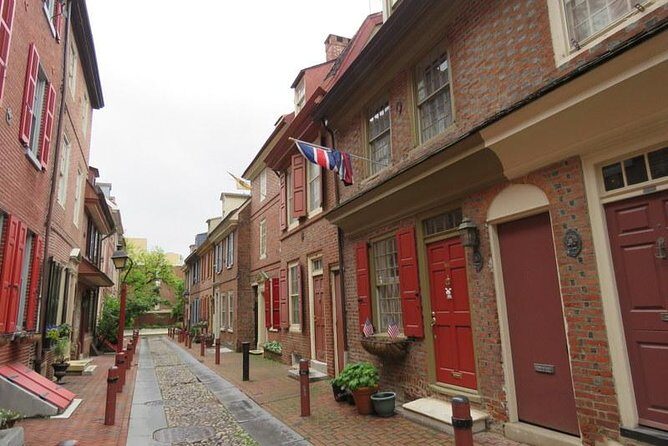
Your first stop is Elfreth’s Alley, the oldest continuously occupied residential street in America. This is where you shift gears—from big speeches to real daily life. The street’s the point: narrow, historic, and built for the kind of neighborhoods where community mattered.
Why I like this start: it gives you a baseline for what “Colonial Philadelphia” actually looked like on a human scale. Before you jump into government buildings, you get a sense of the streets and homes where people lived, worked, and moved around.
One practical note: since this is a street stop, you’ll want to watch your footing and keep an eye on foot traffic. It’s a great photo stop, but it’s still an urban sidewalk experience.
Christ Church: Andrew Hamilton, Pierce Butler, and Robert Morris
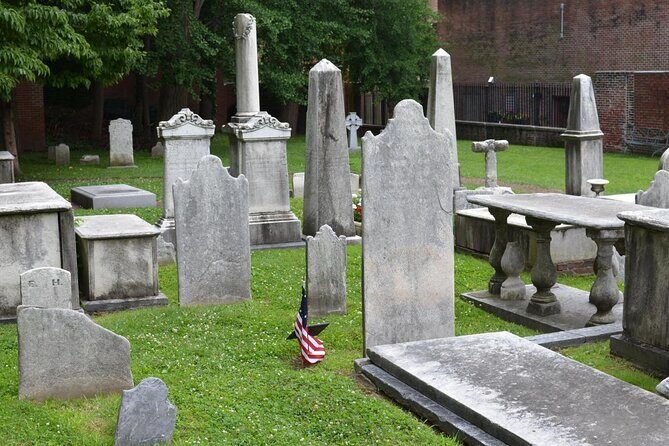
Next up is Christ Church, with a highlight that’s hard to miss: it’s where Andrew Hamilton, Pierce Butler, and Robert Morris are buried (as part of the church’s historical record). This stop adds a different layer to the story: the institutions tied to faith and to influential families.
Two important considerations here:
- Admission is not included. So if you want to go inside, plan for separate ticketing.
- The site can be a bit of a “sit and absorb” moment once you’re there, so it helps if you’re comfortable slowing down.
What makes Christ Church worth your attention on this tour is the way it connects people to place. It’s one thing to read names in a textbook. It’s another to hear how the city’s political and financial leaders overlap with its religious landmarks.
Franklin Court: Ben Franklin’s home location
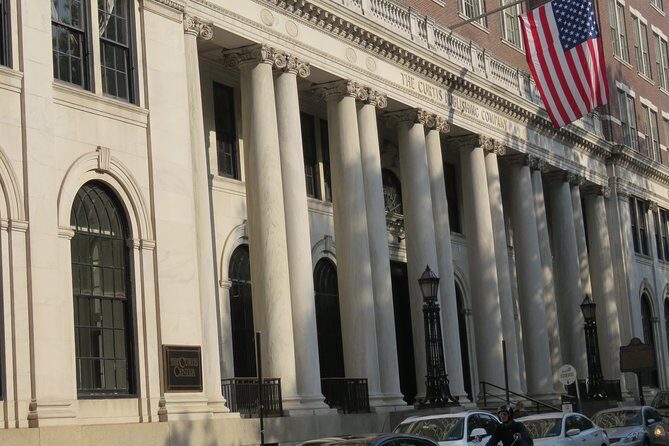
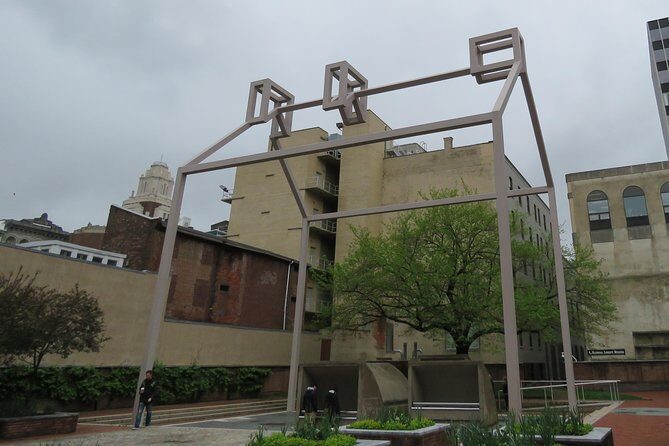
Then you’ll head to Franklin Court, listed as the location of Ben Franklin’s home. This stop feels compact, but it carries serious weight because Franklin isn’t just a person—you’re seeing the physical footprint of a life built around writing, experimenting, and civic problem-solving.
This is also a great point in the tour for you to ask your own questions. When the guide frames what Franklin was doing, you start noticing how the colonial world worked: communication, technology, commerce, and politics were tangled together.
If you’re the type who likes turning “facts” into mental pictures, Franklin Court is a strong mid-tour anchor.
Other Founding Fathers and Revolutionary history tours we've reviewed in Philadelphia


Carpenters’ Hall: the 1st Continental Congress in action
At Carpenters’ Hall, you’ll get to the first big “this is where the nation starts to take shape” stop. The site is connected to the 1st Continental Congress.
This is where you’ll appreciate a private guide most. A general walking tour may point at a building and move on. Here, you can get the story slowed down enough to understand what “Continental Congress” meant in real time—how difficult it was to organize leadership, debate, and direction when you’re fighting on multiple fronts.
Admission here is listed as free, which is a nice bonus in the middle of a day that includes paid entry options at other stops. It makes Carpenters’ Hall a good place to enjoy the moment without worrying about costs.
Second Bank of the United States: Greek revival with marble ambition
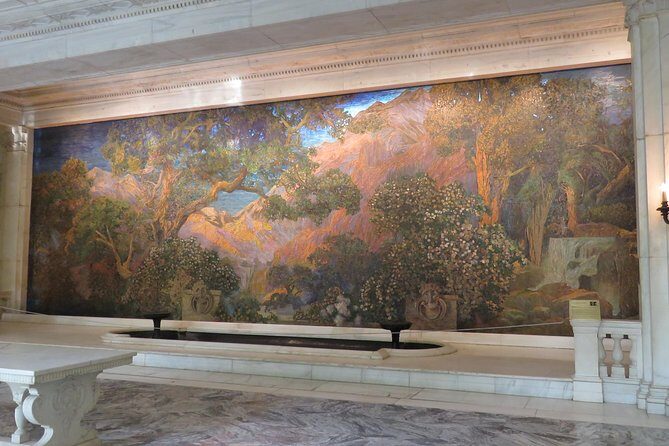
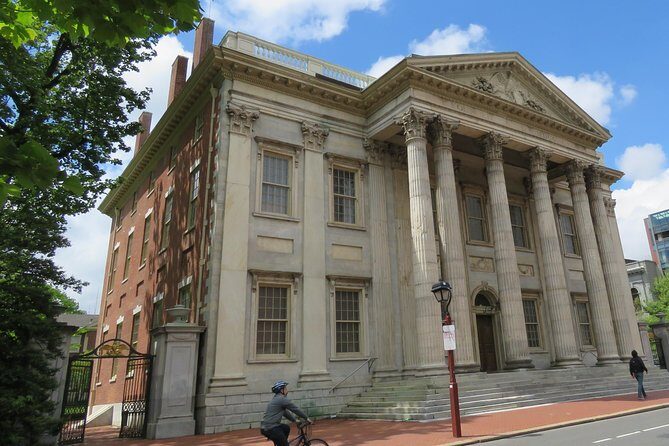
Next is the Second Bank of the United States, described as a Greek revival bank and noted as the first all-marble facade in the US.
I love this stop because it reminds you that early America wasn’t only about ideas—it was also about signals. Building a bank in a Greek revival style wasn’t random. It was a statement about legitimacy, stability, and what the country wanted to look like.
This is also a nice “visual learning” stop. Even if you’re not a design nerd, you’ll likely get a better eye for why buildings use certain shapes, columns, and materials. The guide’s architecture callouts can make this feel less like looking at a facade and more like reading a sentence made out of stone.
Admission here is listed as free, so you can focus on details instead of ticket decisions.
Independence Hall: where the Declaration and Constitution took form
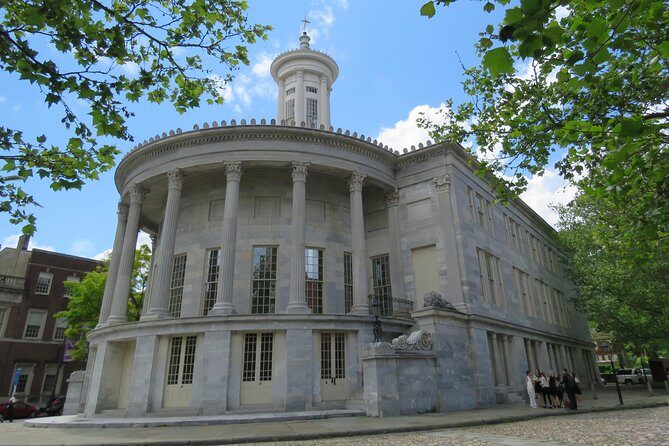
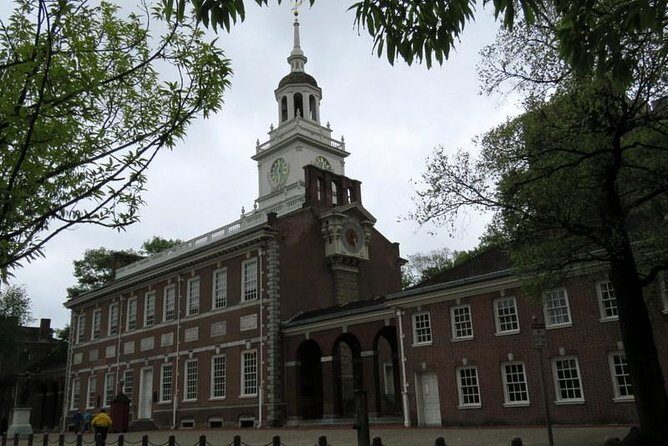
Your final landmark focus is Independence Hall, home to the 2nd Continental Congress, where the Declaration of Independence was created, and also connected to the Philadelphia Convention of 1787 that produced the Constitution.
This is the big one. And because it’s not a museum visit where you can linger endlessly, it’s smart to treat it like a “listen closely” stop. You’ll likely get pointed toward the most important parts of the story, which helps you make sense of what you’re seeing.
Two key practical notes:
- Admission is not included. If you want to go inside, plan for a separate ticket.
- This stop can be a mental sprint because the political timeline is dense. A good guide helps you keep the sequence straight.
If you’re budgeting time, arrive with the mindset that you’re there to understand the “why” behind the place, not just to collect photos. When you know the storyline, Independence Hall becomes more than a famous building.
What pace and fitness feel like on the ground
This tour is marked as requiring moderate physical fitness. For you, that usually means: you’re walking for hours with stops, not shuffling around in short bursts. It’s best suited to people who can comfortably handle city sidewalks and steady movement.
A helpful tip: dress for weather, because the tour runs in all weather conditions. Philadelphia weather can change quickly, so pack layers. Bring a small umbrella if rain is in the forecast, and wear shoes with traction.
Because it’s a private group, your pace won’t be forced by strangers trying to win a contest against the clock. Still, you should be ready to keep moving between stops.
Guide Reid: why the experience comes alive
One of the most praised parts of this tour is the guiding style—especially around explanation and architecture. In the feedback I’m using to guide expectations, Reid is highlighted as engaging and friendly, and he’s praised for going above and beyond with time and details.
The most useful takeaway for you: this isn’t just “read the plaque” history. The guide’s approach blends story points with architectural notes, so you walk away understanding not only what happened, but how the buildings communicate power and purpose.
That matters because Colonial Philadelphia can be overwhelming. You see landmark after landmark and wonder how they connect. A strong guide helps you build the bridge between them—without turning the day into a lecture.
Admissions, tickets, and how to plan your day
Here’s the practical stop math you’ll want to know ahead of time:
- Free admission stops: Elfreth’s Alley, Franklin Court, Carpenters’ Hall, Second Bank of the United States
- Admission not included: Christ Church, Independence Hall
So if you’re the type who likes a smooth day, you’ll likely want to pre-plan your visit to Christ Church and Independence Hall. That way you’re not making last-minute decisions on the sidewalk.
Also note: the tour is listed as lasting about 2 hours 30 minutes, but the guided portion is described as around 3 hours. Build in a little buffer for photos and ticket-related pauses.
Who this tour fits best
This is a strong fit if you:
- Want a private guide and a smaller group experience
- Like the Colonial era but also enjoy architecture and how design reflects values
- Prefer a walk with structure, not a free-for-all sightseeing day
Because the minimum age is 18, it’s not designed for families with small kids. If you’re traveling with older teens or adult friends, you’ll probably enjoy the concentration on politics, institutions, and major historical figures.
Should you book this private Colonial Philadelphia walking tour?
Book it if you want a guided route that ties buildings to the American story without overwhelming you. The best reasons are the private group size, the guide’s friendly approach, and the way architecture details make the history easier to remember.
Skip it (or consider another option) if you want a totally self-paced tour, or if you strongly dislike planning separate tickets for Christ Church and Independence Hall. Also, if long walking and steady outdoor time are a problem, the moderate-fitness requirement may feel like too much.
One more decision helper: this tour is commonly booked about 78 days in advance, so if your dates are fixed, don’t wait until the last minute.
FAQ
How long is the Colonial Philadelphia private walking tour?
It runs about 2 hours 30 minutes (approximately), and the guided portion is described as around 3 hours.
Is this tour private?
Yes. It’s a private tour for your group only, up to 8 people.
Where does the tour start and end?
It starts at 146 Race St, Philadelphia, PA 19106, and ends at 52 S 3rd St, Philadelphia, PA 19106.
What’s included in the price?
The price includes the guided tour (about 2.5–3 hours) with your personal guide.
Which stops have admission included vs not included?
Elfreth’s Alley, Franklin Court, Carpenters’ Hall, and the Second Bank are listed as free. Christ Church and Independence Hall are listed as admission not included.
What’s the minimum age, and does it run in bad weather?
The minimum age is 18. The tour operates in all weather conditions, so dress appropriately.