REVIEW · PHILADELPHIA
Small-Group Public Walking Tour Exploring Philadelphia’s Gilded Age to Now
Book on Viator →Operated by phillyPHAT · Bookable on Viator
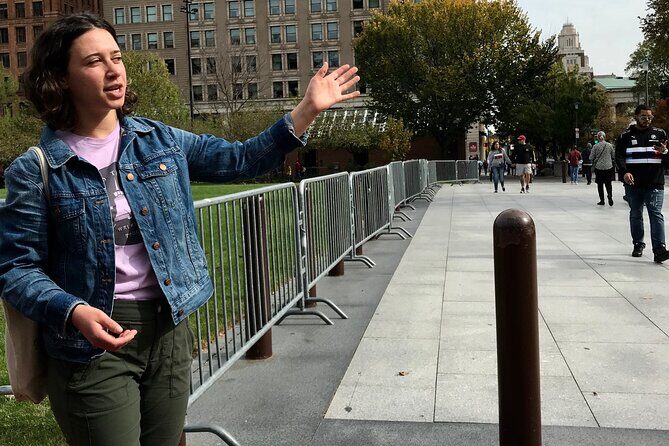
Philadelphia wealth hides in plain sight. This small-group walk connects the Gilded Age to modern Philadelphia, one landmark at a time. You’re capped at eight, so it’s easier to ask questions and keep the pace human.
I love how the route starts at a real, working landmark like Reading Terminal Market, not a photo stop. And I like the way the tour compares design ideas across eras, from International Style to Art Deco to glassy towers.
The main drawback to plan for: many stops are exterior views, and a couple interiors are not included in the price. You’ll get a chance to see inside at select places, but you may need extra tickets or advance interest if you want the full picture.
In This Review
- Key things I’d watch for on this tour
- Philadelphia on Foot: Gilded Age to Now in 2.5 Hours
- Why This Walk Works: Small Group and a Style Timeline
- Stop-by-Stop Route: Markets, Temples, and City Hall
- Reading Terminal Market (1890s food hall feel)
- Loews Philadelphia Hotel / PSFS (International Style in a Depression-era context)
- Pennsylvania Academy of the Fine Arts (Frank Furness High Victorian Gothic)
- Masonic Temple (Romanesque or Norman Castle styling)
- City Hall Visitor Center (a mega-civic statement)
- From Art Deco Shopping to Opera-Era Architecture
- Macy’s Philadelphia / John Wanamaker Building (Grand Court and the organ)
- Ritz-Carlton Philadelphia and the bank-and-title building story
- Union League of Philadelphia (a wartime club built to support Union troops)
- Bellevue Hotel (Beaux Arts with a French chateau look)
- Academy of Music (La Scala influence and a cost-saving facade change)
- Skyscrapers, Rail Power, and the Love Park Finish
- Drexel Building (a Renaissance-style copy in Philadelphia)
- Shops at Liberty Place (the skyline-height turning point)
- Comcast Center and Comcast Innovation Center (glass, height, and design variety)
- Penn Center / Suburban Station (Art Deco for the speed of trains)
- Love Park (ending at the Ben Franklin Parkway line)
- What You Get for $45 (and When You May Pay Extra)
- Tips to Make the Most of Your Walk
- Who This Tour Suits Best
- Should You Book This Philadelphia Architecture Tour?
- FAQ
- How long is the Small-Group Public Walking Tour exploring Philadelphia Gilded Age to Now?
- How much does the tour cost?
- How many people are on the tour?
- Where does the tour start and where does it end?
- Is hotel pickup or drop-off included?
- What’s included in the ticket price?
- Are admission tickets included for every stop?
- What age is required for this tour?
- Does the tour run in bad weather?
- What’s the cancellation policy window?
Key things I’d watch for on this tour
- A capped group of eight keeps the conversation going, not just the walking
- Two-and-a-half hours hits a lot of top sights without turning into a marathon
- Mostly free entry stops help your money go further
- Frank Furness and Bauhaus-era ideas show up in unexpected Philadelphia buildings
- An end at Love Park gives you an easy landing spot for more sightseeing
Philadelphia on Foot: Gilded Age to Now in 2.5 Hours
This tour is built for people who like seeing how a city thinks over time. Philadelphia doesn’t just have famous buildings; it has design ideas that keep getting remixed—sometimes carefully, sometimes in big swings.
With a 2 hours 30 minutes schedule and a small group size of max eight, you’ll cover a lot of ground while still having moments to pause and ask. It’s also hands-on in the best way: you’re literally moving along the streets where these eras meet, so you can feel the shift from one architectural mood to the next.
One more practical note I appreciate: it runs in all weather, so dress for the day you actually get.
Other walking tours we've reviewed in Philadelphia
Why This Walk Works: Small Group and a Style Timeline
Most architecture tours feel like a highlight reel. This one works more like a guided timeline.
I like that the stops jump between different types of Philly power: markets, art education, civic buildings, banking, hotels, and rail. You’re not just staring at pretty facades—you’re seeing how institutions wanted to look when they had money, influence, and something to prove.
And because the group is small, the guide can connect the dots. The route is packed with names you’ll recognize—Frank Furness and Daniel Burnham pop up—and you’ll also hear how European design principles influenced American buildings.
If you’re hoping for a bus-style “drive past and forget it” day, this isn’t that. You’ll be walking and listening, and you’ll want comfortable shoes.
Stop-by-Stop Route: Markets, Temples, and City Hall
Your walk begins at 1200 Arch St and ends at Love Park (1515 John F Kennedy Blvd area). Along the way, it’s a chain of landmarks that show Philly’s ambition in different decades.
Reading Terminal Market (1890s food hall feel)
Stop one is Reading Terminal Market, one of the last old-time food halls in the US. It traces back to the 1890s, and even with changes over time, the place keeps that older “market as a destination” energy. It’s a strong start because it grounds the day in everyday life, not just stone monuments.
Loews Philadelphia Hotel / PSFS (International Style in a Depression-era context)
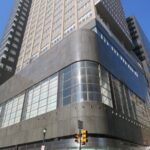
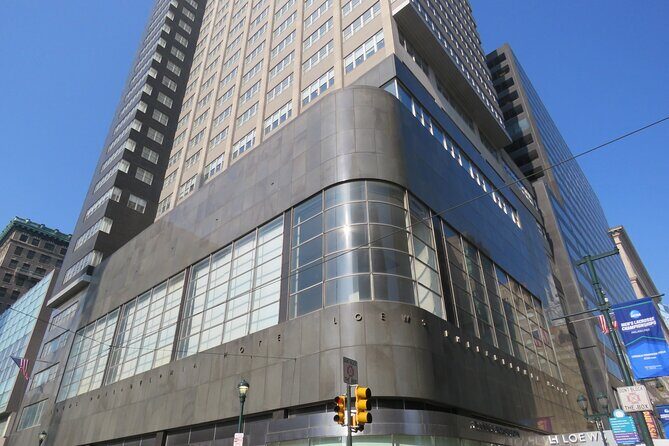
Next comes the Loews Philadelphia Hotel, formerly the PSFS building. What I find compelling here is the story tied to the Depression: it was created through collaboration between a local architect and a Swiss architect, using principles that were spreading through Bauhaus and European modern design. This is where the tour shifts from ornate to modern—without pretending the move was simple.


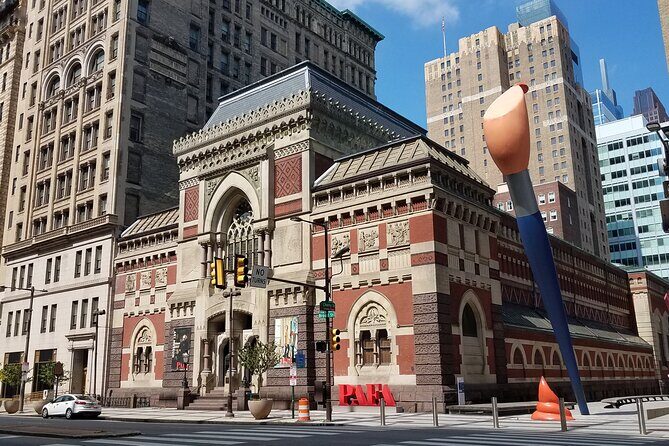
Pennsylvania Academy of the Fine Arts (Frank Furness High Victorian Gothic)
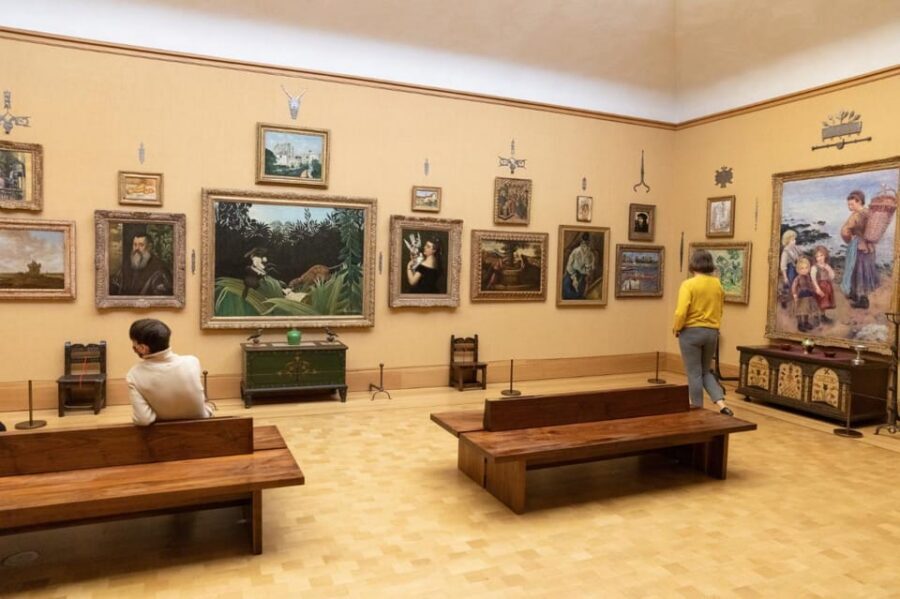
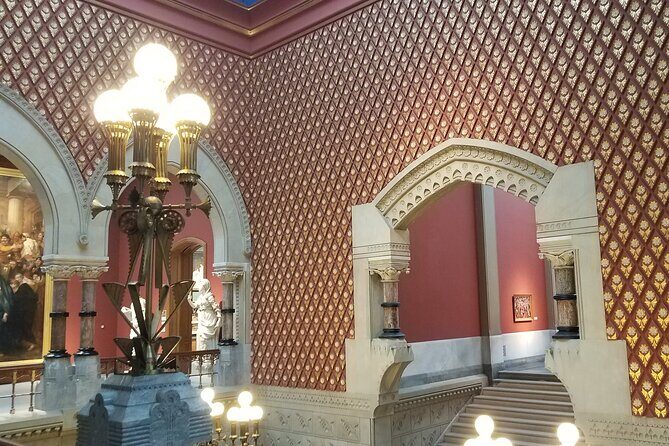
At the Pennsylvania Academy of the Fine Arts, you’re looking at the oldest art school in the US plus one of Frank Furness’s major survivals in High Victorian Gothic style. It also opened just in time for the Centennial Exposition of 1876, which helps you understand why the building needed to announce itself.
One practical consideration: admission isn’t included here. You’ll likely get an exterior look and context, and if you want interior time, you’ll need to plan for the cost.
Masonic Temple (Romanesque or Norman Castle styling)
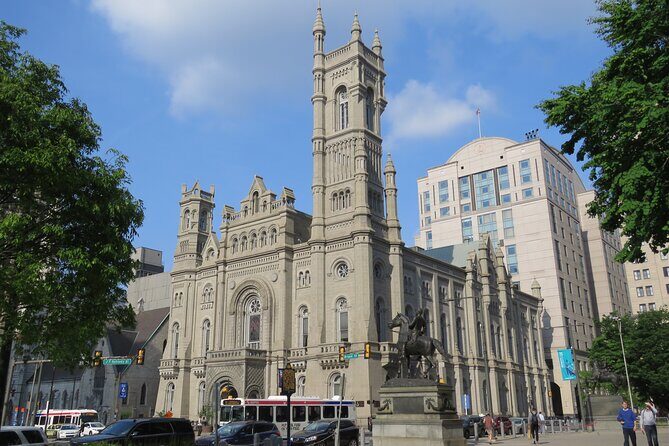
The Masonic Temple stop is another exterior-focused moment, built just after the Civil War and styled in Romanesque or Norman Castle. If you want more, the tour suggests reserving a chance to see the interior rooms, since they’re described as spectacular—but that’s not part of the included ticketing.
So if interior access is high on your list, treat this as a “maybe add-on” moment.
City Hall Visitor Center (a mega-civic statement)
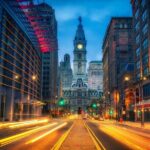
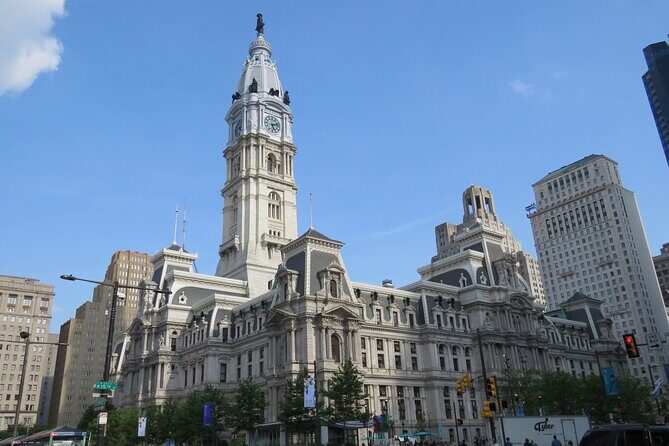
Then you get to the City Hall Visitor Center and the outside of Philadelphia City Hall. This is a Second Empire Baroque building, and the numbers here are big: it’s described as the largest municipal building in the US and the tallest masonry bearing wall building in the world. The William Penn statue on the tower is also called the tallest of its kind on any building.
This is a great stop for “look up” energy. Even if you don’t memorize every fact, seeing the scale in person makes the story land.
From Art Deco Shopping to Opera-Era Architecture
After the civic centerpiece, the route moves into commercial grandeur. You get the feeling that Philly’s design ambitions weren’t limited to government.
Macy’s Philadelphia / John Wanamaker Building (Grand Court and the organ)
At Macy’s Philadelphia, the tour pairs an Art Deco facade across the street (Market Street National Bank) with an inside look at the John Wanamaker Building. You’ll get time to see the Grand Court and hear about its big draw: the grand organ.
The upside here is that you’re not just walking past a mall and calling it a day. You get a chance to experience an interior space designed to feel important.
Ritz-Carlton Philadelphia and the bank-and-title building story
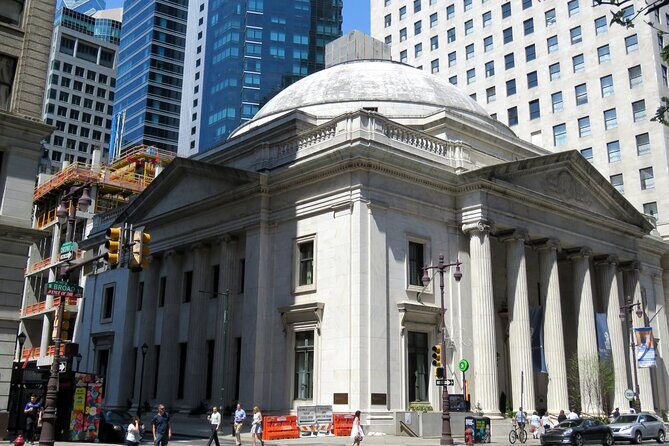
Next is the Ritz-Carlton, Philadelphia area, tied to two major buildings across the street: the former Girard Bank Building and the Land Title Building. The tour notes that the bank was originally designed by Frank Furness in High Victorian Gothic style, but that plan was rejected. Then it points you to the Land Title Building as the first in the city by Chicago architect Daniel Burnham—with the emphasis on making big plans and aiming high.
That’s one of those comments that sounds motivational, but it also helps you read the architecture: you’re looking at buildings that were trying to project future confidence.
Union League of Philadelphia (a wartime club built to support Union troops)
At the Union League of Philadelphia, you’ll see an early example of Second Empire Baroque style and learn that it’s one of the only structures built in Philadelphia during the Civil War. The club’s purpose was to support Union troops, which gives the building’s seriousness another layer. You can view the architecture as symbolism—order, stability, and backing the cause.
Bellevue Hotel (Beaux Arts with a French chateau look)
The next stop is the Bellevue Hotel (The Unbound Collection by Hyatt), designed by George Hewitt, who is noted as a partner with Frank Furness. The style is described as Beaux Arts, with a French chateau look at the top. Even if you’re not a style nerd, you can usually spot Beaux Arts through the way it plays with elegance and theatrical shape.
Academy of Music (La Scala influence and a cost-saving facade change)
Then comes the Academy of Music, the original home of the Philadelphia Orchestra and originally an opera house. The guide points out that the concept was based on La Scala in Milan, and that the Italianate façade was intended to be marble—yet brick and brownstone were substituted to save on cost.
I like this kind of detail because it makes you see architecture as a set of choices, not just a finished object.
Skyscrapers, Rail Power, and the Love Park Finish
By now, you’re ready for the “Philadelphia now” part. This section is where you see how the city broke height expectations and how transportation shaped design.
Drexel Building (a Renaissance-style copy in Philadelphia)
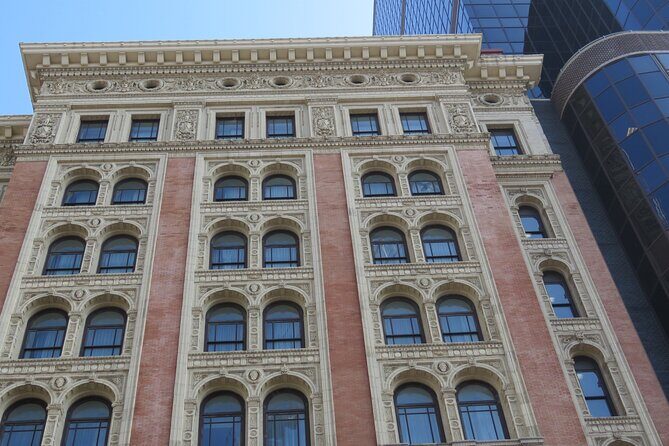
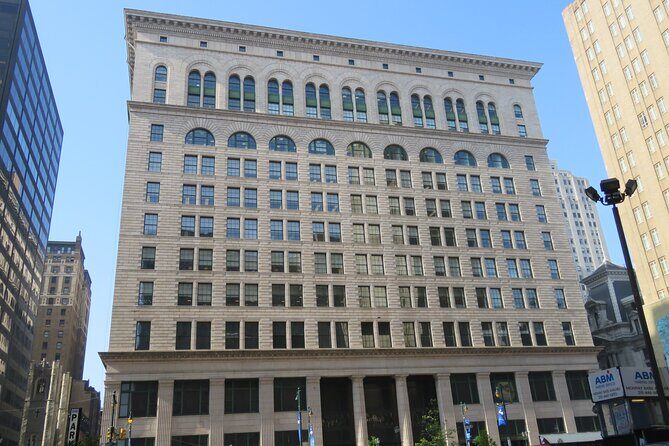
At the Drexel Building, the key idea is that it’s a great copy of the Strozzi Palace in Florence. It was originally designed for Anthony Drexel’s financial company, and you can feel how banking wanted to borrow prestige from Europe.
Shops at Liberty Place (the skyline-height turning point)
The walk continues to the Shops at Liberty Place, where you’ll see two towers that broke a height barrier of 548 feet. The tour explains there had been a gentleman’s agreement to keep buildings from going higher than the City Hall statue of William Penn, and that changed in the 1980s with these towers. This is the moment where Philly’s vertical ambitions clearly pivot.
Comcast Center and Comcast Innovation Center (glass, height, and design variety)
Then you hit Comcast Center, described as home to the 1st and 2nd tallest buildings in Philadelphia. You’ll also hear about the Comcast Innovation Center—with its three-story groupings and a zig-zag pattern on the outside, plus a 10-story hotel at the top.
If you like modern design, this stop gives you a contrast: early grandeur gives way to sleek glass forms and intentional massing.
Penn Center / Suburban Station (Art Deco for the speed of trains)
At Penn Center / Suburban Station, you’re in the Art Deco world of the Pennsylvania Railroad. This complex was created in the 1930s to replace Frank Furness’s High Victorian Gothic terminal across from City Hall. The style is described as representing the sleekness and speed of modern trains—another reminder that architecture often sells an idea about the future.
This is also a great stop for photo framing if you like strong lines. Art Deco loves geometry.
Love Park (ending at the Ben Franklin Parkway line)
The tour ends at Love Park, at the Love sculpture. The park has been redesigned several times and offers different activities depending on the time of year. The payoff is the view axis: from here you get a grand view up the Ben Franklin Parkway toward the Art Museum area.
Think of the finish as a practical win. You’re not stuck back at the start point—you’re dropped near a prime sightseeing corridor.
What You Get for $45 (and When You May Pay Extra)
At $45 per person for about 2 hours 30 minutes, this feels like good value if you care about architecture and want a guided route that connects eras. The capped group size of eight also helps justify the price: you’re not getting rolled into a crowd where your questions die on arrival.
Most stops are listed as admission ticket free, which is a nice cost-control feature. But two moments are not included:
- The Pennsylvania Academy of the Fine Arts (admission not included)
- The Masonic Temple interior option (not included)
So your budget can stay simple, as long as you’re good with exterior viewing at those places or willing to add paid time if you really want it.
Tips to Make the Most of Your Walk
If you want the day to feel smooth, here’s what I’d do.
- Wear shoes you can stand in for a while. The tour is a lot of stops, and there’s no hotel pickup to make it easier.
- Bring a layer. It runs in all weather, and you’ll be outside between stops.
- If you care about interiors, decide in advance which add-on matters most: PAFA or a Masonic Temple interior visit.
Also, keep your expectations practical. This is built to show you many top sights in one run. You’re not spending hours inside every landmark.
Who This Tour Suits Best
This tour is a strong match if:
- you love architecture and want a fast way to see Philadelphia’s style changes
- you like history that connects directly to buildings
- you enjoy asking questions and getting specific answers
It’s also a great option if you already live in Philadelphia. The tour is designed to make familiar streets feel new by pointing out details you might normally walk past.
Should You Book This Philadelphia Architecture Tour?
I’d book it if you want a guided, small-group walk that strings together Philly’s major architectural eras—from an old market hall to modern skyscrapers—without turning into a generic sightseeing day.
Skip it or reconsider if you mainly want long indoor museum time, since a few key interiors cost extra or require planning. And if you dislike walking outside in changeable weather, be honest about that before you commit.
If you’re on the fence, here’s an easy decision rule: if you’re the type who looks up at facades and likes understanding why a building looks the way it does, this one will reward you.
FAQ
How long is the Small-Group Public Walking Tour exploring Philadelphia Gilded Age to Now?
It runs about 2 hours 30 minutes.
How much does the tour cost?
The price is $45.00 per person.
How many people are on the tour?
The tour is capped at a maximum of 8 travelers.
Where does the tour start and where does it end?
It starts at 1200 Arch St, Philadelphia, PA 19107 and ends at 1515 John F Kennedy Blvd, Philadelphia, PA 19102 (Love Park).
Is hotel pickup or drop-off included?
No, hotel pickup and drop-off are not included.
What’s included in the ticket price?
A live guided tour is included.
Are admission tickets included for every stop?
Many stops are listed as admission ticket free, but some are not included—PAFA and the Masonic Temple.
What age is required for this tour?
The minimum age is 16 years.
Does the tour run in bad weather?
It operates in all weather conditions, so dress appropriately. If it’s canceled due to poor weather, you’ll be offered a different date or a full refund.
What’s the cancellation policy window?
You can cancel for a full refund up to 24 hours in advance of the start time. If you cancel less than 24 hours before, the amount paid is not refunded.