REVIEW · PHILADELPHIA
Philadelphia: Black History Walking Tour
Book on GetYourGuide →Operated by The Black Journey LLC · Bookable on GetYourGuide
Old City can feel like a history postcard—this tour adds people. You’ll walk Philadelphia’s main streets and connect them to Black life, enslavement, abolition, and escape routes that shaped the country. The route is built around early sites tied to the Underground Railroad and key moments like the Fugitive Slave Act.
Two things I really like: the tour leans hard into specific places you can picture, not vague storytelling, and it gives you a clear thread from early Black community life through the legal machinery that controlled freedom. You also get a smart mix of famous landmarks and lesser-remembered ground truths, including unmarked graves linked to the yellow fever epidemic.
One drawback to keep in mind: timing can run long. Some departures have stretched beyond the stated 90 minutes, and one early introduction segment may feel heavy before you even hit the main route.
Key points to know before you go
- Congo Square to Independence Hall: you connect neighborhoods of memory to the most famous civic buildings in the city.
- Unmarked yellow fever graves: you’ll learn what happened when disease swept through and who paid the price.
- Underground Railroad footpaths: you’ll hear how escapes were supported, including stories tied to prominent figures.
- Quaker education and the Fugitive Slave Act: the tour holds legal and moral history up side by side.
- Mostly outdoors on cobblestones: you’ll cover about 1.5 miles, so wear real walking shoes and expect uneven footing.
In This Review
- Old City Philadelphia, With the People the History Forgot
- Where You Meet and How the 1.5-Mile Route Feels
- Congo Square and the Yellow Fever Epidemic’s Unmarked Loss
- Quaker Schooling, Mixed Classrooms, and Moral Tension
- The Fugitive Slave Act of 1793: A Law Passed in Plain Sight
- Underground Railroad Stories: Escape Was Work, Not Magic
- Old London Coffee Shop and the Ugly Machinery of Sale
- Independence Hall Area: Big Names, Big Consequences
- The American Philosophical Society and the City’s Official Thinking
- Banks, Courts, and Civic Control: First and Second Bank of the U.S.
- Carpenter’s Hall, Revolutionary Memory, and the Tomb of the Unknown Soldier
- John Todd House to U.S. Customs House: Where People and Goods Moved
- Former Sites You’ll Hear About Along the Route
- Timing Reality Check: Pace, Cobblestones, and a Quick Wawa Break
- The Guide Matters: How MaJewel Sets a High Bar
- Price and Value: What $35 Buys You in Real Terms
- Who Should Book This Walking Tour
- Should You Book the Philadelphia Black History Walking Tour?
- FAQ
- How long is the Philadelphia Black History Walking Tour?
- How far do you walk?
- How much does it cost?
- Where do I meet the guide?
- Is the tour guided and in English?
- What should I wear for the tour?
- What kinds of sites will we see?
- Does the tour include stories about the Underground Railroad?
- Can I cancel and get a refund?
Old City Philadelphia, With the People the History Forgot
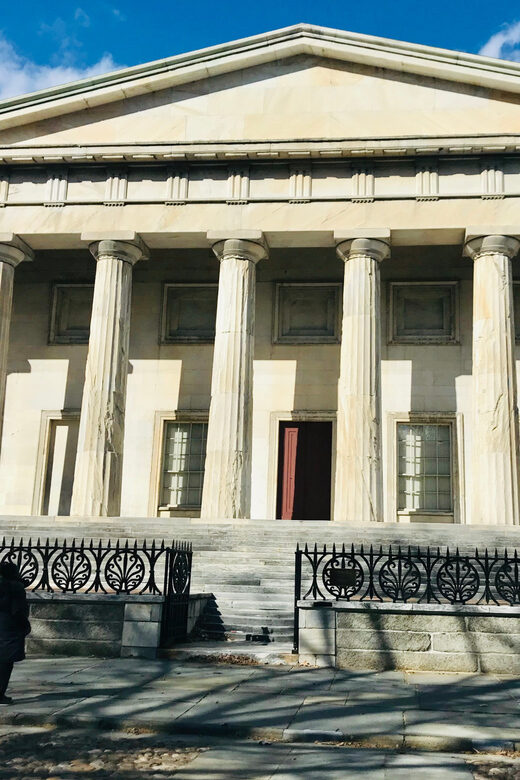
Philadelphia’s Independence-area streets are where the nation’s founding gets performed in monuments. This tour does something different. It uses those same blocks to show you Black Americans’ role in America’s foundation, including the danger of being born into slavery and the effort it took to push against it.
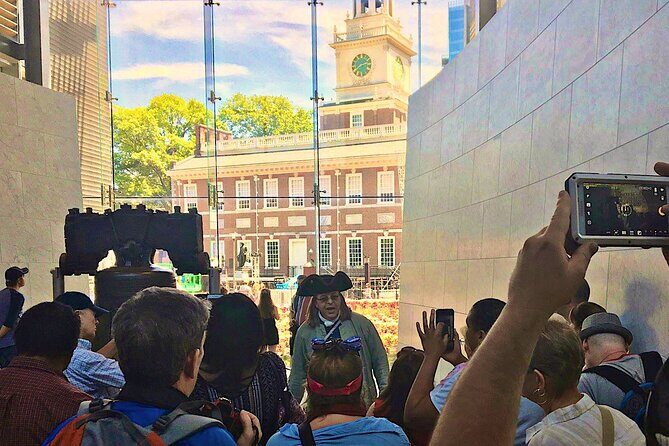
You’ll walk in the footsteps of enslaved people, abolitionists, slaveholders, and founding-era leaders. That matters because it keeps the story grounded: laws were written on these streets, commerce moved people through them, and communities survived in the shadows of all of it.
The best part is how the tour stays practical for your brain. It gives you names, places, and a storyline you can repeat later, which is the whole point when you’re walking for 90 minutes and you want it to stick.
Where You Meet and How the 1.5-Mile Route Feels
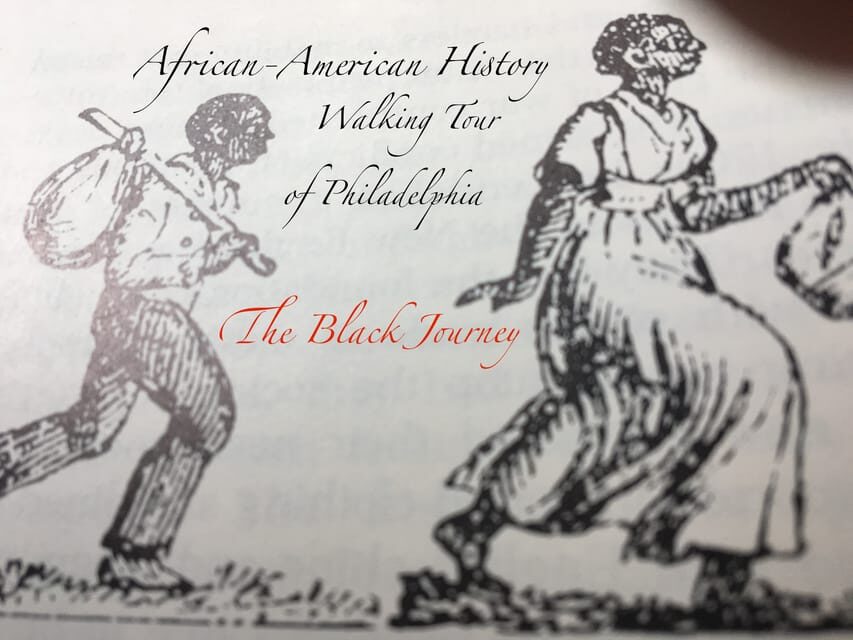
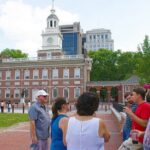
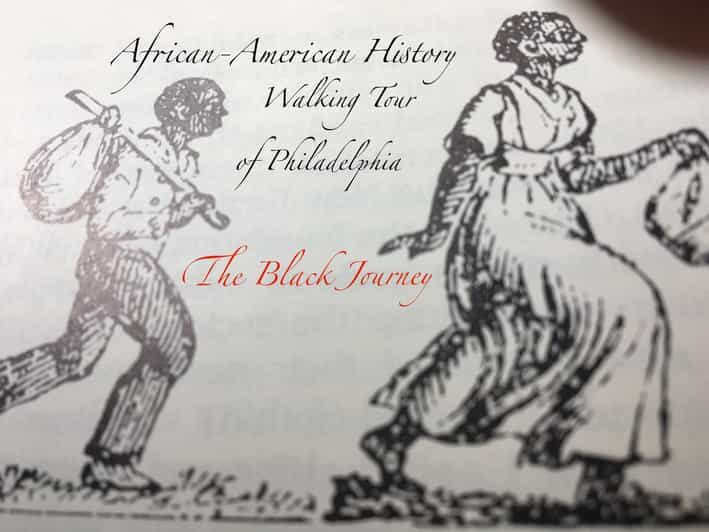
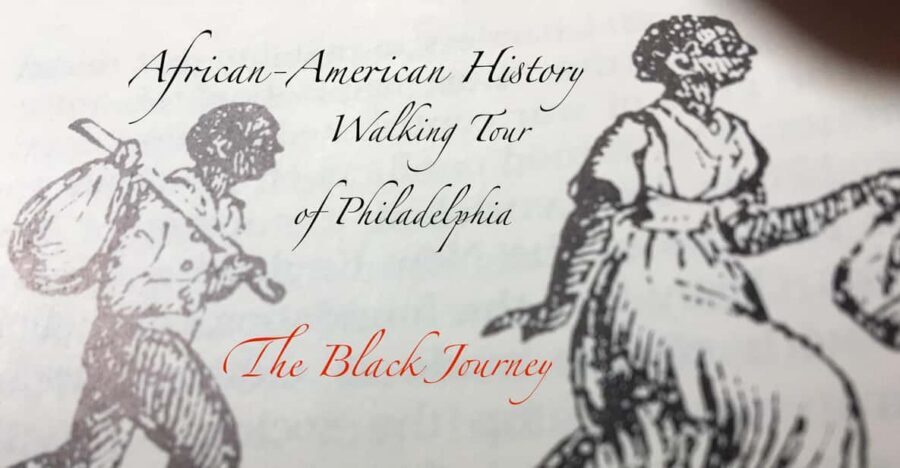
You meet your guide in front of the Independence Visitor Center at the corner of 6th and Market Street, at 599 Market St, Philadelphia. Look for a guide holding a sign that says The Black Journey.
The walk covers about 1.5 miles and lasts around 90 minutes, which is a brisk pace for Old City. Expect cobblestones and lots of short stops, which means your feet do the work long before your mind catches up.
If you’re planning your day, build in a little buffer. Even when the tour is advertised as 90 minutes, some runs have run long, so don’t schedule a tight dinner or a must-make museum ticket right after.
Other historic Old City walking tours we've reviewed in Philadelphia



Congo Square and the Yellow Fever Epidemic’s Unmarked Loss
The tour often starts by steering you toward Congo Square, an area tied to early Black community life in Philadelphia. It’s a strong opening because it sets context: this isn’t only a story of suffering, it’s also a story of people building community.
From there, you’ll learn about unmarked graves connected to the yellow fever epidemic, including free and enslaved victims. That detail hits hard, because it reminds you how illness erased lives and how records and markers didn’t always follow.
This part of the tour is valuable even if you’ve visited Philadelphia before. It changes the way you see the spaces around famous landmarks. You start to notice who isn’t represented when you look at the city as a map of memory.
Quaker Schooling, Mixed Classrooms, and Moral Tension
Another early stop connects you to a Quaker school where Black and White students were educated together. That’s not a throwaway detail. It shows you that early Philadelphia had moments of shared education alongside deep racial injustice.
The tour uses this to highlight moral tension rather than pretending the world was simple. You’ll hear how different beliefs about freedom and responsibility played out in real institutions.
Why this matters: when you understand how education worked in early Philadelphia, the later story about laws and forced control doesn’t feel like a random escalation. It feels like a conflict over values that never fully resolved.
The Fugitive Slave Act of 1793: A Law Passed in Plain Sight
One of the biggest waypoints on the route is where the Fugitive Slave Act was passed in 1793. You’ll connect the legal system to physical place, which makes the whole topic harder to shrug off.
This is one of those parts where you might want to slow your pace mentally. The story isn’t only about the act itself. It’s about what the act enabled: more capture power, more forced movement, and more risk for people trying to escape.
A good tour guide makes the moment understandable. If you get a guide who asks for questions and pauses often, you’ll probably get more out of this section.
Underground Railroad Stories: Escape Was Work, Not Magic
The tour doesn’t treat the Underground Railroad as a myth. You’ll hear about the historic “Underground railroad” and how people traveled for freedom with help along the way.
One specific angle mentioned is the story tied to Martha Washington’s enslaved handmaiden who emancipated herself and others. That’s the kind of detail that turns a famous name into a human story with a chain of consequences.
You’ll also see the tour’s geographic logic. It keeps pointing you toward key streets and nearby historic areas, so you can visualize routes and decision points instead of just collecting facts.
Other Black history and LGBTQ tours we've reviewed in Philadelphia
Old London Coffee Shop and the Ugly Machinery of Sale
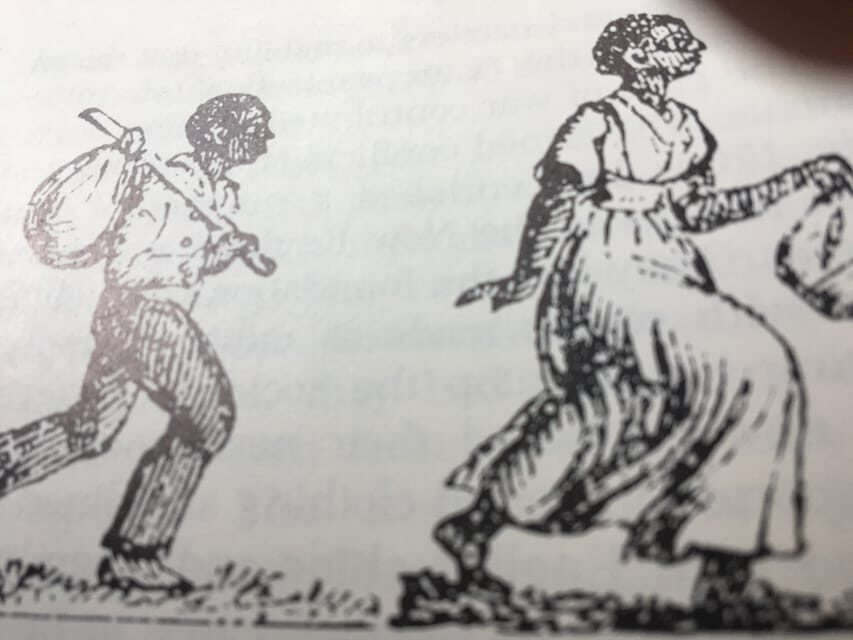
Another stop that really grounds the story in commerce is the Old London Coffee Shop, where people were inspected and sold into slavery. Even if you’ve heard of slave markets, tying it to a named location makes it feel immediate.
This section is uncomfortable on purpose. That’s part of the value. It helps you understand that slavery wasn’t only a labor system. It was also a bureaucratic and commercial system with processes, inspections, and transactions.
If you’re the type who likes to see how societies enforced control, you’ll probably appreciate this stop a lot. It’s a reminder that control didn’t only happen on plantations. It happened in cities too.
Independence Hall Area: Big Names, Big Consequences
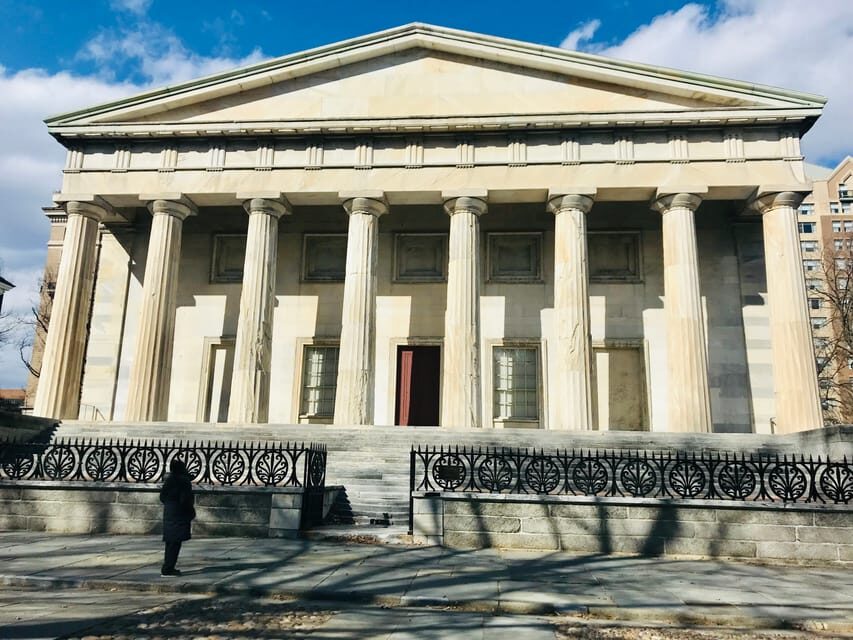
You’ll also spend time around the Independence-area clusters, including Independence Hall, the President’s House, Congress Hall, Old City Hall, and the First U.S. Supreme Court Building. The point isn’t to re-live a famous postcard. It’s to layer the real human stakes onto the places you already recognize.
As you walk, you’ll hear how founding-era power operated in the same civic space where freedom was debated. That contrast is exactly what makes this tour worth doing. You come away with a sharper sense of how ideals and enforcement collided.
This part can feel like a lot of landmark names in a short span. The trick is to treat each site like a chapter headline: who held power, what the legal system allowed, and what that meant for Black Philadelphians.
The American Philosophical Society and the City’s Official Thinking
You’ll visit or pass by the American Philosophical Society Museum and related nearby sites like Library Hall and Thomas Jefferson Garden. These are tied to how knowledge and institutions shaped civic life.
The tour uses these stops to connect ideas to authority. Even when the buildings are beautiful, the story doesn’t let you float above it. It pushes you to ask: who gets included in the definition of citizen, and who gets excluded?
If you enjoy institutions and the history of ideas, this portion will make you look at Philadelphia differently. You’ll see it not just as a stage for documents, but as a place where systems formed.
Banks, Courts, and Civic Control: First and Second Bank of the U.S.

You’ll also get time around the First and Second Bank of the U.S., plus other governing landmarks like the First U.S. Supreme Court area. These are the kinds of sites that often get treated as pure finance history.
On this tour, they get connected to the broader story of how wealth, power, and legal status worked together. That’s the value for you as a reader: it adds cause and effect to what can otherwise feel like disconnected sightseeing.
Keep your expectations realistic. In a 90-minute walk, you won’t get a museum-level visit for every building. What you do get is orientation plus context, so the area makes more sense afterward.
Carpenter’s Hall, Revolutionary Memory, and the Tomb of the Unknown Soldier
The route includes Carpenter’s Hall, Independence Square, Washington Square, and the Tomb of the Unknown Revolutionary War Soldier. These stops help you understand how the city remembers the revolution.
That matters here because the tour connects memory to who’s honored and who’s erased. When you learn about enslaved people, escape routes, and the legal crackdown on freedom, the idea of “revolution” gets more complicated.
You’ll also hear about the Bicentennial Moon Tree. It’s a small, modern marker, but it’s a good reminder that public memory evolves, and not every story appears in big stone text.
John Todd House to U.S. Customs House: Where People and Goods Moved
The later portion of the walk moves through more specific historic pockets, including places associated with John Todd House, the Bishop White House, Kidd House, and areas connected to Dock Creek and 18th-century gardens.
You’ll also hear about the Merchant’s Exchange and the U.S. Customs House. Those are central to Philadelphia’s role as a port and trading hub. On this tour, that translates into a bigger point: cities move goods, and the slave system moved people like goods too.
This is where the tour’s pacing can feel most “walking heavy.” Stay aware, because you’ll be taking in more than one type of history at once: domestic life, civic power, and economic machinery.
Former Sites You’ll Hear About Along the Route
Some of what you learn isn’t tied to a dramatic single building you can step into. The tour identifies former locations of important sites, including Philadelphia Prison Site, Benjamin Rush House Site, Quaker Meeting House Site, and the Quaker School Site. You’ll also hear about an Abolitionist’s House and more.
This is useful because Philadelphia’s city fabric changes. Buildings vanish, roads shift, and today’s blocks don’t always show you what was there. Hearing about former locations helps you avoid the common trap of seeing only what survives.
A practical tip: take a quick photo of any site marker or spot the guide points out. Even if you only capture angles, it’ll help you later when you’re trying to connect memory to place.
Timing Reality Check: Pace, Cobblestones, and a Quick Wawa Break
This tour is designed for about 1.5 miles, but Old City surfaces mean your speed can be slower than you expect. Cobblestones can tire your feet fast, especially if you’re wearing softer shoes or you’re standing still for frequent explanations.
If you’re picky about comfort, this is your moment to be. Wear sturdy walking shoes. Dress for weather. Bring water if it’s warm, because 90 minutes outdoors can feel longer in the sun.
Two timing notes from what’s been shared: at least one departure can start late, and some openings can run longer than you expect before you get to the main stops. On some tours, a brief choice stop at Wawa has been a welcome, practical breather.
There’s also a chance the route intersects with access-based viewing, including Mother Bethel Church and the tomb of Allen in the basement, depending on what can be arranged at the time. If that matters to you, keep your expectations flexible.
The Guide Matters: How MaJewel Sets a High Bar
The quality of a walking tour lives and dies with the guide. On at least one departure, the guide MaJewel stood out for two things: handling questions thoughtfully and keeping energy high while still moving the group along.
That combination is the sweet spot for this kind of subject. When you have dense topics—law, escape routes, institutions, and named individuals—you want a guide who can keep the thread and answer follow-ups without turning everything into a lecture.
If your group gets a guide who encourages questions, you’ll likely get more out of the route. If you prefer quiet sightseeing, you might find some sections more discussion-heavy than expected.
Price and Value: What $35 Buys You in Real Terms
At $35 per person for about 90 minutes, this is not an impulse-only bargain, but it’s also not overpriced for what you get. You’re paying for guided interpretation of a complex topic across multiple named sites, including major civic buildings plus less remembered places tied to enslavement and escape.
The value is in the connections. You’re not just seeing Independence Hall. You’re using it as a reference point to understand how America’s founding era operated for Black Philadelphians—sometimes through education and community, sometimes through brutal enforcement.
If you’re visiting Philadelphia for the first time and you want a tour that changes how you read the city streets afterward, this price can be a fair match. If you’re already planning multiple paid museum stops and you like solo exploration, you might weigh it against more time-intensive options. But as an orientation to Black early Philadelphia in a short walk, it’s strong value.
Who Should Book This Walking Tour
You’ll enjoy this if you want:
- a walking route anchored to real places, not just general history
- clear storytelling about enslavement, abolition, and escape
- context at famous sites like Independence Hall, rather than treating them as separate from Black history
This tour is also a good match for first-timers who want to see a lot without a bus. It’s less ideal if you hate cobblestones or you’re very sensitive to schedule changes, since timing can run long on some dates.
It also works well for people visiting with a curiosity for early American legal history. The Fugitive Slave Act connection plus the Underground Railroad stories give you a strong framework.
Should You Book the Philadelphia Black History Walking Tour?
I think it’s worth booking if you’re open to a tour that connects major Philadelphia landmarks to the people most often left out of the easy version of the story. The mix of named civic sites with grounded details—Congo Square, unmarked yellow fever graves, Quaker schooling, the Fugitive Slave Act moment, and places like Old London Coffee Shop—creates a route that sticks.
Book it if you can handle cobblestones and you want your history walk to be fact-filled and discussion-based. Skip it if you need rigid timing and you can’t risk running long, or if long outdoor walking makes you uncomfortable.
If you do book, show up ready to walk, come with questions, and give the guide a little time to set the thread. This tour rewards attention to small details, like how each stop reframes what you thought you knew about the surrounding blocks.
FAQ
How long is the Philadelphia Black History Walking Tour?
The tour lasts about 90 minutes.
How far do you walk?
It covers approximately 1.5 miles.
How much does it cost?
The price is $35 per person.
Where do I meet the guide?
Meet your guide holding a sign that says The Black Journey in front of the Independence Visitor Center, on the corner of 6th and Market Street, at 599 Market St, Philadelphia, PA 19106.
Is the tour guided and in English?
Yes, it’s a live tour guide, and the tour is in English.
What should I wear for the tour?
Wear comfortable, sturdy shoes because you’ll be walking on cobblestoned streets, and dress appropriately for the weather.
What kinds of sites will we see?
You’ll visit or hear about major Independence-area locations and early Philadelphia sites, including places such as Independence Hall, the President’s House, Congress Hall, the First U.S. Supreme Court Building, the American Philosophical Society Museum, and more, along with sites connected to Black history.
Does the tour include stories about the Underground Railroad?
Yes, the tour includes locations and stories connected to the Underground Railroad used by enslaved people to escape.
Can I cancel and get a refund?
Free cancellation is available up to 24 hours in advance for a full refund.