REVIEW · PHILADELPHIA
Philadelphia: Guided Walking Tour of Historic District!
Book on GetYourGuide →Operated by Tours By TR · Bookable on GetYourGuide
Philly’s founding story is written in stone and brick. This 90-minute guided walk strings together the Historic District’s most important landmarks, using a teacher-led approach that makes the details click fast. The guide, Tom, is the real reason this tour works: he keeps the pace lively and the explanations clear, so you’re not just staring at buildings.
I especially like the sheer number of stops—21 sites in one compact route. You also get great value from the way the narration connects the big moments: the Liberty Bell tale, the debates in Carpenters’ Hall, and the spotlight on where Jefferson worked on the Declaration.
One thing to plan for: it’s outside-only at all stops. If it’s hot or rainy, you’ll be on city sidewalks the whole way, so bring water and dress for the weather (the tour runs rain or shine).
In This Review
- Quick hits
- The 90-Minute Rhythm: Getting Your Bearings Fast
- Price and Value: Why $25 Makes Sense (If You Want the Story)
- Where You Start: Independence Visitor Center (Main Entrance)
- 21 Stops Outside Only: The Clever Part of This Tour
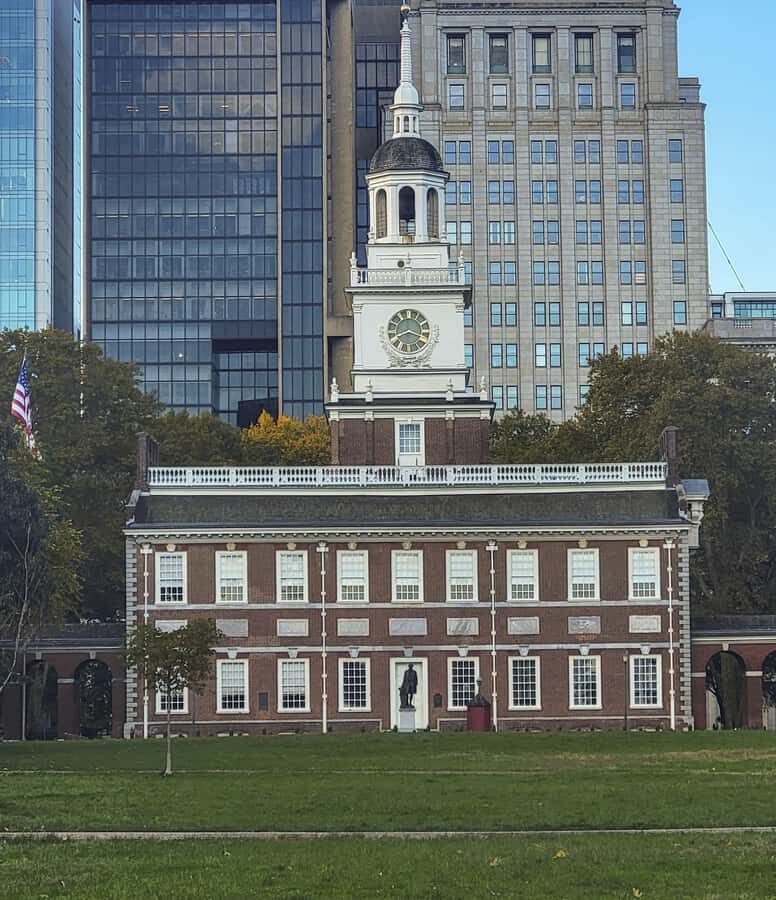
- Liberty Bell to Independence Hall: The Founding Drama Front Row
- Carpenters’ Hall and the Moments Between Big Landmarks
- Looking Up at More Than One Church: Christ Church and Burial Ground
- Elfreth’s Alley: Old Streets, Real Texture
- African American Museum, Graff House, and How the Tour Includes Multiple Stories
- National Constitution Center: The Closing Chapter
- What Makes Tom’s Guide Style Work
- Comfort Tips: What to Bring and How to Survive Hot Days
- Who This Tour Fits Best
- Should You Book This Philly Historic District Walking Tour?
- FAQ
- How long is the Philadelphia Historic District walking tour?
- How much does the tour cost?
- Where do we meet for the tour?
- Are tickets or entry fees included?
- Are the sites entered during the tour?
- Is the tour wheelchair accessible?
- Is the tour offered in English only?
- Does the tour run in rain or shine?
- What should I bring?
- Are pets allowed on the tour?
Quick hits
- 21 outside stops in 90 minutes, so you cover the essentials without wasting time
- Tom, a history teacher leads the tour and turns landmarks into a clear story
- The route hits the core set pieces: Liberty Bell, Independence Hall, Carpenters’ Hall, and more
- Short outdoor look-ins add up: more time to notice details, not just pass by
- Weather awareness shows up in real-life help, including rain gear mentioned in feedback
The 90-Minute Rhythm: Getting Your Bearings Fast
Philadelphia’s Historic District can feel like a lot at once: big buildings, crowded sidewalks, and plenty of signage. This tour’s main trick is its timing. In about 90 minutes, you move through a tight stretch of the neighborhood, so the story stays coherent instead of turning into a checklist.
I like that the guide keeps the focus on what you’re seeing right now. You’re not waiting around for long explanations in one spot and then sprinting past the next landmark. The pace is built for walking: pass-by moments where you still learn something, then a few longer stops where you can really look.
It also helps that the guide is a teacher with a degree in history. That matters because history can turn into dates and terms if nobody makes it human. Here, the narration is built like a lesson: cause-and-effect, what mattered then, and why those choices still echo.
Other historic Old City walking tours we've reviewed in Philadelphia



Price and Value: Why $25 Makes Sense (If You Want the Story)
At $25 per person for a guided walk, this is priced like a no-fuss, high-output city experience. The value comes from two things: the number of stops and the quality of interpretation.
If you’re the type of traveler who enjoys understanding what you’re looking at, you’ll get your money’s worth fast. This is not a tour where you pay to get inside a building. Instead, you pay for context—so the “I’ve seen photos” landmarks turn into “now I get it” landmarks.
Here’s the trade-off. The tour is outside only, meaning you won’t go in and you won’t handle tickets or admissions during the walk. If your priority is museum galleries and inside exhibits, you may want to pair this with a separate ticketed stop afterward.
Where You Start: Independence Visitor Center (Main Entrance)
You meet outside the main entrance of the Independence Visitor Center, the key hub for the Historic District. From there, the walk is designed to flow logically through the area, with the biggest names mixed in along the way.
This start point is practical. Even if you arrive a little early, you have a clear landmark to find your group, and you’re already in the right zone to explore before or after the tour. The meeting coordinates are 39.9514196, -75.1499212, if you’re using a navigation app.
Bring comfortable shoes. The route is on city streets, so your feet do the work and your attention follows. A charged smartphone and camera help too, since you’ll want photos as you pass the major sites.
21 Stops Outside Only: The Clever Part of This Tour
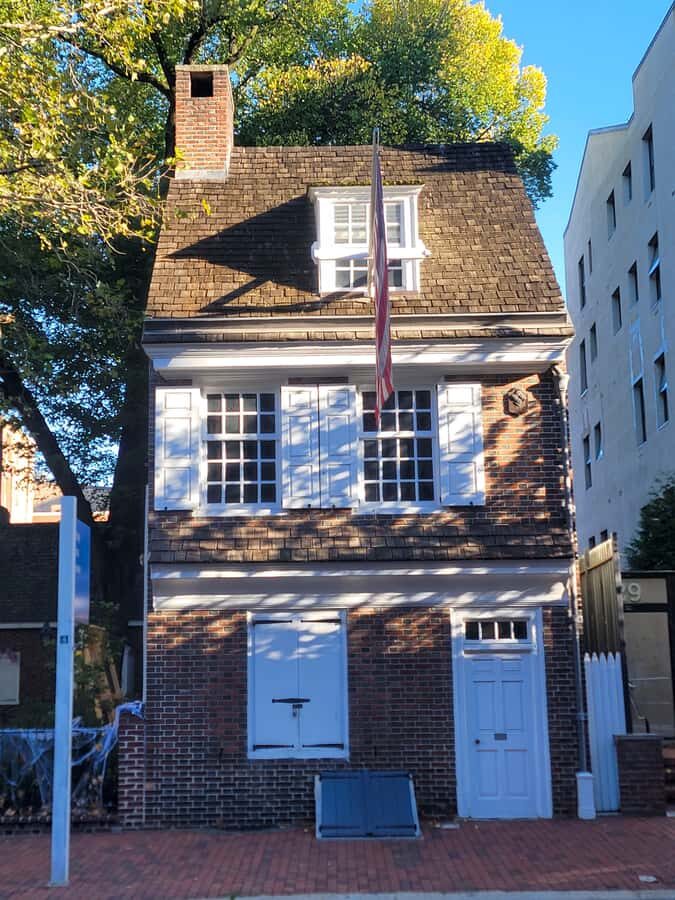
The biggest headline is the 21-site route. But the better question is how it’s executed. You’re not stuck in one place the entire time, and you’re not rushed through every stop either.
Some places are quick “pass by” moments—short looks paired with the key takeaway. Others get extra time to slow down and focus on details. That mix helps you remember more, because you’re not treating everything as equally important.
Also, because it’s outside only, the tour doesn’t eat up time waiting for entry lines or tickets. That’s a real value on a day when the Historic District can be busy. You can keep your plan simple: do the walk, then decide what—if anything—you want to go inside afterward.
Liberty Bell to Independence Hall: The Founding Drama Front Row
This walk doesn’t ease you into the story. It turns you toward the most famous symbols quickly: the Liberty Bell and Independence Hall.
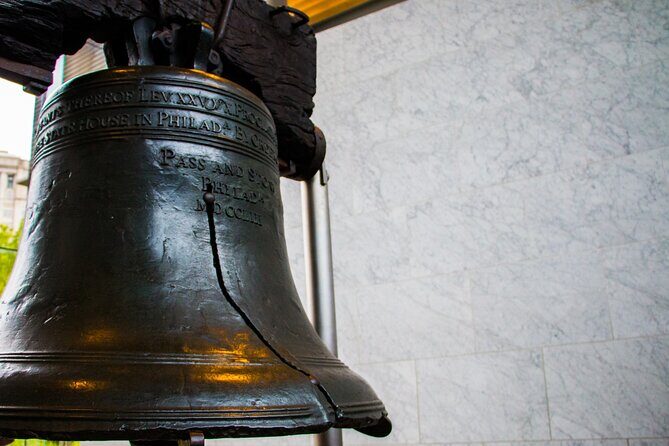
The guide’s narration is built around how these places worked in real life—especially the Liberty Bell story, including how it functioned and why it’s remembered as cracked. Instead of treating the bell like a postcard, you get it in context: what it represented and why people cared.
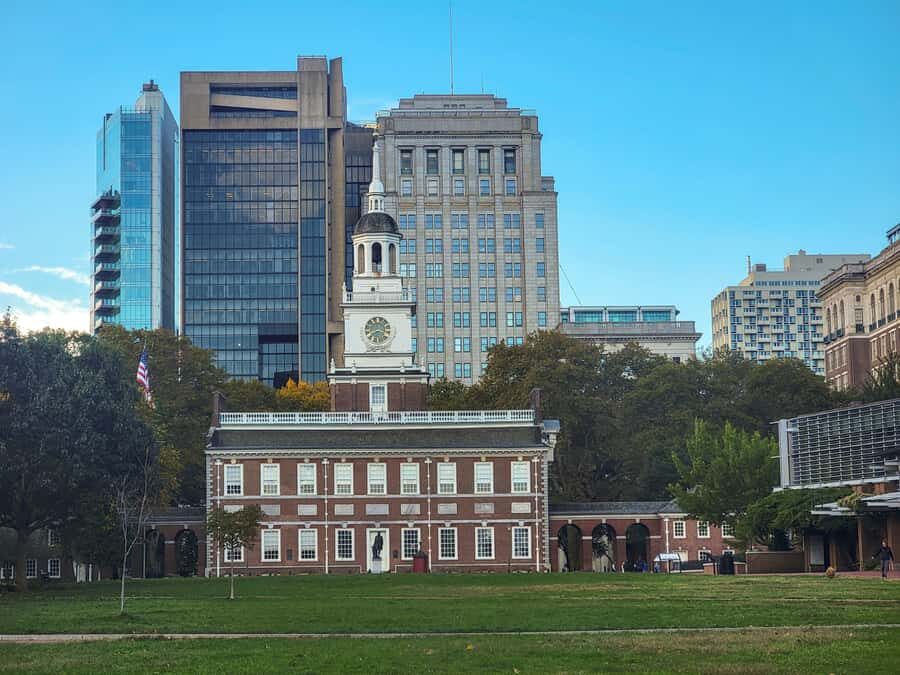
From there, you’re pointed toward Independence Hall, where the narrative shifts from objects to decisions. You’ll hear about the issues the founders faced, and the experience is framed like a debate unfolding in real time rather than a distant history lecture.
If you only have a day in Philadelphia, this section gives you the core emotional arc: symbol, argument, and action.
Other walking tours we've reviewed in Philadelphia





Carpenters’ Hall and the Moments Between Big Landmarks
A standout part of the tour is the way it threads the story through Carpenters’ Hall. You’ll hear about the founders debating, and the whole point is to show that the “end product” wasn’t magic. It came from argument, uncertainty, and a lot of people trying to get a system to work.
Carpenters’ Hall is also a reminder that the Historic District isn’t just one building. It’s a network of meeting places and ideas moving around the same neighborhood. The tour helps you see that connection instead of viewing landmarks as isolated stops.
Then you shift to a quieter but valuable change of pace at Franklin Court. The tour includes a guided look there, giving you extra time to pay attention to what’s around you. Even without entering buildings, this is where you can start noticing how the space feels and why it suited the work people were doing.
Looking Up at More Than One Church: Christ Church and Burial Ground
The walk includes Christ Church Philadelphia and the Christ Church Burial Ground. These stops offer a different angle than the civic buildings. Instead of focusing on government and debates, you’re reminded that the founding era also involved communities, faith, and long-term consequences.
The tour keeps these moments grounded and respectful. You’ll pass by and learn what these sites mean in the broader story, without turning the walk into a one-note lecture.
One practical tip: treat these stops as “pause and look” moments. The guide will point out what matters, but your job is to slow down. Notice the details you’d otherwise skip when you’re just moving from one famous photo spot to another.
Elfreth’s Alley: Old Streets, Real Texture
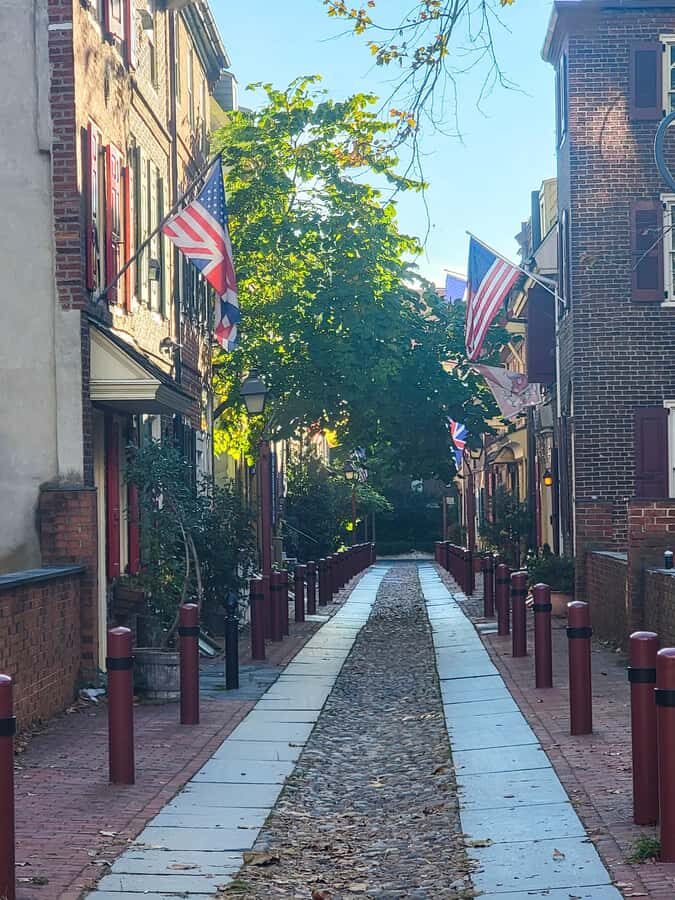
Elfreth’s Alley gets a guided segment with extra time, and it’s a nice breath of perspective. Big landmark sites can dominate your mental map, but old streets are where you start understanding what everyday life might have looked like.
The alley’s value in this tour is how it changes your lens. Instead of only hearing about leaders and documents, you start thinking about the physical reality those leaders walked through. The guide’s explanations help you connect the “founding moment” to the street-level world surrounding it.
This is also a good place for photos. Bring your camera, and don’t be shy about stopping for one or two careful shots rather than rushing through everything.
African American Museum, Graff House, and How the Tour Includes Multiple Stories
The route includes pass-by moments at the African American Museum in Philadelphia and the Graff House. These stops are brief, but they matter because they keep the tour from sounding like a one-track founding story.
This is also where Tom’s approach earns points. In feedback, people noted the tour can feel balanced, with perspective rather than one-sided simplification. You get a sense that history is more than heroes and slogans.
You don’t need to know the names already. The guide’s job is to give you context quickly, so you can follow along without feeling lost. Even short pass-by stops can become memorable when the explanation is clear.
National Constitution Center: The Closing Chapter
The final major stop is the National Constitution Center. By the time you reach it, you’ve already traveled through the symbols, the meetings, and the debates that shaped the founding.
That timing is smart. It helps you see the Constitution Center not as a separate museum stop but as a “what it led to” moment. It’s a natural ending point for a walk that started with symbols and arguments.
As you finish back at the Independence Visitor Center, you’ll be in a good position to keep exploring—whether that means grabbing lunch nearby, going into one site you want to see more closely, or just wandering with a clearer mental map.
What Makes Tom’s Guide Style Work
The praise for Tom is consistent: people describe him as engaging, energetic, and good at turning history into a story you can follow. That’s not just nice feedback. It changes how the tour feels moment to moment.
A teacher-led approach tends to do two useful things:
- It explains terms and significance in plain language.
- It connects the “why” to what you see outside your window.
In some real-life moments, the preparedness stands out too. One review noted Tom even supported guests with rain coats when weather shifted. That’s the kind of practical care that makes you feel looked after without slowing the tour down.
I also like that the tour seems designed to stay respectful and not preachy. One comment specifically pointed out an unbiased perspective. Whether you agree with every interpretation or not, you walk away with less confusion and more room to think.
Comfort Tips: What to Bring and How to Survive Hot Days
This is rain-or-shine. The good news is that it’s only 90 minutes, so you’re not committing half your day to a single outdoor loop. The caution is that you won’t get frequent indoor breaks because all sites are outside only.
So pack smart:
- Comfortable shoes (no surprise here, but you’ll thank yourself later)
- A reusable water bottle (you’ll want it)
- Camera and a charged smartphone for quick photo stops
- Weather-ready clothing, because the sidewalks don’t care about your itinerary
The tour also has a clear list of what isn’t allowed: pets aren’t allowed, and high-heeled shoes are not. There are also strict rules around weapons/sharp objects, smoking, and substances.
If you’re traveling with kids, plan ahead too. Unaccompanied minors aren’t allowed, so the tour is best when an adult is with them.
Who This Tour Fits Best
This is a great fit if you:
- Want the Historic District highlights in a short time
- Prefer interpretation over inside tickets
- Like a guide who speaks like a teacher, not a robot
- Enjoy walking with a clear route and a steady storyline
It’s also a strong choice for first-timers. You’ll learn enough that you can branch out afterward. And because you get value from context, you don’t have to spend extra on every admission just to understand what you’re seeing.
If you’re hoping for lots of indoor time or long museum-style stops, this may feel limiting. It’s designed for outside viewing and explanations, not prolonged building access.
Should You Book This Philly Historic District Walking Tour?
Yes, if your goal is to understand the Historic District quickly and meaningfully. For $25 and 21 outside stops, it offers strong value, especially because Tom’s teaching style keeps the story coherent and the pace traveler-friendly.
I’d skip it only if your priority is indoor entry and you don’t want to rely on outside viewing. If that’s you, plan a different kind of day—maybe pair this with one or two ticketed sites after.
Bottom line: if you want the founding story explained in plain language while you walk through the places where it happened, this is a smart, efficient way to do it.
FAQ
How long is the Philadelphia Historic District walking tour?
The tour lasts 90 minutes.
How much does the tour cost?
The price is $25 per person.
Where do we meet for the tour?
You meet outside the main entrance of the Independence Visitor Center.
Are tickets or entry fees included?
No. Entry and admission fees are not included in the ticket price.
Are the sites entered during the tour?
No. All sites are experienced from the outside only.
Is the tour wheelchair accessible?
Yes, the tour is listed as wheelchair accessible.
Is the tour offered in English only?
Yes. The tour is English.
Does the tour run in rain or shine?
Yes. It runs rain or shine.
What should I bring?
Bring comfortable shoes, a camera, a charged smartphone, and a reusable water bottle.
Are pets allowed on the tour?
No. Pets are not allowed.