REVIEW · PHILADELPHIA
Small-Group Alexander Hamilton Public Walking Tour in Philadelphia
Book on Viator →Operated by phillyPHAT · Bookable on Viator
Follow Hamilton through Philly’s key blocks. This small-group Alexander Hamilton public walking tour strings together big-story America—Washington, the Constitution, and Hamilton’s financial system—using walkable landmarks and live guide storytelling. If you like the musical as much as the man, this one turns hype into real places and real context.
I also like the tight format: about 2 hours 30 minutes with stops that keep moving instead of dragging. You’ll hit major sites including Independence Hall and the First Bank of the United States while learning why Hamilton mattered beyond the stage. One consideration: many stops are short, so if you want deep time inside buildings, plan to do a couple places later on your own.
One more plus for families and first-timers: it’s designed for English speakers, has a maximum of 8 travelers, and the walking pace is friendly for people with moderate fitness. Minimum age is 10, so it’s not built for toddlers or strollers. If you expect long museum-style viewing at every stop, you may feel the time is brief.
In This Review
- Key Highlights to Know Before You Go
- Why This Alexander Hamilton Tour Works So Well in 2.5 Hours
- The Small-Group Feel: What You Gain With a Max of 8
- The Route: Independence Visitor Center to Christ Church Burial Area
- Stop 1: The President’s House (George Washington and John Adams)
- Stop 2: Independence Hall (Congress and the Constitutional Convention)
- Stop 3: Second Bank of the United States (Hamilton and banking systems)
- Stop 4: Franklin Court (Constitution talk with Hamilton, Madison, and Franklin)
- Stop 5: Carpenters’ Hall (1st Continental Congress and early U.S. banking)
- Stop 6: Todd House (Maria Reynolds, Dolly Todd, and the Hamilton-Madison connection)
- Stop 7: Merchant Exchange Building (Hamilton and family nearby)
- Stop 8: First Bank of the United States (Hamilton’s 1791 building and temple style)
- Stop 9: Christ Church (Robert Morris’s grave and the Treasury decision)
- The Guide Experience: Storytelling, Music, and Kid-Friendly Energy
- Price and Value: Getting $45 Worth of Founding-Era Context
- Practical Tips for a Smoother Walk
- Who This Tour Is Best For
- Should You Book This Alexander Hamilton Public Walking Tour?
- FAQ
- How long is the Small-Group Alexander Hamilton Public Walking Tour?
- What is the price per person?
- Where does the tour start and end?
- Is admission included for the stops?
- How big is the group?
- Is there hotel pickup or drop-off?
Key Highlights to Know Before You Go
- Max 8-person group means more questions and less standing around
- Free admissions at the listed stops, so you’re not constantly buying tickets
- Hamilton-to-Philadelphia connections from banking to the Constitution
- A guide who can tell stories clearly (and keep kids engaged when they’re part of the group)
- Music during the tour adds energy, especially for Hamilton fans
- A walk that ends at Robert Morris’s grave, giving the route a strong finish
Why This Alexander Hamilton Tour Works So Well in 2.5 Hours
This tour is built for one thing: making Hamilton make sense in Philadelphia’s real geography. You’re not trying to memorize dates while standing in traffic. Instead, you follow a logical storyline from early presidential power to the Constitution, then to Hamilton’s banking ideas—and you finish at a grave tied to the Treasury debate.
The time window matters. At roughly 2.5 hours, you can fit it into a busy day without feeling like your whole afternoon disappears. The pacing also helps you stay oriented: you learn as you go, rather than reading from a guidebook later with your feet tired.
And yes, it’s a great match for Hamilton fans. But I’d also point out it works for people who just want a clean, well-told tour of Philadelphia’s founding-era landmarks. You’ll get the names, the locations, and the cause-and-effect links between them.
Other Founding Fathers and Revolutionary history tours we've reviewed in Philadelphia


The Small-Group Feel: What You Gain With a Max of 8
When a group is capped at 8 travelers, the guide can actually read the room. You can ask questions without the awkward shout-across-the-street problem. It also makes the walk feel less like a class and more like a conversation with a local who knows how to explain what you’re seeing.
I like that this is also a mobile-ticket tour. It reduces friction when you’re meeting up, and you don’t waste time hunting for printed confirmations. The tour is offered in English, so you get the story without translation lag.
From a practical standpoint, the short stops work best with a small group too. If you have to keep glancing at where everyone is, it turns into a scramble. With fewer people, the route stays orderly.
The other side of the coin: small groups can feel tight if your group is very large with kids who are running ahead, or if everyone wants to pause for photos. You’ll want to keep your group together so the guide can keep the momentum.
The Route: Independence Visitor Center to Christ Church Burial Area
The walk begins at Independence Visitor Center, 599 Market St, Philadelphia, PA 19106. It ends at 22 N 2nd St, Philadelphia, PA 19106, at the Christ Church Burial Area by Robert Morris’s grave. It’s a one-direction route, so you’ll be grateful it’s planned that way—you don’t have to double back.
Here’s the itinerary in order, with what each stop adds and any tradeoffs.
Stop 1: The President’s House (George Washington and John Adams)
You start at The President’s House, the home of George Washington and John Adams as Presidents. This is a smart opening because it grounds the story in the early executive branch—who had power, where leadership lived, and how the new nation actually functioned day to day.
This first stop is short (about 10 minutes). The benefit is momentum. The drawback is that you’ll be in “getting the big picture” mode, not “deep site study” mode.
Stop 2: Independence Hall (Congress and the Constitutional Convention)
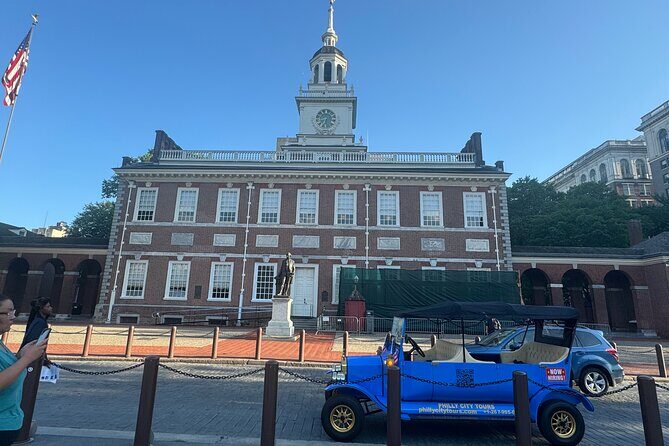
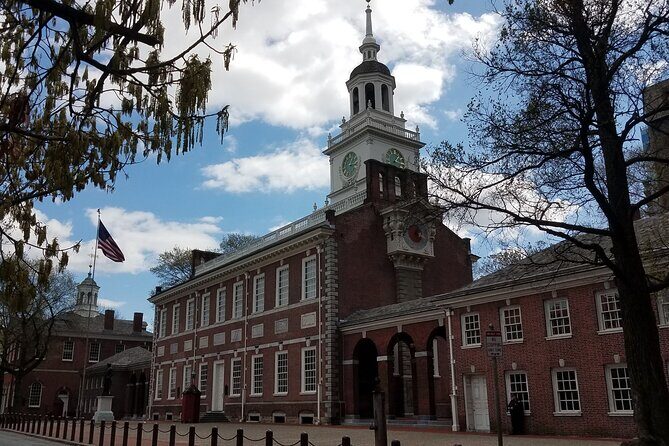
Next is Independence Hall, tied to the 2nd Continental Congress and the Constitutional Convention. This stop is the heart of the founding narrative. It also gives you the bridge to Hamilton’s era: once the Constitution exists, the argument shifts to how the country will run and pay for itself.
Admission here is marked as free. What you should expect time-wise: quick orientation and key stories rather than a long wander through every exhibit.
Other walking tours we've reviewed in Philadelphia
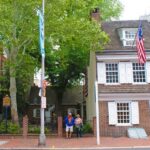




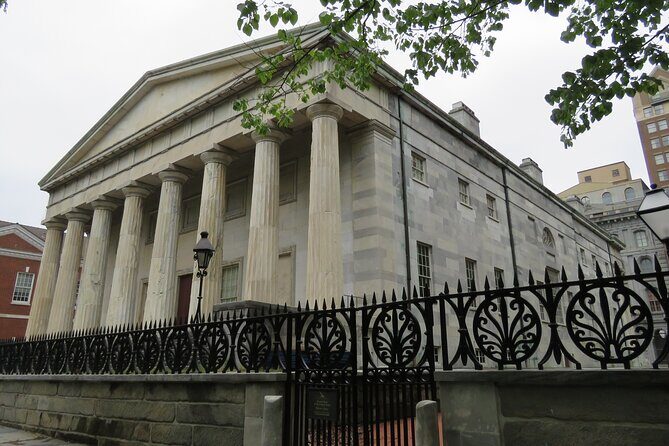
Stop 3: Second Bank of the United States (Hamilton and banking systems)
Then you move to the Second Bank of the United States. The tour connects it to what you might think of as Hamilton’s banking logic—how a modern economy could be structured and stabilized. Even if you’re not a finance nerd, the guide’s job is to turn the concept into something you can visualize on a city block.
This stop is about 5 minutes. Tradeoff: you’ll skim the surface. Advantage: you’ll carry that banking theme forward to the next stop and see how it all links.
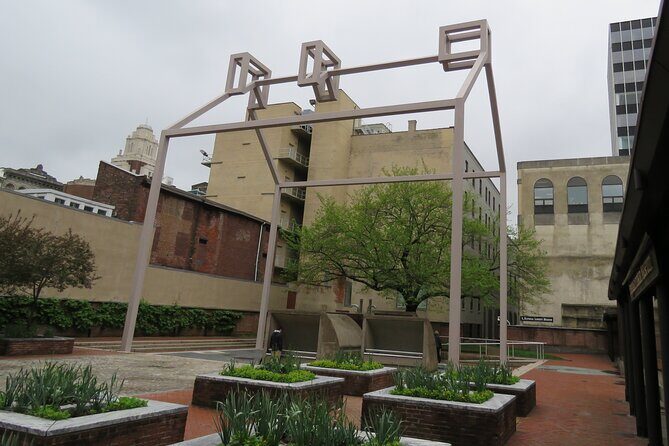
Stop 4: Franklin Court (Constitution talk with Hamilton, Madison, and Franklin)
At Franklin Court, you’ll see where Hamilton, Madison, and Franklin discussed the Constitution. This is one of the most “aha” stops because it reminds you the Constitution wasn’t created by a single person in isolation. It was negotiated through conversations among big thinkers.
It’s also a short stop (about 5 minutes). I’d treat it like a storytelling waypoint. Let it set the tone for what comes next: the practical nation-building work behind the ideals.
Stop 5: Carpenters’ Hall (1st Continental Congress and early U.S. banking)
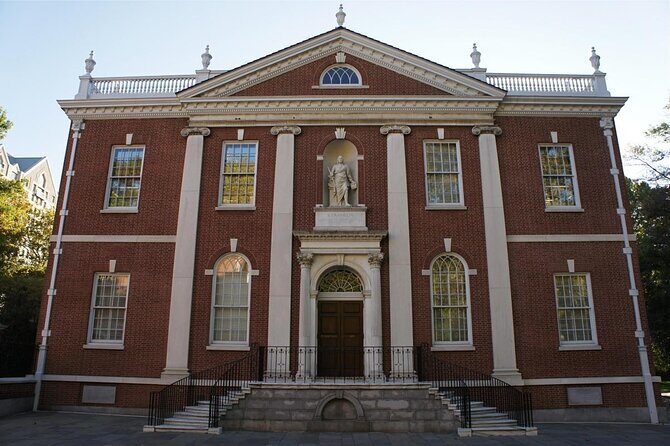
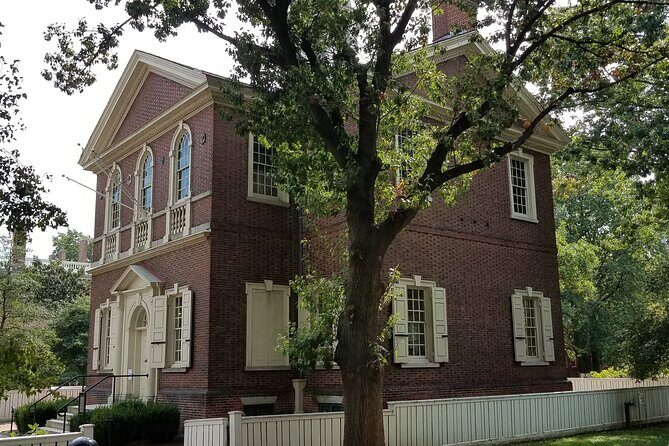
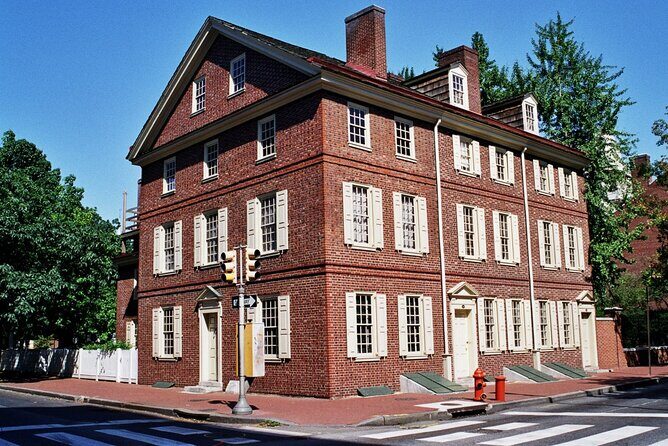
Next up is Carpenters’ Hall, known as home of the 1st Continental Congress. The stop description also notes it later hosted the 1st Bank of the United States for a while. That overlap is the point: political organizing and financial organizing were tangled early on.
Time here is about 10 minutes. Because it’s a bit longer than the mini-stops, you’ll likely get more explanation of why that hall mattered beyond just being a meeting place.
If you’re hoping to linger for photos, build a little extra patience into this part of the walk. The schedule is built to keep the group moving.
Stop 6: Todd House (Maria Reynolds, Dolly Todd, and the Hamilton-Madison connection)
At Todd House, the story shifts to people and relationships. Across the street, the tour points to where Maria Reynold’s lived—Hamilton’s mistress for a year. You’ll also hear how she was introduced to James Madison by Aaron Burr, and how Dolly Todd later became Dolly Madison.
This stop is about 5 minutes. The value is that it shows Hamilton wasn’t just policy and paperwork. Personal alliances and betrayals were part of the political ecosystem.
A consideration: this portion can feel more intense for some kids because it includes affair details. The guide may adapt the tone to the group, but if you’re sensitive about that, it’s worth keeping in mind that this tour does include personal story material.
Stop 7: Merchant Exchange Building (Hamilton and family nearby)
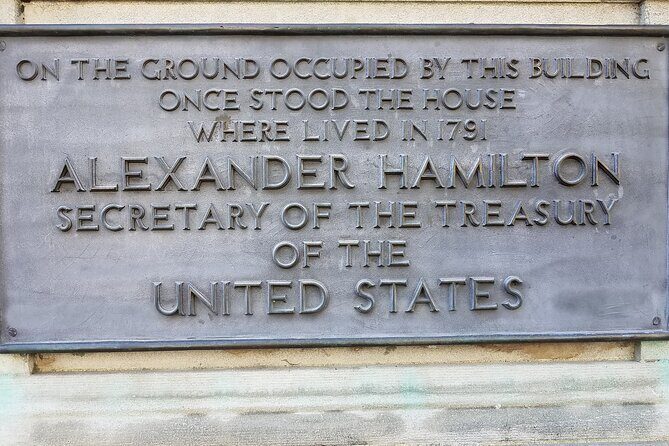
Across the street from the earlier stop is the Merchant Exchange Building, tied here to where Alexander Hamilton and his family lived—about a block from where Maria Reynolds lived. This is a clever geography lesson. It helps you see how close the political and personal worlds could be.
This is also about 5 minutes. It’s more “location-based storytelling” than “stop for long viewing,” so you’ll get the message quickly and move on.
Stop 8: First Bank of the United States (Hamilton’s 1791 building and temple style)
The tour then lands on the First Bank of the United States, created by Hamilton in 1791. You’ll learn it was one of the first new government buildings, and one of the first in Greco-Roman temple style, partially of marble.
This is a highlight for architecture lovers because it ties design to authority. A building like this was never just about banking—it was meant to look permanent, official, and serious. That idea comes through best when you can see the building from the street while the guide explains the symbolism.
Time is about 5 minutes, so the “deep architecture lecture” isn’t the goal. Still, you’ll leave with enough context to appreciate what you’re looking at when you come back later.
Stop 9: Christ Church (Robert Morris’s grave and the Treasury decision)
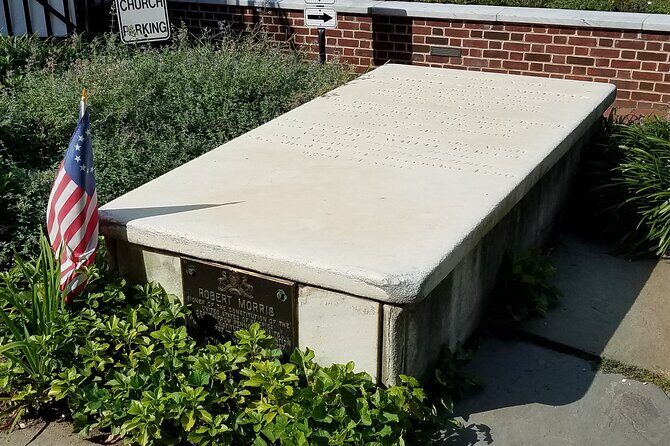
You finish at Christ Church, specifically by the grave of Robert Morris. The tour notes that Morris turned down George Washington’s offer to become the first U.S. Secretary of the Treasury. The stop ties into the bigger theme of who takes risks and who doesn’t—and how choices change government direction.
This final stop is about 5 minutes. The benefit is a clean ending that feels complete. The tradeoff is that you’ll likely want to spend more time here after the tour if this part really grabs you.
The Guide Experience: Storytelling, Music, and Kid-Friendly Energy
A big reason this tour works is the guide’s ability to keep the story moving. In reviews tied to this experience, the guide named Reid is described as excellent with both storytelling and keeping kids engaged. That’s a tall order on a walking tour, where attention can drift fast.
One review also called out music as a plus. That matters because it turns a standing-and-listening format into something more rhythmic. If you’re bringing kids or if you’re a Hamilton fan who remembers songs, music can help the facts stick.
Another practical note from the same feedback: the walk is described as easy with lots of shade. Shade is real value in Philadelphia weather. Even a well-paced tour can feel miserable if you’re in full sun for hours, so it’s good to know the route tends to offer relief.
If you want to get the most out of the guide’s storytelling, show up with one small goal: pick one theme you care about most. Banking? Relationships? The Constitution? Let the guide steer you through that thread.
Price and Value: Getting $45 Worth of Founding-Era Context
At $45 per person, this isn’t a bargain that feels disposable. It’s priced as a real guided experience. The good news is that you get a lot for what you pay: a live guided tour, plus a route with free admission tickets listed for the major stops.
You’re also getting a format that normally costs more in big-city sightseeing: the group is limited to 8 travelers, so the guide’s time is spread out across fewer people. At the same time, the tour avoids long bus transfers (hotel pickup isn’t included), so you spend your time where it matters: on the street, in front of the places.
Is it still worth it if you’re not a Hamilton superfan? I think yes. Hamilton’s ideas are part of the founding-era story, but the route still covers Independence Hall, early Congress settings, and early banking buildings. You’re basically buying a guided storyline that connects those dots for you.
One last thing: this tour is commonly booked about 48 days in advance on average. That’s not a must, but it tells me it’s popular. If your dates are set, you’ll save yourself stress by booking early.
Practical Tips for a Smoother Walk
This tour is designed for people with moderate physical fitness, and the minimum age is 10. That suggests a steady walking pace with some standing at stops. It’s not described as stroller-friendly, so if you’re traveling with kids, plan around that.
The tour ends at Christ Church Burial Area. That’s convenient for people who want to walk off and keep exploring, but it also means you should plan how you’ll get back to your next stop without expecting hotel pickup.
Since it’s a walking experience, wear shoes you trust. You’ll be looking up at buildings, listening, and then moving on. If you’re already tired from a day of museum time, this could still work—but it won’t feel relaxing if you show up running on empty.
If you’re the type who loves photos, take them fast at each stop and let the guide finish the point. The timing (5 to 10 minutes at most places) is part of the design.
Who This Tour Is Best For
This works best if you fit one of these buckets:
- Hamilton fans who want the story tied to real places in Philadelphia, not just lyrics and stage images
- History lovers who like a guided connection between the Constitution and early U.S. government systems
- Families with older kids (10+) who can handle a fast walk and short stops
- People who want an efficient route that gives structure to a founding-era day
It may be less satisfying if you want a slow museum experience at every location. The stop durations are intentionally short, so you’ll probably want to come back to one or two places later if you fall in love with them.
Should You Book This Alexander Hamilton Public Walking Tour?
If you want an organized, small-group way to experience Philadelphia’s founding sites through Hamilton’s life and ideas, I’d say book it. The mix of major landmarks, free-entry stops listed for the route, and a guide who can keep both adults and kids engaged makes this feel like practical value, not just a themed walk.
Before you reserve, be honest with your style. If you love long on-site exploring, you’ll need to pair this with extra time at your favorite stop after the tour. If you like being guided through a story with enough stops to feel like you covered a lot, this format fits well.
FAQ
How long is the Small-Group Alexander Hamilton Public Walking Tour?
The tour runs for about 2 hours 30 minutes.
What is the price per person?
The price is $45.00 per person.
Where does the tour start and end?
It starts at Independence Visitor Center, 599 Market St, Philadelphia, PA 19106 and ends at Christ Church Burial Area, 22 N 2nd St, Philadelphia, PA 19106.
Is admission included for the stops?
The tour lists free admission for the stops on the itinerary.
How big is the group?
The tour has a maximum of 8 travelers.
Is there hotel pickup or drop-off?
No. Hotel pickup and drop-off are not included.
If you want, tell me your travel dates and who’s in your group (kids or no kids), and I’ll suggest the best pairing for the rest of your Philadelphia day around this route.