REVIEW · PHILADELPHIA
Philadelphia Must-See Private Walking Tour With A Guide
Book on Viator →Operated by Guydeez · Bookable on Viator
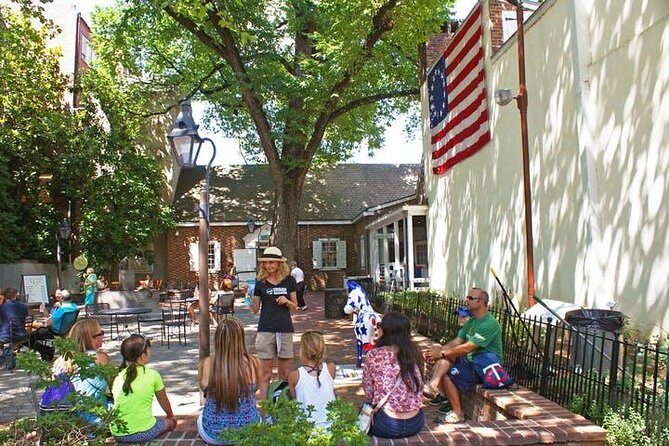
One neighborhood can make a whole country feel real. This private, 2-hour walking tour links Philadelphia’s key Revolutionary landmarks in a tight route you can grasp fast. You’ll move stop to stop with an in-person English-speaking guide, and the pacing is built for sightseeing without feeling rushed.
I really like that it’s truly private and exclusive—your group only—and you can customize the walk to your interests. I also like the way the itinerary mixes story-heavy stops (like where Franklin and Washington are connected, or the halls tied to independence) with easy, short breaks, so you keep energy for the whole loop.
The main drawback to plan around: this is a city tour that is not focused on going inside monuments. Tickets aren’t included, so if you want specific interior access beyond what’s listed, you may need extra booking help and extra time.
In This Review
- Key things I’d focus on before you book
- A tight 2-hour route through Philadelphia’s independence story
- Stop-by-stop: what each location is really adding
- Stop 1: Elfreth’s Alley for a feel of old Philadelphia
- Stop 2: Christ Church and the Washington/Franklin connection
- Stop 3: B. Free Franklin Post Office and early mail delivery
- Stop 4: Carpenters’ Hall and the First Continental Congress (1774)
- Stop 5: Second Bank of the United States as a museum space
- Stop 6: Liberty Bell Center for the independence icon
- Stop 7: Independence Hall for the documents and the debate
- Private guide value: what makes this feel worth $132.15 per person
- Timing and pacing: why the 15–20 minute stops work
- Tickets and “not inside monuments”: how to avoid disappointment
- Meeting point, walking comfort, and how to plan your day
- What the reviews emphasize (and why you should care)
- Who this tour suits best
- Should you book this Philadelphia private walking tour?
- FAQ
- How long is the walking tour?
- Is this tour private?
- How much does it cost?
- What language is the guide?
- Where does the tour start and end?
- Is transportation included?
- Are food and drinks included?
- Are tickets included for attractions?
- What kind of sightseeing is this?
- Cancellation note (quick)
Key things I’d focus on before you book
- Private guide, no crowd shuffle. Your group stays together the whole time.
- Short, clear stop lengths. Most stops are about 15–20 minutes, which keeps the route moving.
- Revolution-to-government flow. The route connects street life, letters, meetings, and independence in sequence.
- Annie-style storytelling stands out. The reviews highlight guides who make it fun and interactive, not lecture mode.
- Help booking tickets, but tickets aren’t included. You get guidance, yet you pay for admission where applicable.
- Mobile ticket and simple start point. Meet at 400 Arch St and get moving quickly.
A tight 2-hour route through Philadelphia’s independence story
This tour works because it’s designed like a guided narrative you can walk. In about two hours, you’re not just ticking off famous buildings—you’re seeing a thread that runs from early Philadelphia street life to the creation of the U.S. government.
The order matters. The walk starts with a residential lane that sets the tone for everyday life in earlier Philadelphia, then shifts to places tied to communication and public gatherings, and ends with the big symbols of independence and the government bodies created around it. It’s an efficient way to get a first understanding of the city’s role in the American Revolution without spending your whole trip in lines.
Because it’s a walking format, the pace stays human. Each stop is timed (mostly 15 minutes, with a couple at 20), so you get enough time to look closely and absorb the story, then move on before boredom sets in. If you like city exploration that stays active but not exhausting, this is a solid match.
Other private and custom-built tours we've reviewed in Philadelphia



Stop-by-stop: what each location is really adding
Here’s how each stop earns its place in the loop, plus what to watch for so you get value from your guide’s explanation.
Stop 1: Elfreth’s Alley for a feel of old Philadelphia
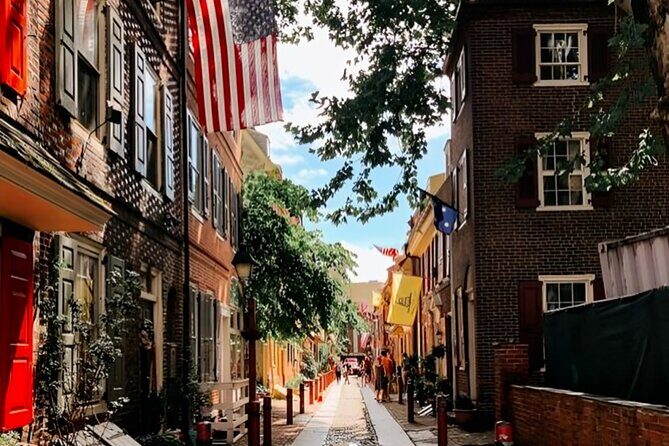
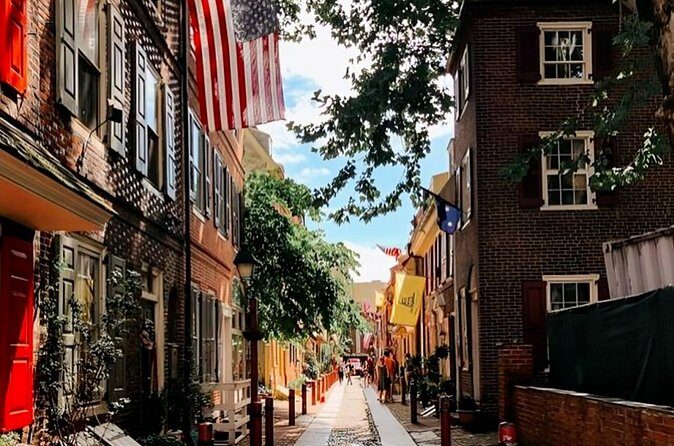
Elfreth’s Alley is described as the oldest continuously inhabited residential street in America. That’s a big claim, and it’s also a useful one for your understanding. When you start here, you’re anchoring the whole tour in the lived-in side of history—not just grand buildings and official decisions.
What I like about beginning at a residential street is that it makes the later political sites feel more connected to real people. You’ll see charming colonial homes lined up along the street, and your guide can tie what you’re seeing to the era that produced the Revolution-era institutions you’ll visit shortly after.
Possible consideration: since it’s a street, the experience depends on what you can see from sidewalks and how quickly you can reposition for photos and viewpoints.
Stop 2: Christ Church and the Washington/Franklin connection
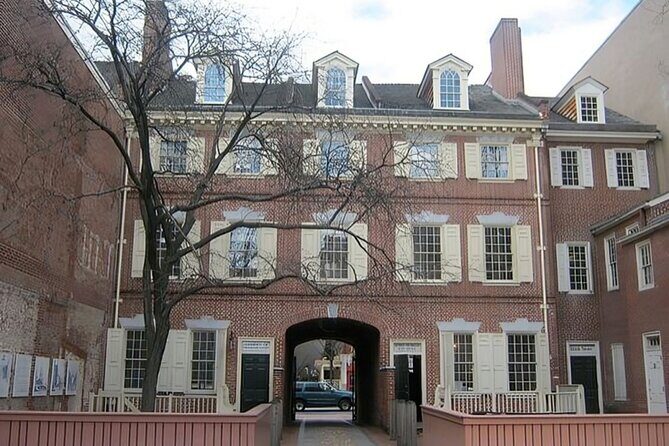
Next up is Christ Church, tied to major Revolutionary-era figures, including George Washington and Benjamin Franklin. This is one of those stops where the name alone can feel familiar, but the value is in hearing how the church connects to the people you’ve already heard about in school.
You’ll spend about 20 minutes here, which is enough time to take in the setting and let your guide connect dots between the individuals and the broader story of the period. Admission is listed as free for this stop, so you can focus on learning rather than figuring out extra costs on the spot.
What to watch for: use this stop to ask your guide how the people connected to Christ Church relate to the later sites you’ll see. It makes the rest of the tour feel more intentional.
Stop 3: B. Free Franklin Post Office and early mail delivery
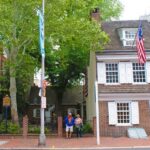
Then you shift from worship and prominent figures to communication. This stop focuses on Benjamin Franklin’s first post office. That might sound niche, but it’s a smart turn in the story. The American Revolution didn’t run on symbolism alone; it ran on messages, organization, and the movement of information.
This part of the tour is about seeing how communication infrastructure helped make coordination possible. With only about 15 minutes allocated, you’ll want to listen closely—this is a quick hit designed to add meaning, not to replace a dedicated museum visit.
If you’re someone who enjoys practical history—how systems worked—this stop will likely be a highlight.
Other walking tours we've reviewed in Philadelphia




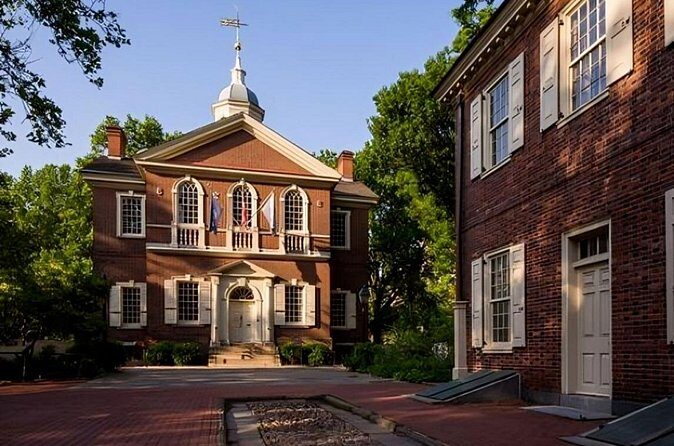
Stop 4: Carpenters’ Hall and the First Continental Congress (1774)
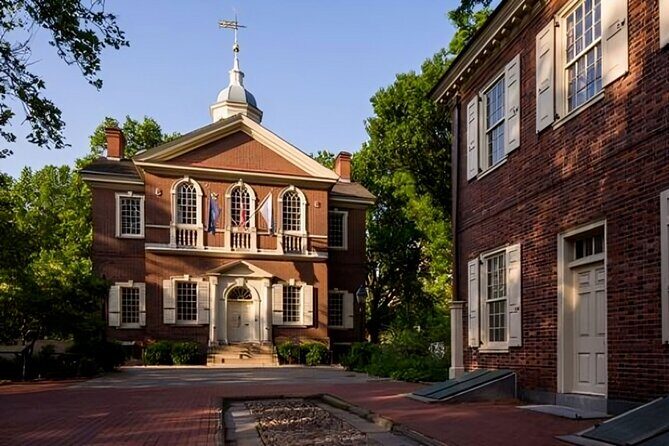
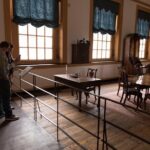
Carpenters’ Hall is where the tour becomes explicitly political. It’s described as the meeting place of the First Continental Congress in 1774. That is a key pivot point: you’re moving from everyday life and communication to organized political action.
The stop is short (about 15 minutes), so your guide’s storytelling matters. Ideally, you’ll come away understanding that these places weren’t random backdrops. They were where decisions and meetings shaped the road toward independence.
Practical tip: because you’re outside as part of a city tour (not a deep interior museum plan), take a moment to look for features your guide points out so you don’t feel like you missed the main event.
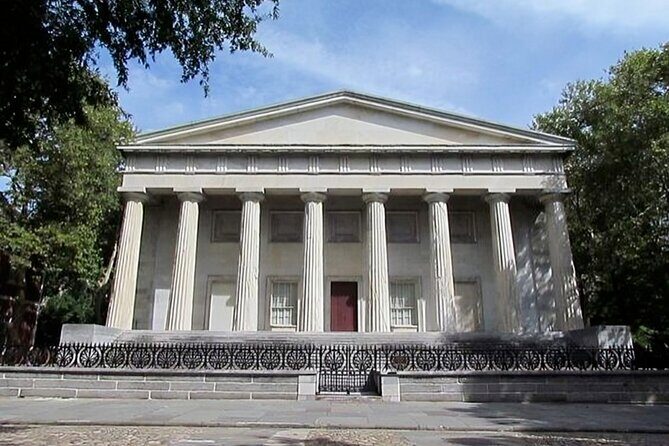
Stop 5: Second Bank of the United States as a museum space
Next is the Second Bank of the United States. This building is now used as a museum showcasing American art and artifacts. That’s a helpful transition because it connects the Revolution-era government and economy to what people preserve today.
This stop is about 20 minutes, giving you time to view the building and absorb how a financial institution fits into a period of nation-building. Even if you keep your visit focused on the outside and the guide’s explanation, this stop brings the story forward into the present.
Consideration: since the tour data frames this as a city walk, don’t expect a full museum-style itinerary. If you want deeper time inside the museum exhibits, you’d need extra time and possibly additional planning.
Stop 6: Liberty Bell Center for the independence icon
Now you get one of the most recognizable symbols in American history: the Liberty Bell. It’s housed in the Liberty Bell Center, and this stop is about 15 minutes.
This is a classic “look and understand” moment. Your guide’s job here is to connect the symbol to the independence story you’ve been building step by step. Think of it as the emotional centerpiece in the middle of a practical timeline.
Since the stop is brief, make it count. If you’re photo-focused, plan on using that 15 minutes for both photos and the guide’s quick explanation.
Stop 7: Independence Hall for the documents and the debate
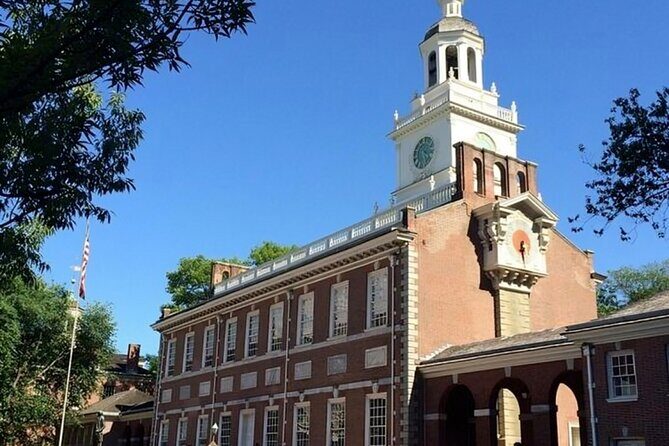
The final stop is Independence Hall. The tour description highlights that this is the birthplace of America’s independence, and that the Declaration of Independence and the U.S. Constitutions were debated and adopted there.
This ending makes sense. You start with daily street life. You move through communication and political meetings. You hit the independence icon. And then you land at the place where the big governing ideas were argued over and finalized.
Independence Hall is about 20 minutes in the tour. Because the tour is framed as a city walk and not a tour inside monuments, this time is best used for perspective: what the place represents, why it mattered in the moment, and how the earlier stops connect to it.
Private guide value: what makes this feel worth $132.15 per person
The price is listed as $132.15 per person for about 2 hours. At first glance, that can feel steep if you’re comparing it to a free self-walk. But the value here isn’t only in seeing seven famous stops. It’s in how fast you can understand what you’re looking at, and how smoothly your route runs.
Three ways you get value:
- You’re not competing with other groups. Private means fewer awkward waits and less time spent re-hearing basics.
- You get customization. If you have a particular interest—Revolution politics, famous figures like Benjamin Franklin, or the communication angle—your guide can shape the emphasis.
- Ticket help is included, even if tickets aren’t. You’re not left alone to figure out everything. You’ll get support to book tickets for the visits you want.
Also, there’s mention of group discounts. If you’re traveling with friends or family, that can improve the math quickly. Private tours often get more reasonable as you spread the cost across a small group.
One more practical detail: you receive a mobile ticket, and the meeting point is fixed. That reduces day-of stress and keeps the experience from turning into logistics work.
Timing and pacing: why the 15–20 minute stops work
This itinerary is built around short blocks: 15 minutes for Elfreth’s Alley, Franklin’s post office, Carpenters’ Hall, and the Liberty Bell Center; 20 minutes for Christ Church, the Second Bank, and Independence Hall.
That pacing matters because it reduces the most common tour problem: you spend too long at one spot and then feel tired at the end. Here, the stops are varied enough that your brain doesn’t get stuck on one type of attraction. You’re moving between street scenery, public buildings, and places tied to key political actions.
For you, that means the tour tends to feel complete even if you’re visiting Philly for the first time. In the reviews, the tour is repeatedly praised as a fast way to get to know Philadelphia, and this structure is why that works.
Tickets and “not inside monuments”: how to avoid disappointment
The tour includes help from the team to book tickets for desired visits, but tickets are not included. Also, it’s a city tour and not a tour inside the monuments.
So plan for this reality:
- You will see and learn at major sites.
- You should not assume the tour automatically includes full interior access at every stop.
- If you want to add specific interior experiences, you’ll need to handle tickets separately or use the provider’s help to book them.
One practical way to make this smooth: decide in advance what you want most—quick storytelling and classic photo moments, or deeper interior time that may require extra ticketing.
If you keep expectations aligned with a city-walk format, this tour tends to land exactly where it’s meant to: clear context plus a satisfying highlight reel.
Meeting point, walking comfort, and how to plan your day
The tour starts at 400 Arch St, Philadelphia, PA 19106, and it ends back at the meeting point. It’s near public transportation, so you can build it into a day that also includes other parts of the city.
Because it’s a walking tour, wear shoes you actually want to walk in. Also, since it’s about two hours, it fits well early in your trip: you get your bearings fast, then you can return later to anything that grabbed you.
If you’re pairing it with food or other sightseeing, leave a little buffer. You’ll likely want time for quick photos and for asking a last question before you head off to your next plan.
What the reviews emphasize (and why you should care)
The feedback is strongly positive, with a 4.8 rating across four reviews. The top themes are consistent:
- Guides like Annie are described as delivering the best version of this kind of walk: fun, interactive, and informative.
- People liked the responsiveness when plans changed last minute, including the guide’s willingness to adjust the itinerary to match interests.
- A first visit to Philadelphia is a perfect use case. This kind of structured route helps you understand what you’re seeing without needing prior knowledge.
So if you care about getting meaning—not just names—this tour has a track record for delivering that.
Who this tour suits best
This is a strong fit if:
- You’re visiting Philly for the first time and want a smart overview.
- You prefer a guided walk over hopping around alone.
- You like history tied to people and decision-making (not only dates on plaques).
- You want private time with an English-speaking guide, with room for customization.
It may be less ideal if you’re hoping for a museum-heavy day with long interior visits at each major site. The tour format is built for a city walk, not a monuments-inside itinerary.
Should you book this Philadelphia private walking tour?
Yes—if you want an efficient way to understand Philadelphia’s Revolutionary core without turning your trip into a logistics marathon. The private format, the guided flow through major sites, and the strong feedback about guides like Annie make it a high-value choice for first-time visitors and for anyone who wants their history to be clear and engaging.
Before you book, do two things:
1) confirm what kind of interior access you expect versus what the tour format includes, and
2) decide whether you’ll need tickets beyond the basic free stops.
If you align your expectations to a walking city tour with guide-led storytelling, you’ll likely come away with a much stronger sense of how Philadelphia’s famous landmarks connect into one coherent independence story.
FAQ
How long is the walking tour?
It lasts about 2 hours.
Is this tour private?
Yes. It’s private and exclusive, so only your group participates.
How much does it cost?
The price is $132.15 per person.
What language is the guide?
The guide is English-speaking.
Where does the tour start and end?
It starts at 400 Arch St, Philadelphia, PA 19106, USA, and ends back at the same meeting point.
Is transportation included?
No. Transportations aren’t included, and public transport costs are at your own expense.
Are food and drinks included?
No. Drink or food isn’t included.
Are tickets included for attractions?
Tickets aren’t included. The tour includes help from the team to book tickets for the desired visits, but you’ll need to handle admission separately.
What kind of sightseeing is this?
It’s a city tour. It is not described as a tour inside the monuments.
Cancellation note (quick)
Free cancellation is available up to 24 hours before the experience’s start time for a full refund.