REVIEW · PHILADELPHIA
90 Minute History Walking Tour of Old City Philadelphia
Book on Viator →Operated by WeVenture · Bookable on Viator
One of Philly’s founding spots is always in view. This 90-minute Old City walking tour strings together the stories behind Independence Hall, the Liberty Bell, Benjamin Franklin, the U.S. Mint, Betsy Ross, Quaker history, and Elfreth’s Alley, with a live guide and a simple route you can follow without stress.
Two things I especially like: the guide help beyond the tour, and the mix of big-name landmarks with smaller, high-impact stops where details matter. One consideration: this is a group experience, so if you want history only with zero opinions, you may want to set that expectation at the start.
In This Review
- Key Points at a Glance
- Why This 90-Minute Old City Walk Works
- Meeting at Signer’s Garden: Easy Start, Clear End
- Independence Hall: The Two-Event Story That Shapes Everything
- Liberty Bell Pass-By: Outside View, Focused Context
- Benjamin Franklin’s Tombstone: The Small Spot That Packs a Punch
- U.S. Mint Stop: Follow the Money, Then Learn the Coin Fact
- Betsy Ross House Story: A Belief, Not Just a Slogan
- Quaker Courtyard and Early Philadelphia’s Christian Community
- Elfreth’s Alley: The 1700s Street You Can Actually Feel
- Guide Styles and Group Energy: What to Expect
- Is This Tour Worth $29? The Value Math
- Who Should Book This Old City Tour
- Should You Book This 90-Minute Old City History Walk?
- FAQ
- How long is the 90-minute Old City Philadelphia history walking tour?
- What does the tour cost?
- Where do I meet, and where does the tour end?
- Is the tour offered in English?
- How large is the group?
- What’s included in the ticket price?
- Is food or drink included?
- Will I get a mobile ticket?
- Can I cancel and get a full refund?
Key Points at a Glance
- Tight 90-minute route: you hit the core founding-era sites without spending your whole day in line and transit
- Small group size (max 16): easier questions, more conversation, less crowd energy
- Photo-friendly stops: your guide helps you capture the preserved 18th-century street moments
- Big stories in compact space: Independence Hall, Franklin, and the Mint explained in plain language
- Local-area recommendations: the guide’s knowledge doesn’t end when the tour ends
Why This 90-Minute Old City Walk Works
You don’t need a full day to understand why Philadelphia mattered in America’s early years. This tour is built for focus: 1 hour 30 minutes, mostly in the historic heart of Old City, with a guide who connects places into a timeline. At $29 per person, it’s priced like a city highlight tour, but it includes more than just photos and pointing.
I like that the tour includes a donation to a local nonprofit historic organization. It’s not a huge line-item on your phone receipt, but it’s the kind of built-in detail that makes the visit feel grounded. You’re also not paying extra for everything—there’s no add-on admission mentioned for the core experiences, and one key stop (Elfreth’s Alley) is specifically called out as free.
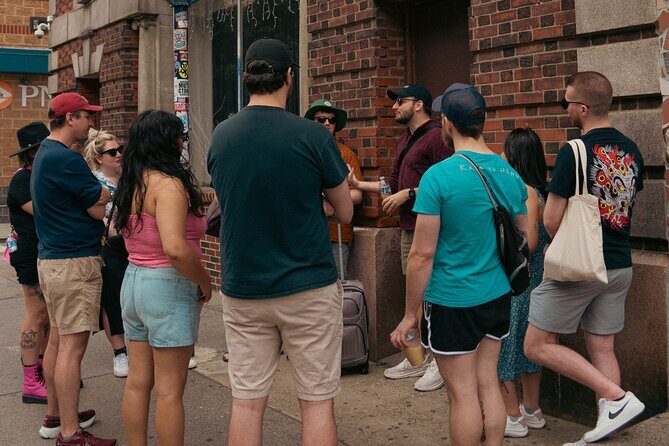
The group stays small, with a maximum of 16 travelers. That matters because you’ll hear each other’s questions and you won’t feel like a distant face in a crowd. Also, you’ll get a little natural social time with like-minded people—history fans, curious first-timers, couples, and families.
Other historic Old City walking tours we've reviewed in Philadelphia



Meeting at Signer’s Garden: Easy Start, Clear End
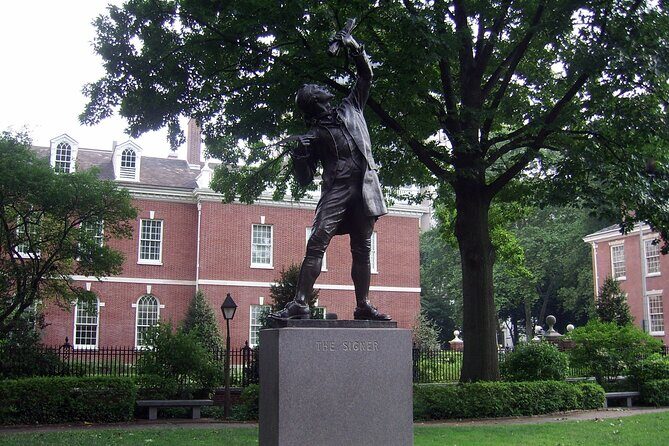
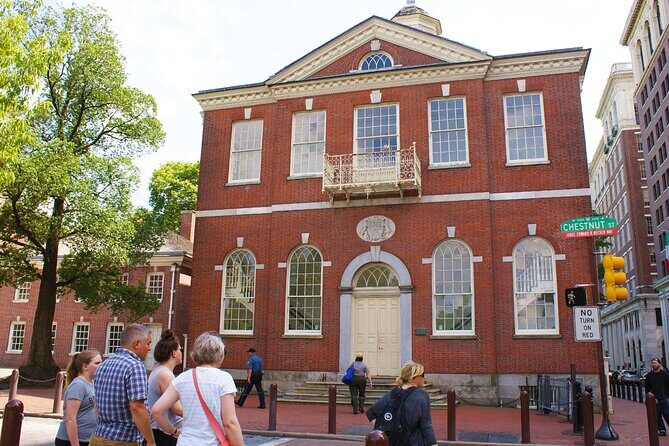
You start at Signer’s Garden, at 434-498 Chestnut St, Philadelphia, PA 19106. Your tour ends in the heart of Old City Philadelphia, so you’re finishing right where you’ll want to wander afterward for meals and more exploring.
This is a walking tour, so plan for comfortable shoes and a pace that keeps you moving. The tour is listed as “most travelers can participate,” which usually means it’s not overly technical. One review specifically notes an easy walking pace, which is a good sign if you’re traveling with a mix of ages.
A few practical bits: you’ll use a mobile ticket, the tour is in English, and it’s near public transportation. Service animals are allowed, which is important to know ahead of time if you’re traveling with one.
One more detail that I appreciate: the guide may happily share recommendations for the rest of your trip. That turns the tour from a single activity into a smart starting point for the days after.
Independence Hall: The Two-Event Story That Shapes Everything
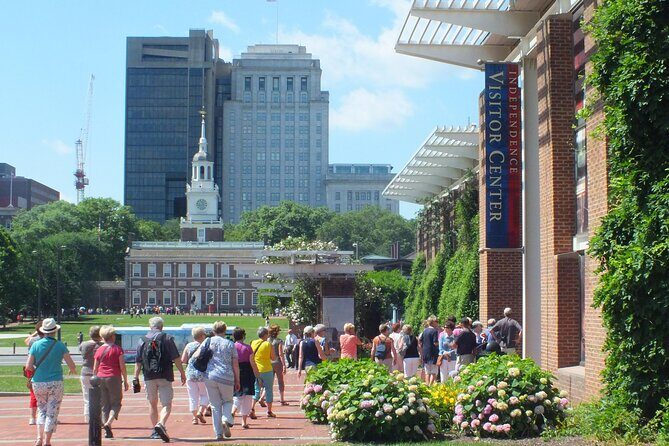
The tour’s first major stop is the building that saw the birth of the United States of America. The key moment you’ll hear about is 1776, when the Continental Congress declared independence from the British Empire. Then the tour bridges forward to 1787, when the founders created the U.S. Constitution.
What makes this stop work on a 90-minute schedule is that it’s not presented as two random dates. It’s presented as one evolving mission: break free first, then build a system that can actually govern. When a guide ties those milestones together, the whole founding era stops feeling like separate trivia and starts feeling like a story with momentum.
You’ll also get the practical benefit of standing in a place where the timeline is visible in your mind. This is one of those stops where you might otherwise see impressive buildings but miss the structure of why they matter.
Liberty Bell Pass-By: Outside View, Focused Context
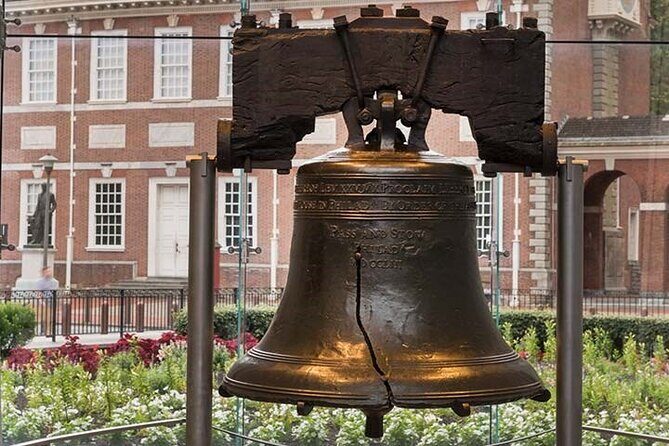
Next up is the Liberty Bell, viewed from the outside while your guide explains its history and how it became America’s enduring symbol of freedom. Since the tour keeps you moving, this is a “pass by” stop rather than a long, sit-down experience. That’s not a drawback—it’s part of the value. You get context without losing time to a slow break in the flow.
The best way to enjoy this stop is to listen for the explanation behind why the bell became revered. A lot of people know the nickname and the basic idea, but the meaning sharpens when your guide connects it to the wider independence story you just heard at Independence Hall.
If you’re the kind of visitor who likes to understand what you’re seeing before taking photos, this stop is a good reset point. And because it’s outside-facing, you can keep the rest of the tour energy going.
Benjamin Franklin’s Tombstone: The Small Spot That Packs a Punch
One of the most interesting turns on this route is the Franklin stop. Under a non-descript tombstone lies one of America’s most important citizens: Benjamin Franklin. Your guide frames Franklin as more than a portrait—an influential printer, politician, scientist, and philanthropist.
This is the kind of stop that works because it changes your expectations. Franklin isn’t introduced as one personality; he’s introduced as multiple contributions that shaped early American life. A smaller, quieter corner becomes a lesson about impact.
If you like history that feels human—people who weren’t just names in a textbook—this stop is where the tour earns its keep. You’re not learning only dates. You’re learning how a person’s work can echo across fields.
Other walking tours we've reviewed in Philadelphia




U.S. Mint Stop: Follow the Money, Then Learn the Coin Fact
Then you’ll reach the U.S. Mint in Philadelphia, described as the largest mint in the world and a place that produces most of America’s circulating coins. The guide also includes a small line meant to stick in your head: a penny saved is a penny earned.
This stop is smart because it turns “founding era” into something physical you can connect to daily life. The United States didn’t just declare independence and write a constitution; it also had to run a real system—trade, currency, and everyday economic trust.
A guide can make this moment feel surprisingly practical. Without turning it into a lecture, you get a sense of how the country functioned and why minting mattered.
Betsy Ross House Story: A Belief, Not Just a Slogan
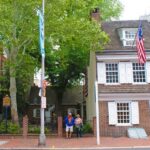
The Betsy Ross stop is framed as a belief: it’s believed she lived here when she created the first American flag. Your guide tells that story from outside her charming 18th-century home.
This is a useful kind of historical stop because it’s honest about its framing. Some visitors want one clean answer for everything; real history is messier. When your guide explains the story while keeping the certainty level clear, it feels more credible than forced certainty.
Also, this stop helps the tour’s rhythm. You go from major institutions (Independence Hall, the Liberty Bell, the Mint) to a smaller, lived-in setting—so the route becomes less like a checklist and more like a walk through different layers of the city.
Quaker Courtyard and Early Philadelphia’s Christian Community
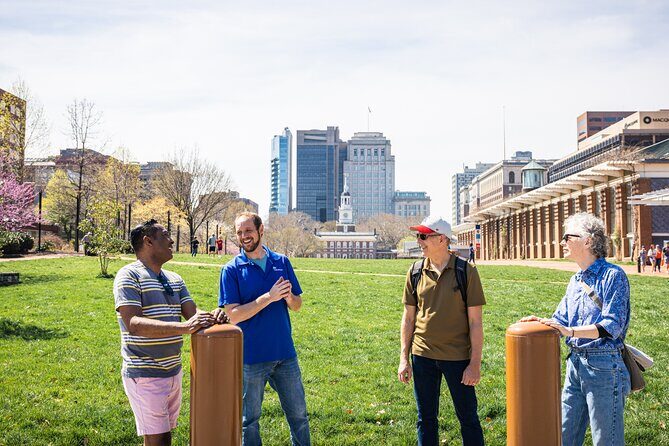
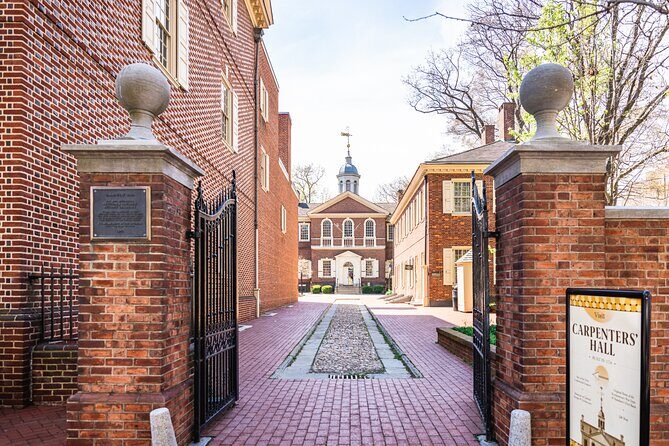
Another stop takes you into the courtyard of the largest Quaker meetinghouse in the area, with a discussion of the Christian community that was predominant in early Philadelphia. The focus here is on the human side of a city: what the community valued, how faith shaped everyday life, and why it left a footprint in the places you still see today.
This is one of the places where a good guide really matters. If your guide gives context without turning it into a debate club, you’ll come away with a clearer picture of why Old City wasn’t only political power—it was also belief systems and community life.
If you like history that shows how people lived, not just what leaders decided, you’ll probably enjoy this stop. It also provides variety after the more famous landmark-heavy moments.
Elfreth’s Alley: The 1700s Street You Can Actually Feel
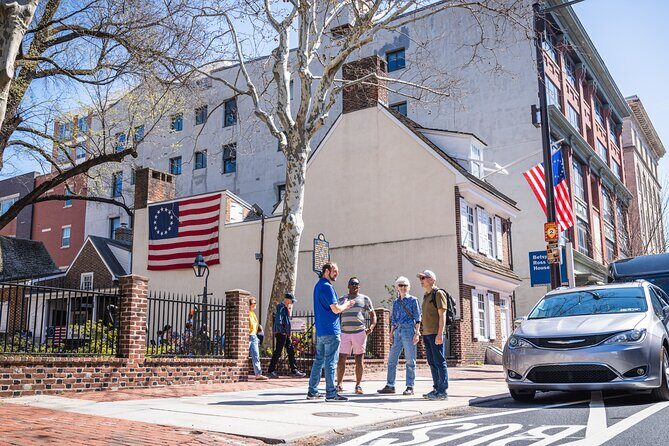
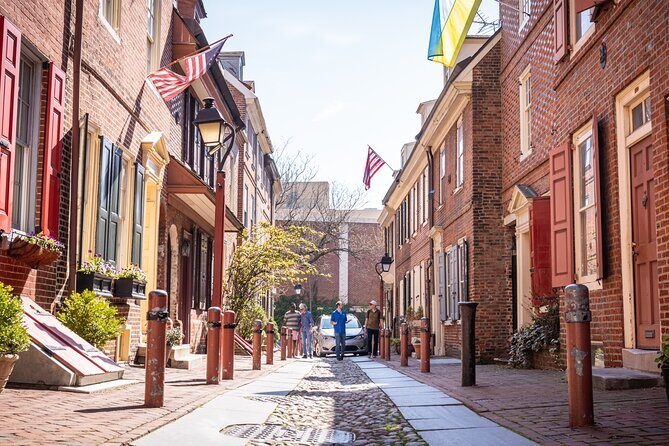
The tour includes a final highlight on Elfreth’s Alley, often described as one of the most charming streets in America. You’ll stroll past quaint homes from the 1700s, and you’ll learn why the street matters: it’s known as the oldest continuously residential street of the former 13 British Colonies.
This is where the tour becomes visual in your body, not just in your head. The homes and street rhythm make the 18th-century feel more believable because you’re walking it, not imagining it.
It’s also where your guide’s photo help is likely to pay off. One of the stated highlights is that your guide will snap photos of a preserved 18th-century street. If you’re traveling with a partner or family, this is the moment you’ll appreciate someone else taking the picture so you both show up.
Time matters here too. Elfreth’s Alley is listed as 15 minutes and admission is noted as free for this stop (ticket-free for visiting). That gives you enough time for photos and a slow look without dragging the whole tour.
Guide Styles and Group Energy: What to Expect
Most tours live or die on the guide. This one has strong feedback patterns: guides described as friendly, passionate, and very comfortable answering questions. Some names that show up in positive experiences include Jonathan M., Caroline, John, and David. If you get a guide with that kind of delivery style, you’re likely to leave with more than facts—you’ll leave with places to go next.
A few practical expectations based on the format:
- The group stays small (max 16), so your guide can keep an eye on the pacing.
- You’ll get a connected narrative rather than isolated facts.
- The pace is built for sightseeing rather than speed-walking marathons.
Now, one consideration to keep in mind: there’s at least one unhappy experience where the guide was said to spend too much time on political opinions and not enough time on historical focus. That’s not the majority of feedback, but it’s real enough that you should protect your own expectations. If you prefer history presented as history only, I’d start the tour with a simple tone-setting comment like you want more context and less opinion. A good guide will adjust.
Is This Tour Worth $29? The Value Math
At $29, you’re not just paying for landmarks. You’re paying for:
- a live local, English-speaking guide,
- story structure that connects multiple founding-era sites,
- a donation included in the tour cost,
- and a route that makes Old City easier to navigate on foot.
If you were to “DIY” this route, you’d still need to figure out what to look at and how to connect the dots. Most visitors end up with a bunch of photos and a vague feeling of greatness, but not much clarity on why the timeline matters.
This tour aims to solve that. In 90 minutes you see the core places that define Philadelphia’s role in independence, constitution-making, public life, and community identity. Elfreth’s Alley adds a human-scale endcap that most self-guided routes either miss or rush through.
The only real downside on value is if you’re not interested in guided context. If you already know the founding story cold and you want silence and solo wandering, a self-paced plan might suit you better. For most people, the guide turns “famous places” into something you actually understand.
Who Should Book This Old City Tour
This fits well if you:
- want a first-time orientation to Old City Philadelphia,
- like your history explained in plain language,
- enjoy asking questions during a walking format,
- and want a guide who can point you toward more stops after you finish.
It also seems to work for families, including older kids. One positive experience mentioned a 13-year-old following along and asking questions, which tells me the content is accessible without feeling watered down.
Couples can also like this one. The route is compact, the storytelling gives you shared talking points, and Elfreth’s Alley is a nice photo ending.
If you’re traveling for work and want a quick, focused use of time, this is also a good candidate. You get an efficient sweep of key sites rather than getting stuck in one area for hours.
Should You Book This 90-Minute Old City History Walk?
Yes, I’d book it—especially if you’re short on time and want Philadelphia’s founding era explained in a way that’s easy to carry home. The small group size, the guide’s ability to connect the dots, and the mix of major and lesser-known stops make it a strong value for $29.
The only reason not to book is if you’re very sensitive to guide opinion taking over the narrative. If that’s you, set your preference at the start and you’ll do fine. Otherwise, this is the kind of tour where you leave thinking, I get it now—and you also know where to go next.
FAQ
How long is the 90-minute Old City Philadelphia history walking tour?
It’s listed at about 1 hour 30 minutes.
What does the tour cost?
The price is $29.00 per person.
Where do I meet, and where does the tour end?
You start at Signer’s Garden, 434-498 Chestnut St, Philadelphia, PA 19106. The tour ends in the heart of Old City Philadelphia.
Is the tour offered in English?
Yes, it’s offered in English.
How large is the group?
The maximum group size is 16 travelers.
What’s included in the ticket price?
Included are a local, English-speaking guide, fascinating stories of Philadelphia’s historically significant sites, a donation to a local nonprofit historic organization, and the walking tour through Old City Philadelphia.
Is food or drink included?
No. Additional food and drink are not included.
Will I get a mobile ticket?
Yes. The tour uses a mobile ticket.
Can I cancel and get a full refund?
Yes. You can cancel up to 24 hours in advance for a full refund.