REVIEW · PHILADELPHIA
Philadelphia 1-Hour Evening Electric Cart Tour
Book on Viator →Operated by WeVenture · Bookable on Viator
Philadelphia feels different after dark. This 1-hour electric cart tour lets you see major Revolution-and-19th-century landmarks in a tight loop, and the small group setup means you can actually ask questions instead of yelling over traffic. One practical downside: on a very cold evening, the cart may not feel warm, so bring layers.
I like this tour for two reasons that really matter when you only have a day or two. First, it’s built for an evening pace—illuminated sights, easy photo angles, and a quiet ride that helps you hear the guide. Second, you get a small dose of “Philly beyond the postcards,” like the Quaker meeting house area and the pass-by through Chinatown and Reading Terminal Market—plus a real chance to climb the Rocky Steps for your own photos.
In This Review
- Key highlights you’ll feel fast
- Why an evening electric cart is a smart Philly move
- Getting your bearings from 1200 Arch St (and why time matters)
- Independence Hall at night: more than a photo stop
- Liberty Bell and the Revolution story arc
- Benjamin Franklin’s cemetery stop: history with personality
- The U.S. Mint pass-by: currency you can connect to today
- Arch Street Meeting House and Quaker roots
- Philadelphia Museum of Art and the Rocky Steps moment
- National Constitution Center: democracy explained in plain words
- Chinatown and Reading Terminal Market: where to plan your next meal
- City Hall and the architecture spotlight
- Eastern State Penitentiary: the darker side of Philly
- Price check: is $59 worth it for a one-hour cart tour?
- Who this tour fits best (and who might want a different plan)
- Should you book Philadelphia’s 1-hour evening electric cart tour?
- FAQ
- What’s the duration and start time?
- Where does the tour start?
- How much does it cost?
- What language is the tour offered in?
- What’s included, and is food included?
- Can I cancel for a refund?
Key highlights you’ll feel fast
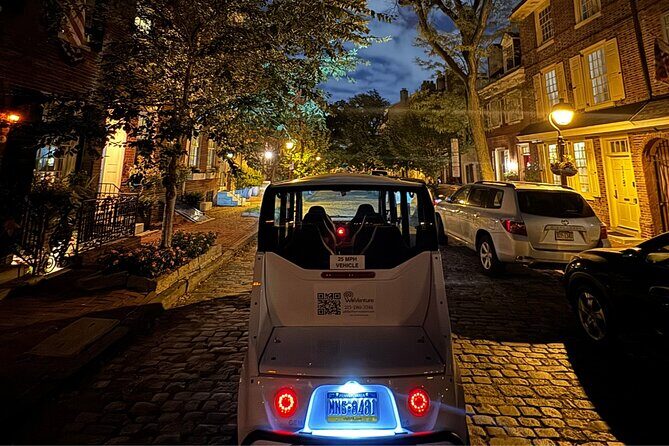
- Up to 10 people means the guide can answer questions as you roll
- Independence Hall and the Liberty Bell are lit up and explained clearly at night
- Rocky Steps photo moment includes time to hop out and climb
- Electric cart comfort keeps the ride smooth and quiet enough to hear stories
- A tight Old City to Center City route that works well for first-time planning
Why an evening electric cart is a smart Philly move
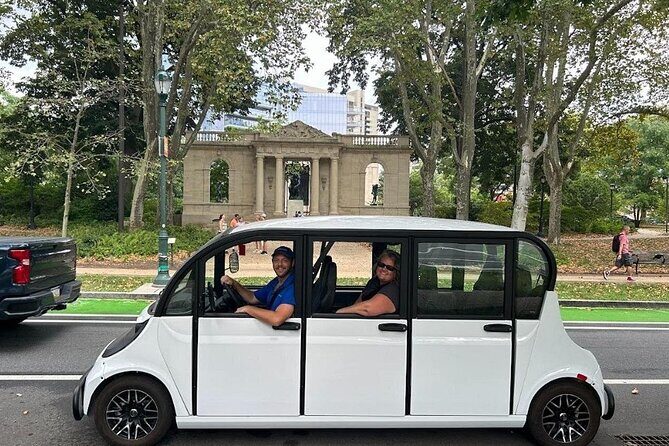
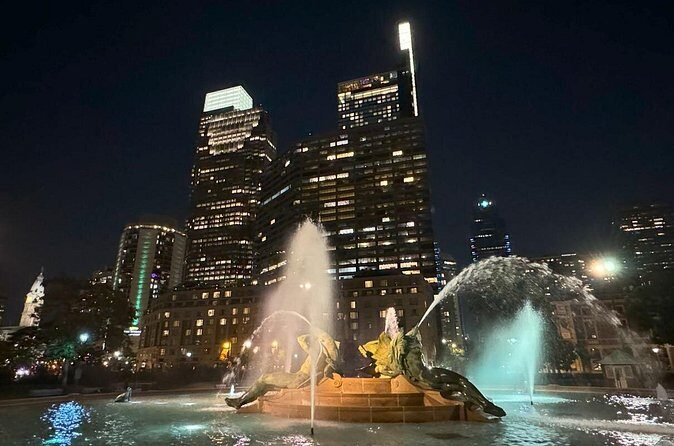
Philly at night is all light and angles. From the back-and-forth of the streets near Independence Hall to the skyline glow as you head toward Center City, the city looks like a postcard—but with street-level reality. The electric cart adds two real benefits: it’s quiet enough that you don’t lose half the talk to engine noise, and it makes frequent stops feel easier than in a big vehicle.
This kind of tour is also a good match for how Philadelphia is laid out. You’re not stuck with a long walk between distant attractions. Instead, you glide between “anchor points,” then you get a short moment to capture what you came for—especially at the Philadelphia Museum of Art area and the Rocky Steps.
One note I’d take seriously: this is an evening tour. Even when the route is comfortable, Philly can turn cold fast. If you’re visiting in winter, dress for it like you expect wind and chill, not like you’re going to a warm, indoor museum.
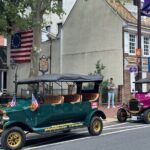
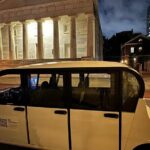
Other electric cart and vintage car tours we've reviewed in Philadelphia
Getting your bearings from 1200 Arch St (and why time matters)
You meet at 1200 Arch St, Philadelphia, PA 19107. The start time is 6:30 pm, and the tour ends back at the meeting point. That timing is deliberate. It lines up with the moment the sky is dark enough for illuminated landmarks, but not so late that the route feels rushed or you’re fighting tired energy.
Because the duration is about 1 hour, you shouldn’t treat this as your only plan. Treat it as your fast “map in motion.” After you get dropped back where you started, you’ll know where to return later—especially if you want to spend more time at places like the National Constitution Center or to wander more deeply around Old City and Center City on your own.
Group size stays small—10 travelers maximum. That small scale shows in how the guide can pace the story. You’re not just watching a list of buildings; you’re hearing how the pieces connect.
Independence Hall at night: more than a photo stop
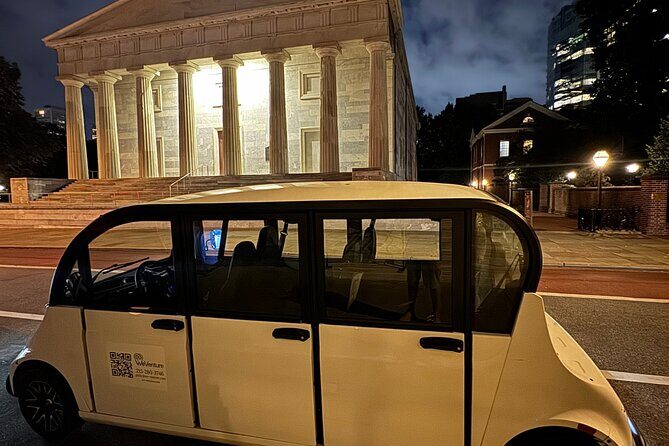
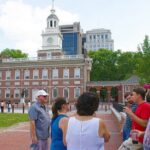
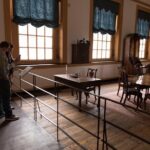
The tour’s Old City start centers on Independence Hall, and it’s a strong choice because it anchors the whole American independence story in one place. At this point in the ride, the guide sets context: this is where the Declaration of Independence and the Constitution were signed. The wording matters. Many people know Independence Hall as a “founding place,” but hearing how the Declaration and Constitution connect helps you understand why Philadelphia was such a gravitational center for the new country.
At night, Independence Hall also hits differently. Daytime can feel like a museum visit. At night, it feels like a living landmark—lit and prominent, with the street energy around it. You won’t be spending an hour inside here on this cart tour, but you will get the big-picture understanding that makes any future visit more meaningful.
If you’re the type who likes to ask questions, this is where you’ll get value fast. Ask about what was happening before and after the signatures, or about why this building became a symbol. The small group size makes it realistic to have a back-and-forth, not just one-way narration.
Liberty Bell and the Revolution story arc
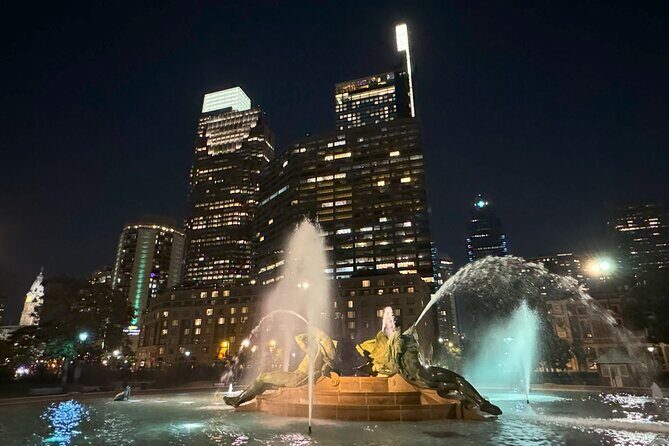
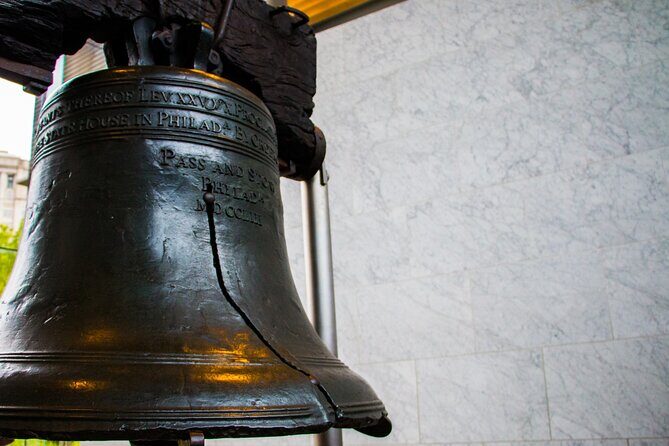
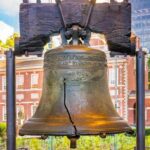
Next up is the Liberty Bell, across from Independence Hall. This is another “everyone knows it” stop, but the point of the tour is what you learn around it: the guide shares stories about the bell and how it became a national symbol, not just an object behind glass.
The cart pass helps you see how the bell sits in the broader Independence Hall area. You get a sense of the geographic storyline—why these landmarks cluster where they do and how they shaped public imagination over time.
For photos, evening is great here because lighting does some of the work. Keep your camera ready as you pass, and don’t expect a long staged moment. The value is the explanation and the quick visual hit that helps you remember what you’re seeing.
Benjamin Franklin’s cemetery stop: history with personality
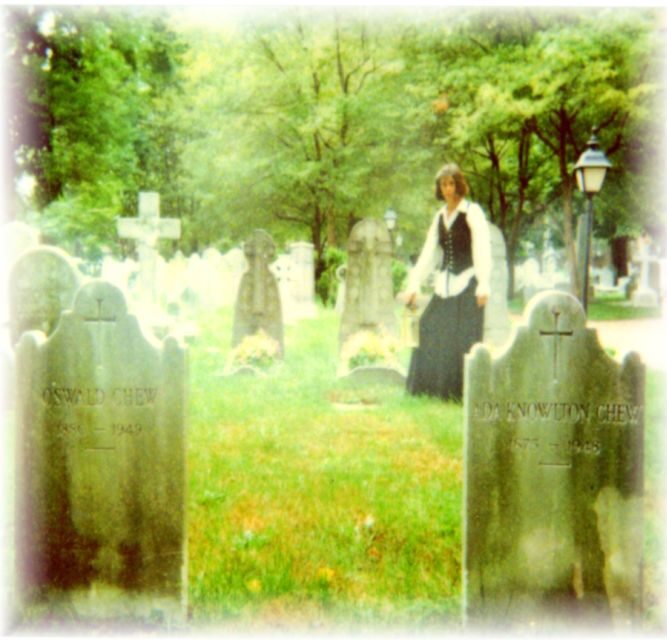
The tour drives by the grave of Benjamin Franklin. This is one of those moments where Philadelphia stops being a set of buildings and starts feeling like real people with complicated lives.
What makes this worthwhile on an evening cart tour is how the guide blends biography with local lore. Franklin shows up across American history in lots of ways, but on this ride you’ll get a sharper sense of his Philadelphia years and contributions, plus the kind of “people talk” that makes a cemetery feel less like a quiet dead end and more like a part of the city’s identity.
If you’re curious about what shaped Franklin’s thinking—or just want the human side of founding-era history—this is a good moment to lean in with questions.
Other evening experiences in Philadelphia

The U.S. Mint pass-by: currency you can connect to today
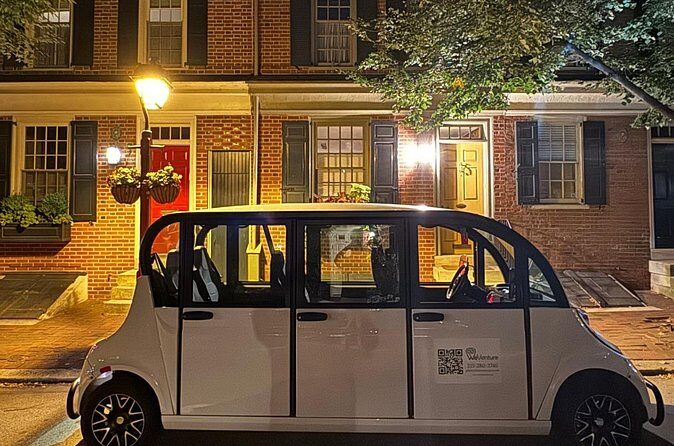
You’ll also drive by the United States Mint of Philadelphia. Even though you’re not going inside on this tour, it’s still a smart stop because it answers a question most guidebooks leave hanging: what does the mint actually do, and why does it matter beyond coins?
The guide covers the minting process and the evolution of currency in America, plus the role the mint plays in the nation’s economy. That turns a building you might otherwise ignore into a practical piece of the country’s machinery.
I’d think of this stop as a history-to-present bridge. When you later handle coins or notice modern currency details, the mint becomes part of that story instead of something abstract.
Arch Street Meeting House and Quaker roots
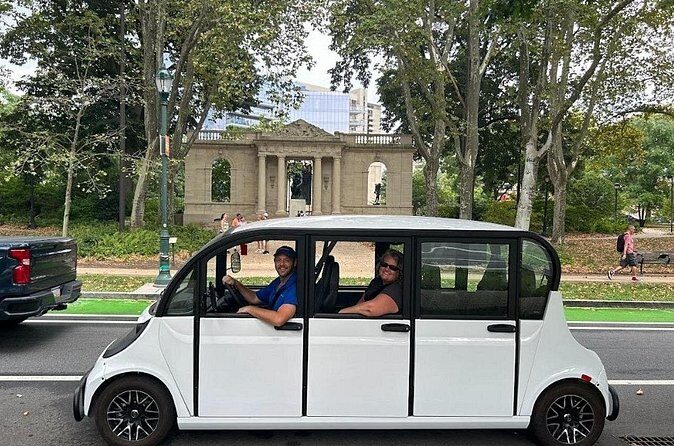
As the cart heads through areas tied to early Philadelphia, you pass by Arch Street Meeting House, connected with the Society of Friends, commonly known as Quakers. This part of the route is valuable because it adds a layer beyond the loudest Revolution narrative.
Philadelphia’s founding involved religious communities with their own values and roles in civic life. Hearing how the Quakers helped shape the colony of Pennsylvania gives you context for why certain social and cultural patterns developed there.
This is also one of those stops where a good guide can make the city feel bigger than one era. The Revolution gets plenty of attention; the Quaker presence adds perspective on how community life grew around it.
Philadelphia Museum of Art and the Rocky Steps moment
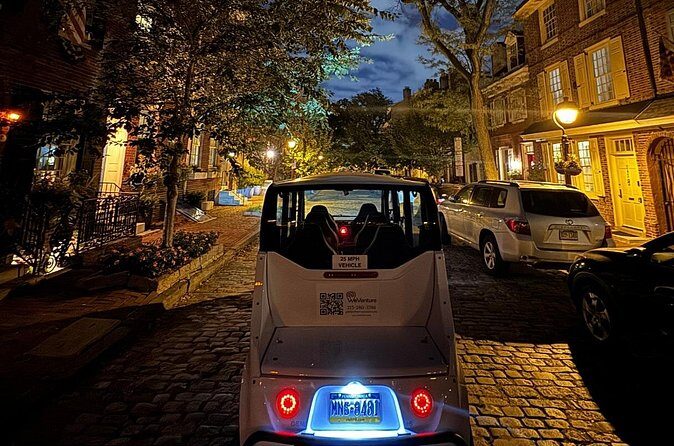
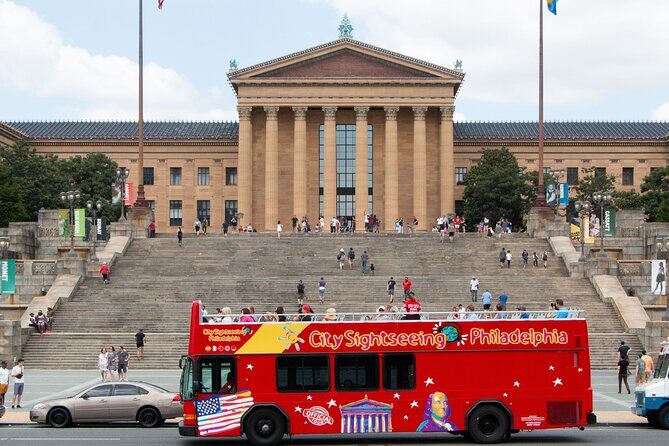
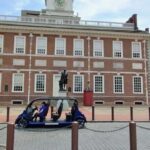
Then comes one of the most fun parts of the evening: the Philadelphia Museum of Art area, including a chance to head to the Rocky statue and climb the famous Rocky Steps.
This is the stop that turns a driving tour into a memory. It’s also where you’ll appreciate having the cart bring you close. Instead of committing to a long walk uphill after dark, you get a practical launch point for a quick climb and photos.
A few practical tips for this portion:
- Wear shoes you trust on stairs. Steps plus city sidewalks can be slick if it’s damp.
- Give yourself a minute to adjust your camera settings before you start climbing.
- Don’t rush the steps. The best shots happen when you stop, frame, and take one or two extra tries.
If you’re traveling with family, or you want a “Philly fun” moment even if you’re not a movie fanatic, this stop delivers. It’s also the perfect place to ask the guide for quick advice on viewpoints—where to stand for the best shots around the area.
National Constitution Center: democracy explained in plain words
As the route continues, you pass by the National Constitution Center. This museum is about the history and significance of the U.S. Constitution, with interactive exhibits and programs that focus on democratic principles.
Even without going inside, it helps to have a tour that names what the center actually does. Many visitors walk past it later without really understanding its purpose. On this cart tour, you’ll get the “why it exists” explanation, so if you choose to visit it later, you’ll arrive with questions you can actually follow.
If you like your history grounded in how systems work, this is one of the stops that fits that style. You’re not just learning dates—you’re learning what the Constitution is trying to protect and how it connects to everyday civic life.
Chinatown and Reading Terminal Market: where to plan your next meal
The cart moves through Chinatown, described as a culturally diverse area with its own heritage and food scene. This is a drive-by, but the guide’s commentary is aimed at getting you to look up from your phone and notice the street-level details—what kinds of businesses cluster where, and how the neighborhood feels like a living community instead of a tourist checkbox.
Then you roll past Reading Terminal Market, one of Philadelphia’s best-known food destinations. This is where the guide’s local perspective becomes especially useful. The tour includes tips on the market’s history and the idea of exploring multiple vendors, plus encouragement to ask for recommendations for where to start.
What I’d do after the tour: use the cart stop as your shortlist. The market is big, and it’s easy to freeze when you arrive hungry. If you remember a few vendor names your guide suggested, you’ll walk in with a plan instead of guessing.
City Hall and the architecture spotlight
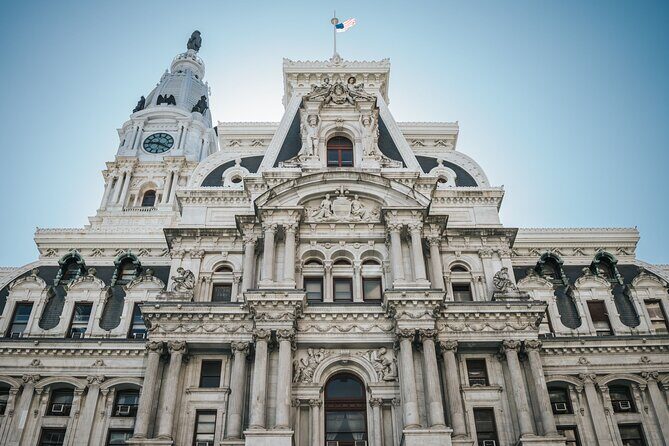
You’ll also pass the towering Philadelphia City Hall. This is another stop where the guide helps you read the building. Instead of treating it as a landmark you only photograph from far away, you’ll learn about its design and its role in the city’s political history, framed as part of the 19th-century story.
At night, City Hall can look almost theatrical, but the value here is the explanation that makes it feel like civic space—not just a backdrop.
If you’re the kind of traveler who likes to connect architecture to real people and real power, this portion is worth paying attention to as you roll by.
Eastern State Penitentiary: the darker side of Philly
Last on the tour circuit is a pass by Eastern State Penitentiary. If your idea of Philadelphia includes the harder edges—not just Revolution sites and museums—this stop balances the route.
The guide talks about notorious inmates and the haunting stories tied to the historic prison. Even when you’re only driving by, the commentary can reshape how you think about the building. It’s no longer just “a prison you’ve heard of.” It becomes a window into how punishment, reform, and social expectations played out in the past.
This is also a good moment to decide whether you want to do more on your own after the tour. If the stories intrigue you, you now know the name to anchor your future visit.
Price check: is $59 worth it for a one-hour cart tour?
At $59 per person for about one hour, you’re paying for three things: (1) guided interpretation, (2) a compact route that hits major landmarks in one evening, and (3) a small-group format that keeps the experience interactive.
It’s not a bargain if you want lots of museum time or if you plan to spend your evening wandering randomly anyway. This tour is efficient by design. It’s best when you want a guided orientation and a couple of memorable moments—especially the Rocky Steps climb.
Also, food and drink aren’t included, so you’ll still need to plan your meal separately. The upside is that this structure makes it easy to pair the tour with dinner nearby afterward, once you’ve picked up ideas from the guide.
Given the high satisfaction (a 4.9 rating with strong recommendation rates), the value tends to come down to this: you’ll get your money’s worth if you want guidance, not just transportation.
Who this tour fits best (and who might want a different plan)
This tour is a great fit if:
- you’re a first-time visitor who wants a fast, organized view of key landmarks
- you like guided context and want to ask questions
- you want a Philly evening plan that isn’t just waiting in lines
- your group includes different ages and you want one activity that covers both iconic and offbeat stops
You might want a different option if:
- you need long time inside museums or historic sites
- you dislike cold-weather outdoor moments (the cart can feel chilly on winter nights)
- you’re hoping for frequent stops at every location along the route
One more note from real-world experience: guides here vary by name and style. You may meet people who have been led by Jonathan, Deshon, D, Barry, or Adam and Laura. The common thread is that the narration tends to be lively, and the tour format gives you space to interact.
Should you book Philadelphia’s 1-hour evening electric cart tour?
If you want the easiest way to turn a short Philly stay into a smart, story-filled evening, I think this is worth booking. The route is designed for nighttime views and quick context, and the Rocky Steps component makes it feel more than a drive-by bus ride.
My advice: book it early enough that you can use the tour as your planning tool for the rest of your trip. Then pair it with a follow-up visit to whatever sparks your curiosity—whether that’s the Constitution Center, the market, or a deeper stop at one of the historic sites you pass on the cart.
FAQ
What’s the duration and start time?
The tour runs for about 1 hour and starts at 6:30 pm.
Where does the tour start?
The meeting point is 1200 Arch St, Philadelphia, PA 19107, USA. The tour ends back at the meeting point.
How much does it cost?
It costs $59.00 per person.
What language is the tour offered in?
The tour is offered in English with a local English-speaking guide.
What’s included, and is food included?
Included items are the guided electric cart experience, illuminated historic sites, city highlights like City Hall and Eastern State Penitentiary, and the chance to climb the Rocky Steps. Food and drink are not included.
Can I cancel for a refund?
Yes. There is free cancellation if you cancel up to 24 hours in advance for a full refund.